Pages

Showing posts with label freerange eggs. Show all posts

Sunday, April 17, 2016

Wild greens! Spring nettle quiche

Wild spring nettles are up!  Our patch in the woodland part of the yard is blooming well, and we were able to make some of our favourite nettle foods this weekend - nettle tea, nettle greens smoothie, and nettle quiche.  Nettle pairs well with so many foods, tasting a bit like a bitter dandelion or spinach.  Delicious with eggs and cheese (try our nettle-kopita recipe), but wonderful with honey in a strongly brewed herbal infusion.  It also makes a great addition to a herbal shampoo as it softens and conditions hair.

Nettle (Urtica dioica) also known as stinging nettle, is rich in iron and minerals.  Traditionally it has been used as a skin purifier, to aid rheumatism, help with allergies (hay fever), stimulate the digestive organs, to help promote milk production in nursing mothers, and so much more.

Keep in mind when harvesting that nettle stalks and stems are covered with tiny hairs that are very prickly and will sting the bare skin, thus the name "stinging" nettle.  For some foragers this is not an issue (you can gt used to the stinging over time) but as a new forager be mindful to harvest wearing gloves, long pants and closed shoes (not a great idea of walk with shorts or sandals into a tall nettle patch unless you don't mind the stinging), or very very carefully and slowly.  Once nettles are steamed, infused, or cooked the sting is completely gone.

Here is our recipe for nettle quiche:

Nettle Quiche
4 eggs
1 1/2 cups milk (dairy or non-dairy)
salt and pepper to taste
cheese of choice (e.g. feta, cheddar), about 1-2 cups
large handful washed fresh nettles, chopped
green onions and/or garlic greens
1 Tbsp butter, melted
one single-crust unbaked pie dough, arranged in pie pan

Whisk eggs and milk.
Add salt and pepper.
Put cheese, greens and other veggies into bottom of pie crust.
Pour egg-milk mixture on top of greens.
Pour butter onto the egg-mixture.
Bake at 400F for about 30 min.
Makes one large quiche.


Friday, April 19, 2013

This Moment

{This moment} - This moment - an end of week ritual, no words, just a special photo to remember, savour, enjoy.


Saturday, March 30, 2013

New spring chicks coming

Our new baby chicks are arriving next week...there is a lot of anticipation around here (and artwork to celebrate the new arrivals).  Spring is definitely in the air now!


Saturday, April 23, 2011

Around the farm

Around the farm this weekend - first rhubarb nearly ready, waiting and hoping for asparagus, baby chicks growing, salad greens picked, seedlings transplanted, peas planted, trees budding, grapes pruned, compost turned, chicken run repaired, eggs collected and decorated..happy earth day, happy easter, happy spring to all.


Tuesday, April 06, 2010

Spot the chicken


We have two hens, Buttons and Gypsy, who have taken to laying eggs in a bucket of sawdust which we keep near our cob oven! Each day we find one of the hens sitting quietly in the bucket - quite a cozy soft spot actually, under a sheltered roof hidden by a woodpile, out of sight from potential predators. Those smart hens :)

Tuesday, March 30, 2010

Eco-crafting natural egg dyes


Decided to invite a few mamas & kids from the neigbourhood over to do some egg decorating, have a spring picnic, and enjoy the backyard...the weather is looking like it will be gorgeous this week, plus, it is almost easter and why not try some alternatives to food colouring dyes for eggs. I experimented earlier to test out some natural dyes I had read about. For brown - strong dark coffee; for blue - elderberries from the freezer; for green - spirulina powder; for yellow - turmeric powder; for pink - chili powder. They are definitely not strong colours, and the eggs needed to "steep" for a good hour, but the results were not bad. You add 1 tsp white vinegar to the boiling water and dye agent, then add the hard boiled eggs. Simple. I tried to dye the lightest brown of our hen's eggs, but really white eggs would probably take up the colour better.

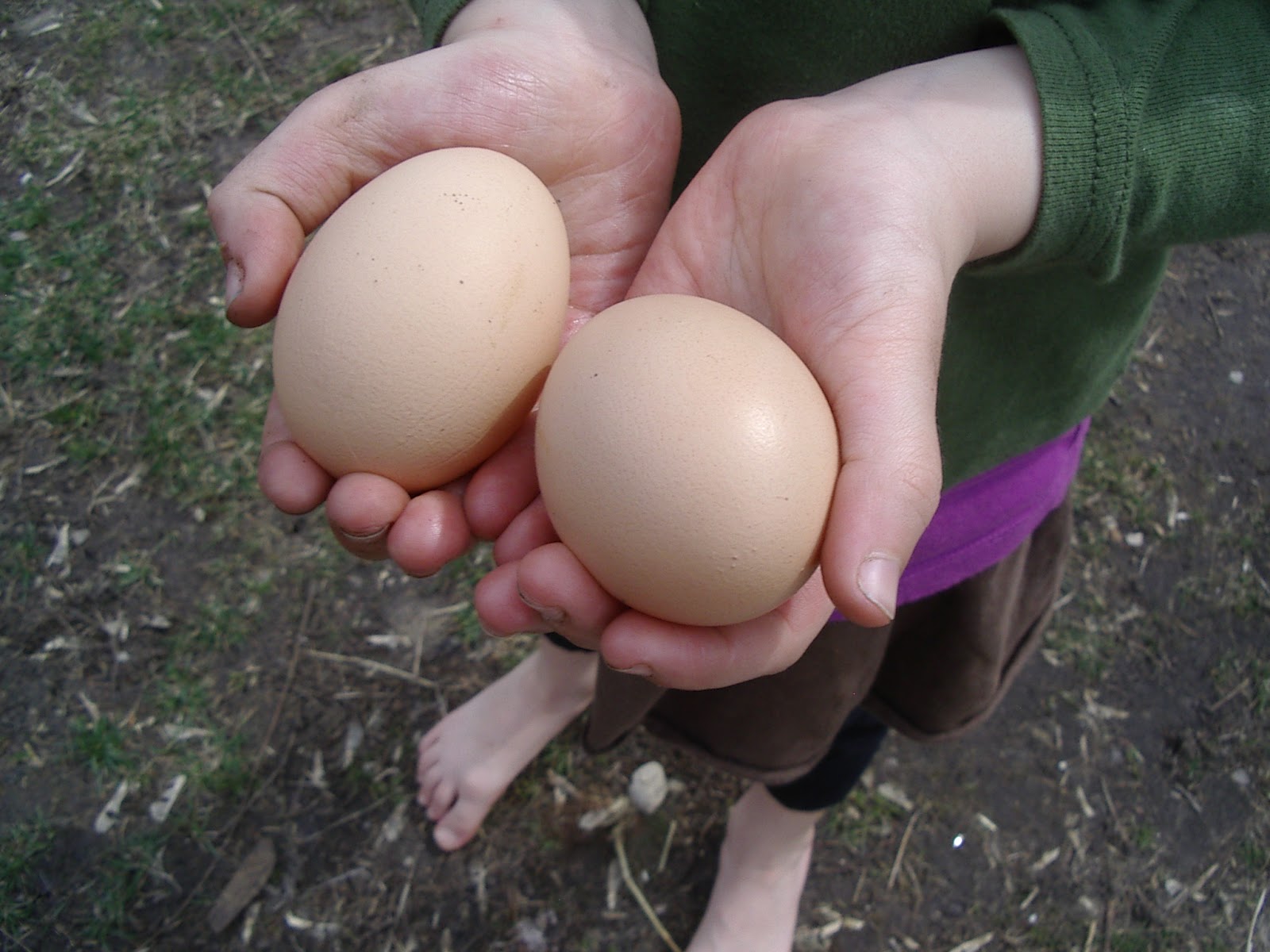
By the way, the spring "easter egg hunt" really does make sense - our hens have been so happy with the warm weather and their chance to free-range around the yard, that they have been laying their eggs in all kinds of surprising hidden locations. We certainly feel like we are hunting for them each day. One unusual place they seem to frequent and like, is a large bucket filled with wood shavings that we keep near our outdoor oven under a covered wood shed roof. There are at least 1-2 eggs in this pail each day! I don't know how the hens manage to sit on the rim of the pail and lay their eggs.

This weekend, there is an easter egg hunt being organized at a park in our neighbourhood - everyone is invited to bring coloured hard-boiled eggs to hide, which kids can trade in for chocolate eggs. I love that spontaneous and free community events like this, the May long weekend neighbourhood potluck-picnic, and Wednesday night kids soccer, all happen in this neighbourhood on a grassroots level.

***** Thanks for everyone's great ideas and suggestions on natural egg dying! For example, one person mentioned she uses raw eggs in the dye and simmers them for 20 minutes, then lets them steep another half hour off the heat. She finds them the perfect edible stage then. Colours suggested were thick grape juice for purple, and swirly colours used by wrapping eggs in onion skins with rubber bands.

Friday, March 13, 2009

Spring walks & a spring greens quiche...mmm


I was desperate for a taste of spring today! I had already been out for a long ramble with our dog and baby, looking for early signs of spring and the bright sun was making us feel giddy. We discovered snowdrops peeking out of the soil in a neighbours front yard, a few buds sprouting on trees, and the rose bushes in our garden shooting out green runners to the sky. When we got home I let the hens out, and they happily roamed through the garden, pecking for seeds and taking dust baths in their old favourite sunny spot near the back patio.

With the warmer weather, the hens have been back to their more regular laying routine, meaning plenty of fresh eggs again for us! With the hens on my heels, I wandered through the garden beds hoping for some fresh green shoots - I came up with just enough for a tasty quiche - nettle tops, new garlic fronds, and parsley sprouting in the coldframe. The greens in the coldframe were also growing nicely, but not quite ready to be salvaged for a salad yet, but by April we should have fresh salad greens again for regular meals.

Wednesday, October 03, 2007

Egg-rich! Chicken update


We are egg-rich! Currently we are getting 5-6 eggs/day from our lovely layers and are handing them to any friends who drop by for a visit. We are so proud of our hens, who have all learned to lay in the nest boxes over the past month (Aug 22 was our first egg). We have also been able to employ several friends as chicken-sitters, when we go away for a night or weekend trip. This is a must for any urban chicken keepers, as the birds do need to be fed and watered, as well as let out for a stretch several times a day.

The girls love to eat greens - as much as they can get, so we feed them bunches of it cut into small strips with their feed every day, as well as hanging bunches from strings along the fence of their enclosure so they can nibble all day. They especially love comfrey (which encourages laying), broccoli greens, kale, swiss chard, dandelion greens, and the latest, sorrel. We also give them grains such as buckwheat (especially kasha, which is roasted buckwheat and this is a real treat for them), sunflower seeds, pumpkin seeds (which deter mites), oats, millet, quinoa, etc. Shredded carrot, and any kind of berries or fruit (grapes, raspberries, melon) - fresh or dry - is their absolute favourite, and they will go crazy for these snacks.

We are starting to prepare their winter house. We have not been able to find much information in books or on the internet regarding winter/northern chicken keeping. The main detail we've learned is that chickens can survive fairly cold weather, down to several degrees below zero, as long as they are out of the wind (so they don't get frostbite). It seems we could keep them in their coop over the winter, if we added a heat lamp or small heater, but this poses a slight fire hazard and also means running electricity for days on end. Our plan is to house them in our greenhouse, where we have planted fresh greens for them to eat, and they would have more space to roam. On sunny days we will let them stroll in the yard, or under the outdoor coldframes just to get some more exercise and fresh air.

We have been meeting various other people here in the city who also keep chickens. There seems to be a small underground urban chicken keeping movement, and so we are considering starting a urban chicken keepers alliance, so we can help create more of a network where we can support each other, as well as further the idea of chickens within urban agriculture/food security plans. If there are any other local urban chicken keepers out there reading this, please contact us if you have ideas or (in other cities) if have formed such networks and could give us advice from your experiences.