We are currently running our Practical Home Herbalist series again. This is a four-part series of herbal classes for those who want to delve deeper into their relationship with healing herbs and remedy-making for home use. We have a wonderful group of ten women taking part this time around, and also a local photographer who is going to document our classes for us. Classes offer hands-on remedy making with samples to take home, harvesting and tasting herbs, plants to take home for creating their own herbal garden, learning about four focus plants each week, learning through artwork (each participant creates a traditional "herbarium" or herbal botanical journal as part of this series). The hope is to provide participants with practical skills and knowledge for making simple safe remedies for their own friends and families, as well as building deeper understandings of the beautiful healing plants that are our allies. This series is so much fun to create, host and offer to our community! I look forward to sharing more - for now here are a few photos from our first session in which we featured: plantain, dandelion, nettle and lemon balm. With these herbs we enjoyed making herbal shampoo (nettle, lemon-balm), herbal pesto (dandelion-plantain), herbal vinegar (nettle), and drinking deep dark green herbal nettle infusions. Read more about the Practical Home Herbalist series here.
Showing posts with label nettle. Show all posts
Thursday, May 18, 2017
Monday, April 17, 2017
Signs of spring
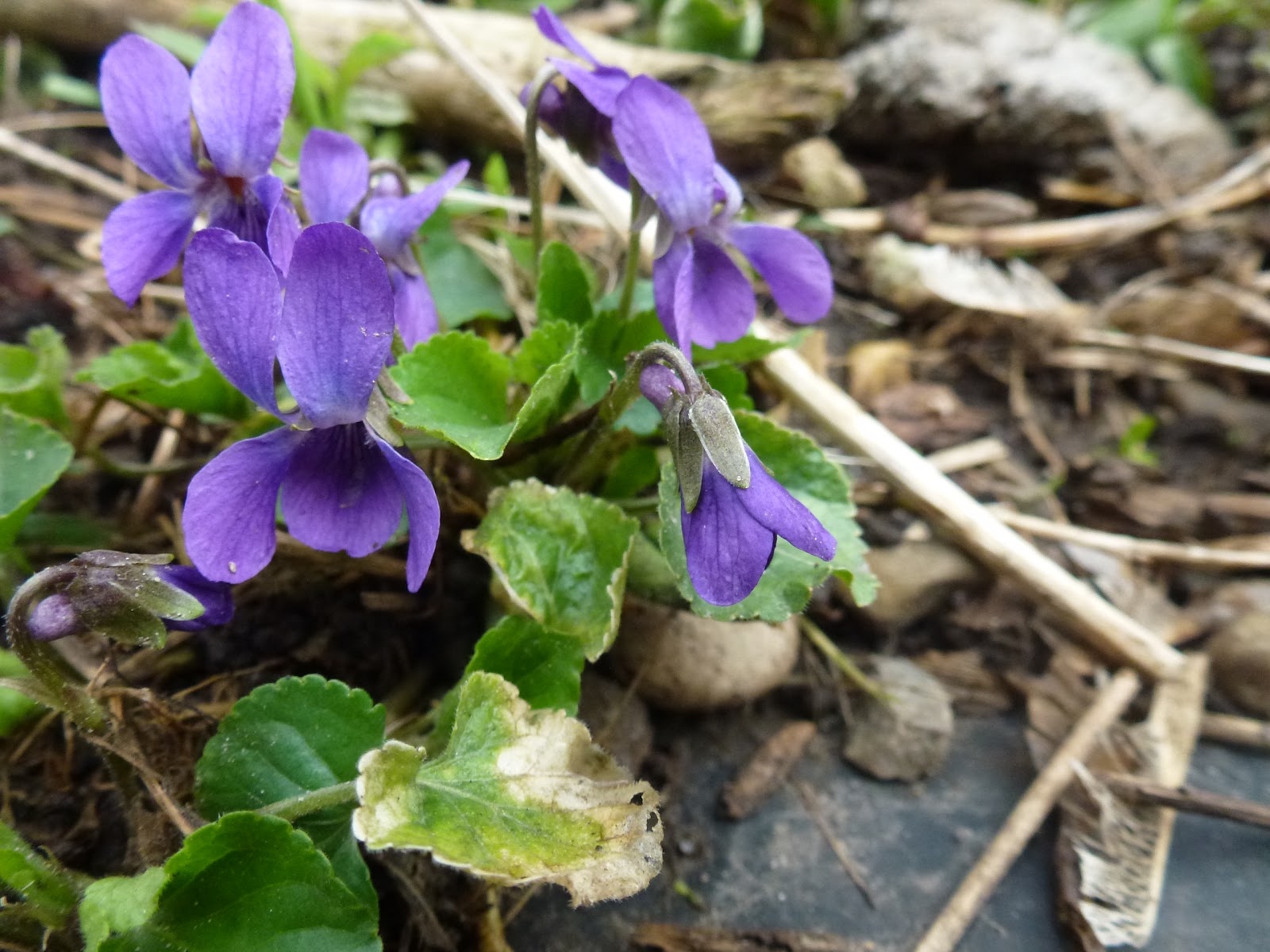
There are sure signs of spring popping up around the yard and garden all around us. Every year it's the same happy pattern - first the wild greens (the nettles, the dandelions, the wild garlic that we start nibbling on); then the wild violets that we pick for syrup and salads; then the other wild herbs & flowers that we've planted into our shade gardens (the trout lilies, the bloodroot, the wild ginger that have all been planted to create woodland areas in our yard); and then the rhubarb growing bigger by the minute! The sorrel leaves, the asparagus poking up, the chives, the mint patches, the lemon balm, the catnip, the yarrow...These are our favourite early days of spring, when it's all so hopeful and fresh, the flavours are new and exciting, vibrant and healthful for us again after our winter.
Sunday, June 05, 2016
Wild Plant Medicine Workshop 1 - focus on Nettle
I absolutely love nettle. I think it's one of my favourite "wild" medicinals, with such a versatile range of applications and uses. And since it is at it's peak right now, we offered our first workshop in the "wild plant medicine (in the city)" series on the topic of Nettle!
Not only is it delicious, packed with nutrition (iron, calcium, vit A and C, 25% protein by weight), but healing to many aspects of our body (men, women, children, elders alike). It is an alterative, working to bring our body back into healthy balance, meeting us where we need. It helps stimulate all systems of elimination in the body, this removing toxins and wastes and realigning our bodies toward healthy wholeness. It is helpful for allergies, arthritis, rheumatism, recovering from illness, beneficial for nursing mothers, and generally toning to both the male and female reproductive systems. It does not have counter-indications with other herbs/medicines, and can be used freely and safely. Primarily the leaves are used, harvested before they start to flower. It can be tinctured, dried for tea or used fresh for tea and cooking (the drying, steaming or cooking removes the sting from the leaves). See a few of our favourite nettle recipes below - taking our "medicine" as food is always a great way to go!
Nettle has a long history of co-habitation with humans. Wherever old human settlements are in the northern boreal regions of the globe (Europe, Asia, North America) likely you will find nettle. It is said that nettle has often been found growing over old burial grounds, bringing to mind that this special plant is protecting sacred ground - it's stinging properties mean that humans will not easily trample through a nettle patch.
Nettle is also beneficial for many species of animals - several kinds of butterfly larva only eat nettle, and also nettle is a useful food source for ground birds, reptiles and rodents in riparian areas.
So, don't think of this wonderful wild plant as just a "weed" - bring some nettle into your life, ethically harvesting* where it is growing along streams and shady moist riverbanks and wooded areas, or even planting a small patch in a contained area of your back woods/garden (be warned, nettle spreads rapidly by underground roots and rhizomes so do keep it contained by trenching the area or planting in a container). Remember, it's called "stinging nettle" for a good reason - harvest with caution, wearing long sleeves, pants and gloves as it can cause severe contact dermatitis (red stinging itching welts) from the formic acid it releases into exposed skin through it's stinging hairs.
* ethical wild harvesting - meaning to harvest carefully and respectfully, leaving no trace that you have been harvesting a wild plant (take no more than 1/4 of a patch, do not harvest entire plants, cover soil back to leave ground undisturbed, and leave healthy plants to go to seed and grow in the coming years)
* and when harvesting in the wild, be sure to know FOR SURE that you have properly identified the plant (use a good ID book with clear photos or sketches of plants in various times of season, or go with an experiences wild harvester who knows how to safely harvest and identify - there are some look-alike plants that can be toxic)
Here is an delicious example where nettle makes a creamy soup in place of any dark leafy green (spinach, chard, kale). It was paired with sorrel in this lemony green soup above.
And in our workshop we made a nettle-based "medicinal" pesto - deep green, garlic-y, and delicious!
Nettle-Walnut Pesto (cheesy version)
8 cups nettle leaves (top 6 inches, removed from stalk)
2 cups other wild green edibles (we used dandelion and plantain leaves, but you could use traditional pesto garden herbs like basil or parlsey)
1 cup nuts (e.g. walnuts, pine nuts, brazil nuts, almonds)
1 cup seeds (e.g. sunflower, pumpkin, hemp)
2 cups olive oil (more or less, to get consistency you want)
1 cup parmesan, grated
1/2 cup Asiago, grated
10 clove of garlic
3 tsp sea salt
Nettle-Seed Pesto (vegan version)
8 cups nettle leaves
2 cups other wild green edibles
2 cups seeds (e.g. pumpkin, sunflower, hemp or combination of these - add in nuts if you like in place of seeds)
1 cup nutritional yeast
1-2 cups olive oil (to get consistency you want)
10 cloves garlic
3 tsp sea salt
Method:
1) Blend greens with seeds and some oil in small batches in a food processor.
2) Then add cheese/nutritional yeast, garlic and sea salt and blend well.
3) Add more olive oil if necessary to get the consistency you want. Do not thin with water as it will create a paste, not a thick pesto sauce.
4) Taste, adjust flavours - remember the pesto will mellow and blend flavours as it sits.
5) Scoop into jars and store in fridge (for about 2 weeks) or freezer for longer term.
6) Serve with crackers, zucchini chips, as a dip for fresh veggies, mixed into pasta, on bread, mixed into mayo for a delicious veggie burger experience, and so many other great uses for pesto!
Coming up next month in the "wild plant medicine (in the city)" series:
Plantain - and making healing oils, salves, and bug lotions with plantain
Not only is it delicious, packed with nutrition (iron, calcium, vit A and C, 25% protein by weight), but healing to many aspects of our body (men, women, children, elders alike). It is an alterative, working to bring our body back into healthy balance, meeting us where we need. It helps stimulate all systems of elimination in the body, this removing toxins and wastes and realigning our bodies toward healthy wholeness. It is helpful for allergies, arthritis, rheumatism, recovering from illness, beneficial for nursing mothers, and generally toning to both the male and female reproductive systems. It does not have counter-indications with other herbs/medicines, and can be used freely and safely. Primarily the leaves are used, harvested before they start to flower. It can be tinctured, dried for tea or used fresh for tea and cooking (the drying, steaming or cooking removes the sting from the leaves). See a few of our favourite nettle recipes below - taking our "medicine" as food is always a great way to go!
Nettle has a long history of co-habitation with humans. Wherever old human settlements are in the northern boreal regions of the globe (Europe, Asia, North America) likely you will find nettle. It is said that nettle has often been found growing over old burial grounds, bringing to mind that this special plant is protecting sacred ground - it's stinging properties mean that humans will not easily trample through a nettle patch.
Nettle is also beneficial for many species of animals - several kinds of butterfly larva only eat nettle, and also nettle is a useful food source for ground birds, reptiles and rodents in riparian areas.
So, don't think of this wonderful wild plant as just a "weed" - bring some nettle into your life, ethically harvesting* where it is growing along streams and shady moist riverbanks and wooded areas, or even planting a small patch in a contained area of your back woods/garden (be warned, nettle spreads rapidly by underground roots and rhizomes so do keep it contained by trenching the area or planting in a container). Remember, it's called "stinging nettle" for a good reason - harvest with caution, wearing long sleeves, pants and gloves as it can cause severe contact dermatitis (red stinging itching welts) from the formic acid it releases into exposed skin through it's stinging hairs.
* ethical wild harvesting - meaning to harvest carefully and respectfully, leaving no trace that you have been harvesting a wild plant (take no more than 1/4 of a patch, do not harvest entire plants, cover soil back to leave ground undisturbed, and leave healthy plants to go to seed and grow in the coming years)
* and when harvesting in the wild, be sure to know FOR SURE that you have properly identified the plant (use a good ID book with clear photos or sketches of plants in various times of season, or go with an experiences wild harvester who knows how to safely harvest and identify - there are some look-alike plants that can be toxic)
And in our workshop we made a nettle-based "medicinal" pesto - deep green, garlic-y, and delicious!
Nettle-Walnut Pesto (cheesy version)
8 cups nettle leaves (top 6 inches, removed from stalk)
2 cups other wild green edibles (we used dandelion and plantain leaves, but you could use traditional pesto garden herbs like basil or parlsey)
1 cup nuts (e.g. walnuts, pine nuts, brazil nuts, almonds)
1 cup seeds (e.g. sunflower, pumpkin, hemp)
2 cups olive oil (more or less, to get consistency you want)
1 cup parmesan, grated
1/2 cup Asiago, grated
10 clove of garlic
3 tsp sea salt
Nettle-Seed Pesto (vegan version)
8 cups nettle leaves
2 cups other wild green edibles
2 cups seeds (e.g. pumpkin, sunflower, hemp or combination of these - add in nuts if you like in place of seeds)
1 cup nutritional yeast
1-2 cups olive oil (to get consistency you want)
10 cloves garlic
3 tsp sea salt
Method:
1) Blend greens with seeds and some oil in small batches in a food processor.
2) Then add cheese/nutritional yeast, garlic and sea salt and blend well.
3) Add more olive oil if necessary to get the consistency you want. Do not thin with water as it will create a paste, not a thick pesto sauce.
4) Taste, adjust flavours - remember the pesto will mellow and blend flavours as it sits.
5) Scoop into jars and store in fridge (for about 2 weeks) or freezer for longer term.
6) Serve with crackers, zucchini chips, as a dip for fresh veggies, mixed into pasta, on bread, mixed into mayo for a delicious veggie burger experience, and so many other great uses for pesto!
Coming up next month in the "wild plant medicine (in the city)" series:
Plantain - and making healing oils, salves, and bug lotions with plantain
Sunday, April 17, 2016
Wild greens! Spring nettle quiche
Wild spring nettles are up! Our patch in the woodland part of the yard is blooming well, and we were able to make some of our favourite nettle foods this weekend - nettle tea, nettle greens smoothie, and nettle quiche. Nettle pairs well with so many foods, tasting a bit like a bitter dandelion or spinach. Delicious with eggs and cheese (try our nettle-kopita recipe), but wonderful with honey in a strongly brewed herbal infusion. It also makes a great addition to a herbal shampoo as it softens and conditions hair.
Nettle (Urtica dioica) also known as stinging nettle, is rich in iron and minerals. Traditionally it has been used as a skin purifier, to aid rheumatism, help with allergies (hay fever), stimulate the digestive organs, to help promote milk production in nursing mothers, and so much more.
Keep in mind when harvesting that nettle stalks and stems are covered with tiny hairs that are very prickly and will sting the bare skin, thus the name "stinging" nettle. For some foragers this is not an issue (you can gt used to the stinging over time) but as a new forager be mindful to harvest wearing gloves, long pants and closed shoes (not a great idea of walk with shorts or sandals into a tall nettle patch unless you don't mind the stinging), or very very carefully and slowly. Once nettles are steamed, infused, or cooked the sting is completely gone.
Here is our recipe for nettle quiche:
Nettle Quiche
4 eggs
1 1/2 cups milk (dairy or non-dairy)
salt and pepper to taste
cheese of choice (e.g. feta, cheddar), about 1-2 cups
large handful washed fresh nettles, chopped
green onions and/or garlic greens
1 Tbsp butter, melted
one single-crust unbaked pie dough, arranged in pie pan
Whisk eggs and milk.
Add salt and pepper.
Put cheese, greens and other veggies into bottom of pie crust.
Pour egg-milk mixture on top of greens.
Pour butter onto the egg-mixture.
Bake at 400F for about 30 min.
Makes one large quiche.
Nettle (Urtica dioica) also known as stinging nettle, is rich in iron and minerals. Traditionally it has been used as a skin purifier, to aid rheumatism, help with allergies (hay fever), stimulate the digestive organs, to help promote milk production in nursing mothers, and so much more.
Keep in mind when harvesting that nettle stalks and stems are covered with tiny hairs that are very prickly and will sting the bare skin, thus the name "stinging" nettle. For some foragers this is not an issue (you can gt used to the stinging over time) but as a new forager be mindful to harvest wearing gloves, long pants and closed shoes (not a great idea of walk with shorts or sandals into a tall nettle patch unless you don't mind the stinging), or very very carefully and slowly. Once nettles are steamed, infused, or cooked the sting is completely gone.
Here is our recipe for nettle quiche:
Nettle Quiche
4 eggs
1 1/2 cups milk (dairy or non-dairy)
salt and pepper to taste
cheese of choice (e.g. feta, cheddar), about 1-2 cups
large handful washed fresh nettles, chopped
green onions and/or garlic greens
1 Tbsp butter, melted
one single-crust unbaked pie dough, arranged in pie pan
Whisk eggs and milk.
Add salt and pepper.
Put cheese, greens and other veggies into bottom of pie crust.
Pour egg-milk mixture on top of greens.
Pour butter onto the egg-mixture.
Bake at 400F for about 30 min.
Makes one large quiche.
Sunday, April 28, 2013
Wild spring edibles
What abundance we have growing wild around us! We hosted our annual Wild Spring Edibles workshop today, and even though it's just the beginning of the season with wild greens only starting to peek up, our facilitator managed to find a wide assortment of delicious nutritious wild greens, roots and flowers already available. She covered all aspects of wild edibles - including: ethical harvesting, traditional approaches, plant spirit medicine, phtyo-nutrients and medicinal values of wild foods, drying and storing, how to prepare wild foods for eating, juicing, safe quantities to consume, and of course (probably most important) proper identification. We sampled an array of prepared foods such as burdock root tea, pine needle tea, garlic mustard pesto, purslane pesto, garlic mustard root "horseradish", fresh dandelion greens, rosehip jam, and fresh violet blossoms. Then we had a walk around the Little City Farm property to identify these plants, plus a few others such as nettles, wood sorrel, mallow, evening primrose, wild ginger, wild grape, and ramps (wild garlic). We are re-inspired to enjoy the bounty around us, to help build attentiveness and appreciation for these plants and bring greater health for our bodies.
Here are some photos of the spring wild edibles here at Little City Farm, with their names below.
![]() |
| Evening Primrose root and leaf |
![]() |
| Large burdock root (centre) |
![]() |
| Top evening primrose root, middle burdock root, bottom dock root |
![]() |
| Stinging nettle greens |
![]() |
| Garlic mustard greens |
![]() |
| Ramps (wild garlic) |
![]() |
| Wild ginger (just opening the leaves) |
![]() |
| Violet blossoms and leaves |
![]() |
| Young burdock leaves (harvest for the root) |
![]() |
| Dandelion greens |
![]() |
| Clover leaves |
![]() |
| Evening primrose leaves |
![]() |
| Wood sorrel leaves |
![]() |
| Wild rose buds (harvest the rosehips) |
![]() |
| Wild carrot greens (harvest for greens and young roots |
Saturday, June 19, 2010
Creating great compost workshop & biodynamic compost activator plants!
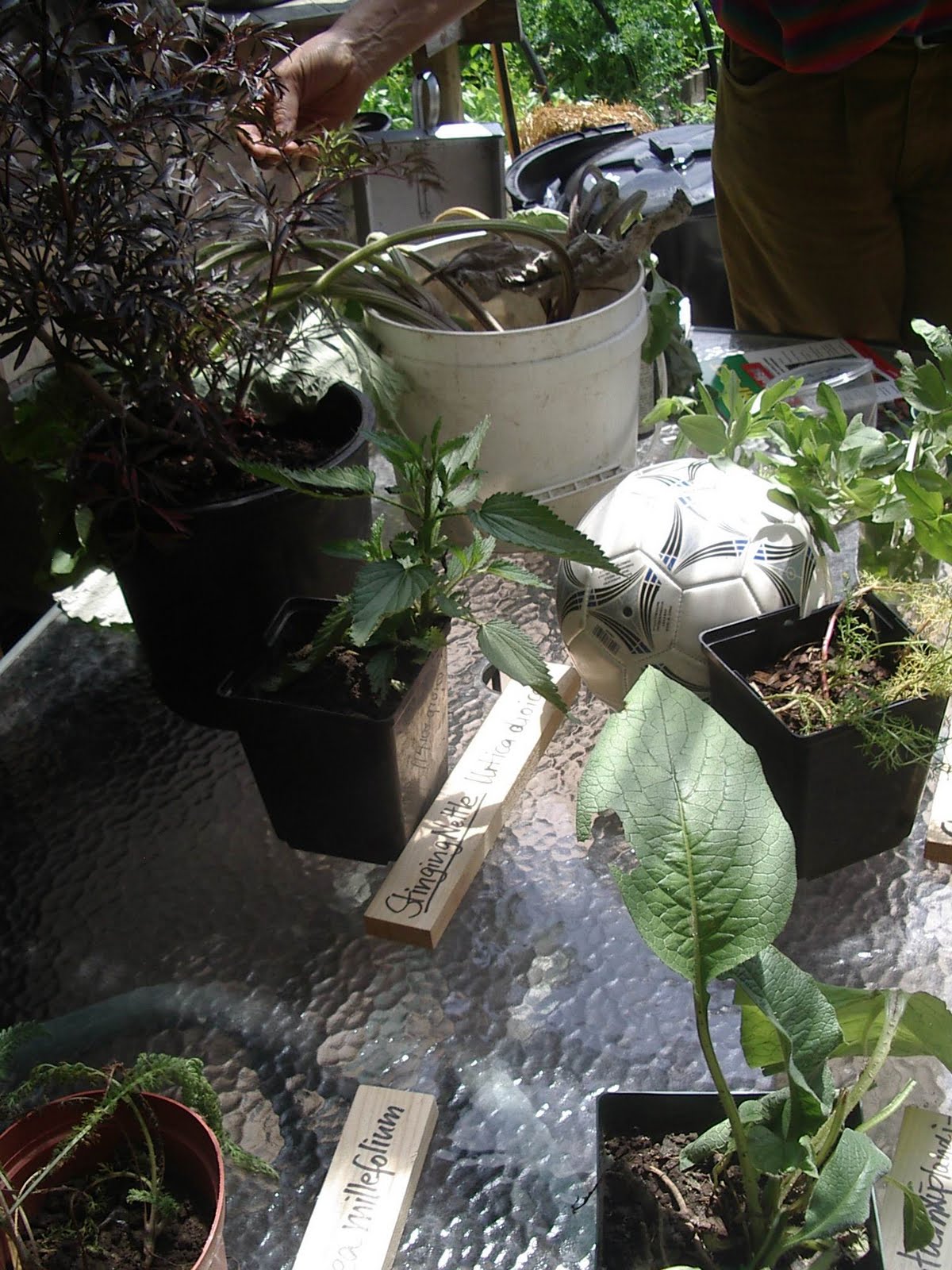
This weekend's Saturday workshop was on Compost! Our friend Anna-Maria, long-time organic grower and CSA farmer, was here to lead the session. She really knows her information well and although we have been composting for more than a decade and have done plenty of reading ourselves, I still came away with many new and useful ideas from her talk! She talked about why to compost (why not?? there are just so many benefits, including fertile soil, building tilth, plant nutrient boosting, reduction of wastes going to landfills, creating closed loop systems in our own backyards, etc etc)! She also takes a biodynamic approach to her composting, both in terms of how she layers her pile (it's like cooking for her, layering and seasoning her piles), and also in the types of plants she adds as "compost activators". Seven useful plants recommended by Rudolf Steiner, father of biodynamic agriculture, include comfrey, yarrow, nettle, chamomile, horsetail, dandelion, and valerian. Anna-Maria also added burdock - ideally, these are all plants you have growing in your own yard so you don't need to be dependent on outside sources. Luckily, over the years on this property, we have encouraged all of these plants to grow here! Even a few leaves of each, chopped up and added every few months, can do wonders for adding the proper balance to the compost pile. Fish emulsion or seaweed can also be added...
The ideal pile would be a 30:1 ratio of carbon:nitrogen, balanced by weight not volume (she suggested if you really wanted to be precise you could leave a scale beside your compost pile!). She talked about useful cover crops to grow, in garden beds or paths, to chop up and add to the soil or the compost pile for extra nitrogen - such as fava beans, sweet peas, clover, vetch, buckwheat, rye. There is also a debate about whether to turn a compost pile, how often or not at all (similar to no-till gardening approaches, no-turn compost approach believes that turning disturbs the microbial life too much). If the pile is properly layered and managed, and heats up well, then turning is not necessary - although she was clear to state that each situation is a little different, and you need to get to know your own garden, compost and conditions well to make judgements about how to manage your pile. Anna-Maria also told us about the wonderful elderberry - which is it's own little composter as it's roots seem to create perfect compost - you can dig gently around the roots in the fall and get beautiful compost to add to your garden (not to mention eating the berries, using the flowers for wines or tincture, and more).
Now I'm off to harvest some comfrey and nettle for our compost, buy an elderberry bush, and try to plant some buckwheat and fava beans as cover crops this season!
The ideal pile would be a 30:1 ratio of carbon:nitrogen, balanced by weight not volume (she suggested if you really wanted to be precise you could leave a scale beside your compost pile!). She talked about useful cover crops to grow, in garden beds or paths, to chop up and add to the soil or the compost pile for extra nitrogen - such as fava beans, sweet peas, clover, vetch, buckwheat, rye. There is also a debate about whether to turn a compost pile, how often or not at all (similar to no-till gardening approaches, no-turn compost approach believes that turning disturbs the microbial life too much). If the pile is properly layered and managed, and heats up well, then turning is not necessary - although she was clear to state that each situation is a little different, and you need to get to know your own garden, compost and conditions well to make judgements about how to manage your pile. Anna-Maria also told us about the wonderful elderberry - which is it's own little composter as it's roots seem to create perfect compost - you can dig gently around the roots in the fall and get beautiful compost to add to your garden (not to mention eating the berries, using the flowers for wines or tincture, and more).
Now I'm off to harvest some comfrey and nettle for our compost, buy an elderberry bush, and try to plant some buckwheat and fava beans as cover crops this season!
Sunday, May 23, 2010
Healing power of herbs! Urban Wild Foods Recipe 2: Stinging Nettle Tea

Well, we thought we'd celebrate our successful seedling sale by ordering a special treat of Indian food. Very tasty, but about an hour after eating I broke out in itchy red hives! Upon reading about the possible causes of hives, I found out they are related to allegies (food allergies, seasonal allegies), stress, and various other factors. Connection to restaurant food with examples such as Indian food, Thai food or Chinese food, are common due to the MSG which is often used at these establishments. I should have known - MSG is not only usually hidden in the spice blends, but also in the red and yellow dyes which are sometimes used to colour the curries, etc. MSG is so prevalent in most processed foods that I basically need to stay away from anything with suspect labelling (MSG is hidden under various names and guises), not that I mind as we try to eat a fresh local seasonal diet when we're at home - but it makes going to restaurants treacherous sometimes.
So I tried a few home remedies to deal with the itchy hives - baking soda poultices (short-term relief), homeopathic gel for bites (not effective), and then I drank the miraculous stinging nettle tea. Within about half an hour of taking one strong cup of this tea all the itching subsided and swelling/redness was greatly reduced! It's actually interesting that this healing action is similar to the homeopathic approach - which may seem counterintuitive to some people - that of using a plant which causes a reaction in the body to heal the same condition. For example, the nettle plant can causes red, stinging itching welts (similar to hives) when it's picked without caution. However, taking nettle internally (as tea) over time can build an immunity to this stinging, and drinking nettle tea can also heal hives. In homeopathic medicine there are many such examples, e.g. apis (made from the body of the honeybee) is the main healing remedy for bee stings. Also, I remember seeing this same principle in action while I was working at the Algonquin Tea Company up near Ottawa. If one observes a plant and our reactions to a plant closely, it is possible to give a well-educated guess at it's healing properties. We were washing the dirt off of a massive pile of astragalus root that had just been harvested. While we were cleaning the astragalus root it caused our noses to run and eyes to water - and it turns out that astragalus root is an amazing plant which has been used for centuries in healing colds, flu and breathing problems. Interesting! We only need to take the time to observe plants, understand them and learn from them - the plants will teach us.
Back to the nettle plant - I am so fortunate to have this wonderous plant growing in our woodland section at the back of the yard. Nettle has many healing properties, including being a blood purifier (which means it helps to heal inflammation, eczema, arthritis, etc by tackling these conditions internally). Many herbal sources recommend to take a strong nettle infusion for a week, at least 2 times per year (generally best in spring when it's freshly available) to help with this blood purification. Nettle is also rich in iron, minerals, calcium (increasing bone density) etc etc. It can be made into a soup (cream of nettle is nice), added into sauces or steamed. I made a nettle-kopita last year that we are still talking about. Definitely need to do that again!
But to keep things really simple, the wild food recipe for this weekend is an easy one - nettle tea. Here is how to make a strong healing infusion, which can be taken hot, cool or as iced tea.
May 23: Nettle Tea
Steep 1 large handful of fresh nettle leaves in 2 cups of water that has just boiled. Let steep for at least 30 minutes. This creates a strong medicinal infusion. Sweeten if desired with honey or organic sugar. Drink 1-2 cups nettle tea per day for one week, as a spring blood purification tonic. The root of nettle is also very potent, if not more so than then leaves, so harvest this carefully if you have access to some fresh plants. Root can be made into a tincture (steeped in an alcohol base), or a decoction (boiled in water like a strong earthy tea).
Subscribe to:
Posts (Atom)