Pages

Showing posts with label calendula salve. Show all posts

Sunday, December 03, 2017

GRATITUDE2017: 25% off SALE at Homestead Herbals this month

We are offering a special sale at Homestead Herbals this month, in gratitude for the support we have seen from our friends, family and customers this year.  Thank you for supporting the work of Little City Farm and our herbal project Homestead Herbals (where we make natural soaps, herbal remedies, salves, bitters and more using organic and wild-harvested herbs, many from our own property!)

We are offering 25% off everything in the Homestead Herbals shop, until December 23!  This sale applies to Canadian customers only (sorry, right now we are only able to ship in Canada).

Use the coupon code: GRATITUDE2017
to receive 25% off your entire purchase
(AND for local orders we will refund you shipping charges if you wish to pick up in person)!

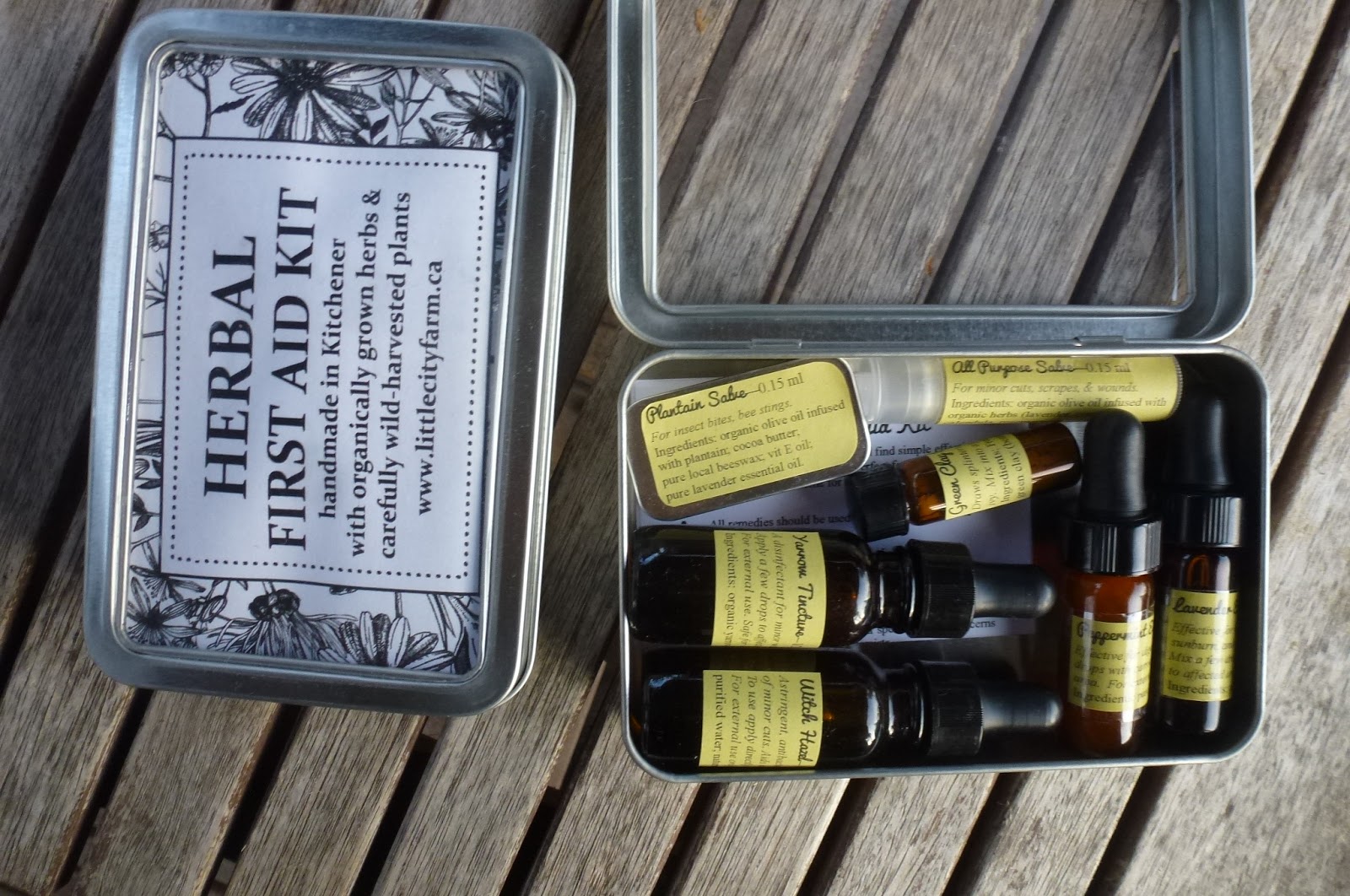
This is the time to stock up on our popular calendula salve, calendula soap, post-partum bath herbs, baby bath herbs, healing balms, and other natural soaps.  Also, in our shop you'll find new varieties of soaps, new salves, elderberry syrup, elixirs, herbal chai blend, unscented herbal deodorants, herbal first aid kits, digestive bitters, shrubs (sipping vinegars), tea blends, and more!


Sunday, August 23, 2015

Calendula Harvest & Salve Recipe

It's calendula harvest time in the garden.  One of my favourite herbs, a general go-to (along with lavender) for all purpose gentle healing benefits - such as skin rashes, baby diaper changes, sun burn, as lipbalm, for  scrapes and minor irritations on the skin.  Calendula is a very easy to grow annual, that readily self-seeds (the seeds are large and obvious, so scatter well in the fall in preparation for next spring's garden).  Calendula officinalis comes in many shades of yellow to orange - but one of my favourite medicinal varieties is the Resina, which has a high resin content making it perfect for oils, salves and tinctures.  Calendula is also an edible flower, the petals are lovely in salads or for garnishing cakes.
 
Here is a very simple calendula salve recipe to try for your own first aid cupboard:

Simple Calendula Salve

You will need:
3 cups olive oil, in which 6 oz wilted (or 4 oz dried) calendula petals have been infused
3 oz shaved pure beeswax (or more)
3 oz cocoa butter (or more)
4 tsp vit E oil
1/2 tsp each pure essential oils lavender (at time of bottling)

Method:
1) Make herbal oil infusion by adding 6 oz calendula petals to the 3 cups olive oil in a clean dry glass mason jar with tight fitting lid.  It's absolutely important that jar and lid are dry so herbal oil does not risk becoming moldy.  Steep in a sunny window for 4-6 weeks shaking jar every few days (this is called a solar infusion).  Or, for a quicker method, steep in a crock pot on lowest setting for about 12 hours.

2) Strain oil, compost herbs and reserve the infused herbal oil.  It should be a darker richer colour than when you started.

3) Add oil to stainless steel saucepan, warm slowly on low heat.  Add beeswax and cocoa butter and vitamin E oil.  Stir gently until all is melted and fully combined.

4) Take off heat, and test with a spoon for proper consistency (i.e. drip a few drops of the hot salve onto metal spoon and when it cools you know what the thickness will be like).  Add more oil to soften salve, or more beeswax to firm it up as needed.

5) Add pure essential oil (we suggest lavender for added healing benefit).  Stir well, then pour into your containers and let firm up.  It will be nice and firm when salve is cooled.  Finished salve can be stored in the fridge (for a really firm salve) or at room temperature.  It's best to use dark glass containers or keep containers out of direct sunlight to preserve salve.  Salve should keep at least 1-2 years if stored properly.


Monday, June 29, 2015

First calendula

The calendula is ready to blossom.  In fact, the first flower opened a few days ago, and the others are coming soon.  We harvest the flower tops continuously so they keep blooming all summer long.  They can be dried in baskets or on screens, to make into calendula oil and salves.  Calendula is another one of those herbs I would not do without, right next to lavender as being a favourite in our family herbal first aid remedy stash.  Calendula salve is great for dry skin, minor cuts, eczema, rashes, and other skin conditions.  Check out our popular calendula healing salve here.  We've been making this salve for many years now, and have had great success and wonderful reviews from happy customers.  We also offer regular workshops on making herbal salves so if you are interested and want to take a course with us, please look at our workshop schedule here.


Tuesday, August 26, 2014

Calendula harvest

This seems to be an abundant flower year.  I have never had such a bountiful crop of calendula blossoms, that we keep harvesting over and over, and they just keep on blooming.  And what a good thing to have so much, since I never seem to have enough calendula for all the winter months where we use it in salves, soaps and tea.  If I was to pick a list of top ten valuable medicinal herbs to grow in a home garden, calendula would be at the top of the list (right next to lavender, peppermint, red clover, plantain, comfrey - oh, it's so hard to choose!)  Did I mention, the bees love calendula too? 

To harvest and dry calendula - pick flowers fresh on a sunny day when they are fully opened, after the morning dew has evaporated but before flowers are wilted by the heat of mid-day.  To harvest continuously keep picking fresh flower heads before they start to form seed heads, and your plants will continue to blossom.  I like to let some calendula go to seed early on in the season so that I ensure a good supply of seeds to self-seed in the garden when they fall, and also to harvest and keep for next year's planting.  Dry calendula on open screens or in wicker baskets, with good air circulation but out of direct light.  They should be fully dried before storing, and can be stored in clean dry glass mason jars with tight-fitting lids, kept in a dark dry cupboard.