Pages

Sunday, May 08, 2011

Bicycle Repair - Spring Tune Up Workshop

Another wonderfully practical workshop this weekend was basic bicycle tune-ups.  Our yard was transformed into a make-shift bike repair shop with buckets of tools, cleaning supplies, bike stands, pumps and more! We had Jesse from Recycle Cycles here to walk participants through an introductory session of how to get a bike ready and safe for spring riding.  He covered changing flat tires, adjusting breaks, oiling chains, checking gear shifters, general maintenance and cleaning (and looking for things like broken spokes, wearing tire treads, worn down break pads), then spent a good deal of time answering questions specific to each person's bike. Useful, empowering knowledge, to know how to fix and maintain your own bike!


Permaculture Workshop

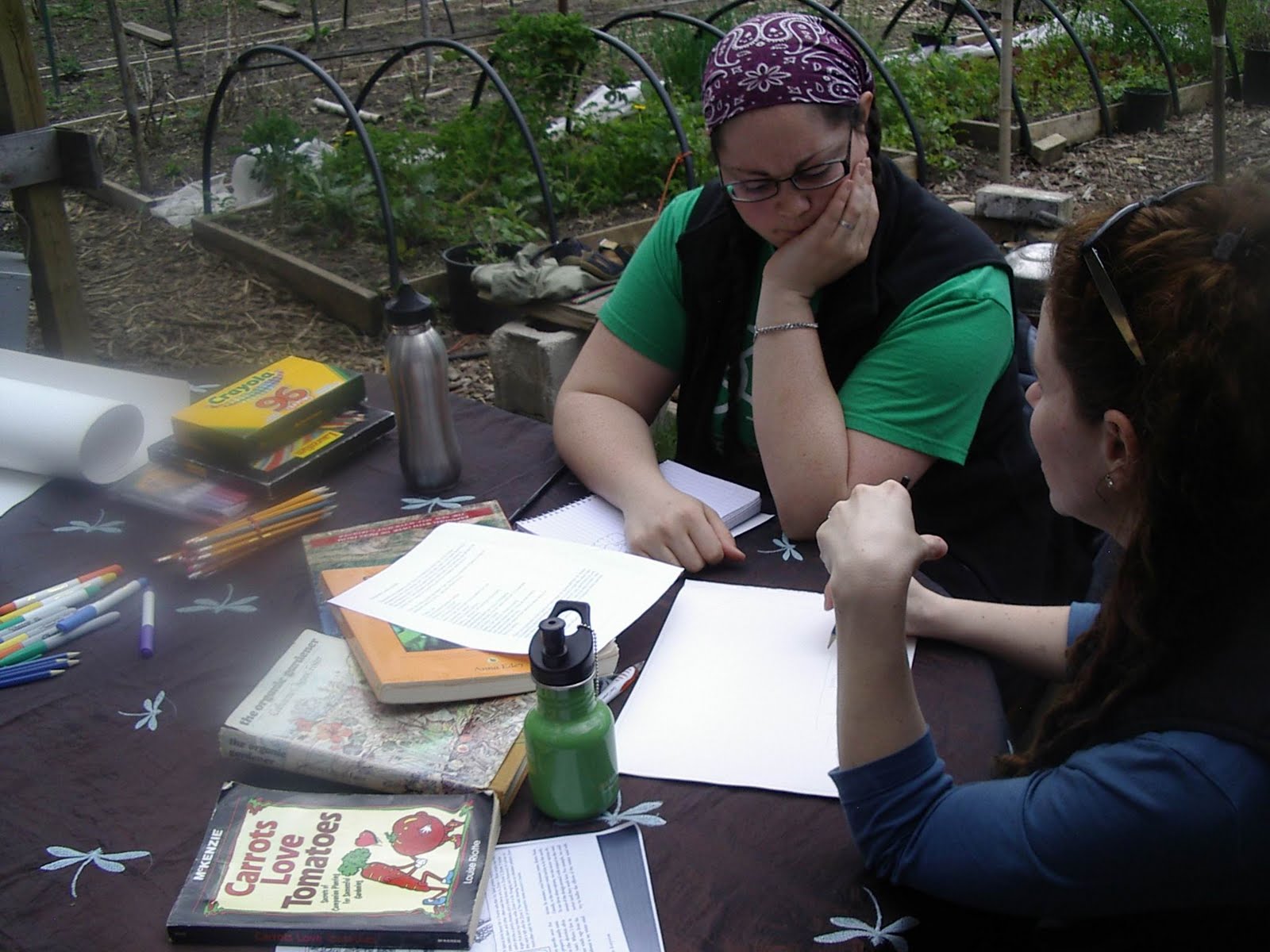
We had our annual Intro to Permaculture Design workshop here on Saturday - as always, I learn new things each time we hold this workshop as our facilitator Tracie is an excellent guide who is always adding new information based on her own learning.  She walked the participants through the basic principles of permaculture, then had each person work on a design challenge by mapping out their yards incorporating permaculture ideas in the design - thinking about zones, sun/shade, drainage, hills and valleysoffering  microclimates, other plants and buildings on site, incorporating chickens, compost, rainwater collection, ponds, etc.  Then participants had the chance to share their sketches and offer suggestions and feedback to each other.  This kind of interactive hands-on workshop is exactly what we like to see here, as there is much to be learned not only from our facilitators but also from the experiences and knowledge we all hold.


Mid May weekend

This has been a full weekend - hosting two workshops, participating in the local Jane's Walk (and baking bread in the cob oven for the tour), chicks to move outside, tending to our sick hen (Maya reading to her), seedlings to transplant, garden seeding, guests in the B&B, and of course celebrating a little for Mothers Day.  Interestingly, Mothers Day in North American actually originated as a pacifist response to the Civil War, with social activist and feminist Julia Ward Howe writing a Mothers Day Proclamation in 1870 calling on mothers to stand together for peace.  Happy Mothers Day, in the truest sense of the celebration.


Friday, May 06, 2011

This Moment

{ This moment } - This moment - an end of week ritual, no words, just a special photo to remember, savour, enjoy.  Inspired by the continued beauty and creativity of Soulemama's blog, where she encourages readers to post their own moments.


Thursday, May 05, 2011

Queen of the Sun - and cancelled beekeeping workshop

We recently found out that the beekeeper who was going to lead our Basic Beekeeping workshop here in July lost all her bees over the winter.  When she opened up the hive in spring they were all dead - and this was completely unexpected.  She thinks it was a disease caused Nozema, which is a form of dysentry for bees.  But it adds to the continued unusual disappearances and deaths of bees in North America, a disturbing reality given how vital bees are to our survival.  They have been called a keystone part of nature, with their key role in pollination of all fruits, vegetables, etc.  So, for now, our beekeeping workshop is cancelled and we hope to connect with another local beekeeper who has an observation hive and the interest in leading an introductory workshop to city folks.

Interestingly, coming at the end of the month and into June at the Princess Cinema (our local independent movie cinema) is Queen of the Sun: What are the Bees Telling Us? a documentary film on the alarming honey bee crisis and colony collapse disorder.  Check out this important film to learn more - here is a list of where it will be screened in the coming weeks and months.

Here is a short article by David Suzuki about the impact of the disappering bees, If the bees disappear we'll all be stung.  He writes that nearly 90% of the world's plants rely on pollinators (bees being the most common pollinators) for fertilization and reproduction.  Something we can all do is to plant and protect bee habitat, as well as encouraging native North American bees as "alternative pollinators" to non native European honeybees (below are pictured native Ontario bees humming through our oregano and goldenrod last summer - often it's the "weeds" or less "attractive" plants that are actually best loved by bees).  Here is a good link for more information on encouraging native bees.

Here are a few general tips for attracting native bee pollinators to your garden:
- no uses of pesticides
- proper nesting places (bees love sun and dry places for nesting)
- there are soil and wood dwelling pollinators - provide unmown undisturbed soil and fallen brush/log piles
- fresh water sources (ponds, bird baths)
- food sources year round (flowering plants that bloom at different stages all through the growing season)

and from Berkeley comes the Urban Bee Garden website - a great resource that includes an extensive bee gardening plant list and a bee garden builder page.


Chicken First Aid

Distressing news - we have one hen, Sadie, who seems to have developed sour crop, aka impacted crop.  Does anyone know any advice? She has not been well the past four days, is not eating or drinking, is sensitive to touch, with a distended crop, and basically just conserving her energy by sleeping or crouching.  She doesn't look good at all, and now that we've quarantined here in a quiet corner of our greenhouse away from the other hens, she just hovers on her straw bed with head tucked under wing or turning her back to us when we try to feed or give her water.

We've been trying to learn more about what to do, and although there are plenty of people we know locally who do keep hens, no one knows exactly what a remedy would be.  From reading about this, we see that sour crop comes from a hen eating something that is unable to pass through the crop (e.g. long greens or long grass, without sufficient grit), therefore sitting in the crop fermenting and obstructing further food intake or digestion.  So, what some suggest is to try to get the hen to vomit out the mass by massaging her crop while holding her upside down.  This worked to some degree, and although we've tried this we have never dealt with this situation before so don't really know what we are doing - and distressing because some people write about the hen dying fairly immediately from sour crop, while others say their hen perked up again after a few days/weeks of resting.  It brings up all sorts of moral issues for us too, should we be keeping hens at all, how to best offer care, when to end suffering, how do you know?

The second part of the remedy includes giving baking soda water (to provide an antacid), also 1 drop of rescue remedy in water; then followed by molasses water or home-made electrolyte solution (fruit juice, etc), or organic vegetable broth water to provide some nutrition and energy.  Then there were suggestions like live culture yogurt (to bring healthy flora back into the digestive tract), and the following all purpose recipe for sick hens in recovery (I can't remember where I found it).  Of course, as preventative measures always providing fresh clean bedding, fresh clean drinking water, and enough grit with the food (crushed oyster shells), and the occasional garlic in their feed/water, is important for maintaining chicken health in general.


Hen Recovery Diet
1 cooked egg yolk, crumbled
1 tsp honey
2 Tbsp yogurt
2-4 Tbsp rolled oats
a few grains multivitamin powder
2 Tbsp grated apple
a few drops echinacea, bee propolis or goldenseal

There is a lot to learn about caring for animals, and if possible it's good to have some resources ready and basic first aid knowledge ahead of time so you are prepared as best you can be.   We found this article helpful, written by a hen keeper from Salt Spring Island; and we are also grateful to the network of urban chicken keepers including members of the Waterloo Hen Association (and a few of our farm friends) who we are able to call on for advice.


A taste of spring - salad greens, edible flowers and rhubarb

The incessant April rains seem to have eased off a little, now that we have moved into May.  We've been watching everything green up with this warm weather, and have been enjoying first harvest of garden goodies.  A rabbit has been visiting our garden, and we just discovered it's been overnighting in our grow tunnel which provided a wonderfully cozy home under the raised plastic sheeting surrounded by rows and rows of young fresh lettuce to nibble.  We've taken off the plastic as the grow tunnel was overheating with the sunny days, and hopefully now the rabbit will move on.  Upon taking off the plastic I noticed the one end of the bed was at it's prime (we've been trying to eat up the salad greens in the greenhouse to make room for trays of tomato seedlings in there, so we haven't been checking the grow tunnel as much lately) - cilantro to full height, full heads of lettuce ready to harvest, swiss chard and red kale perfect for steaming, and chives ready to burst out any day into purple flower.  Today my young daughter and I sat in the garden path and had a feast of fresh salad "burritos", with chives, cilantro and parsley which she loved rolling into several layers of colourful greens.  Mmmmm.

Also some baking, to make room in the freezer and use up the last of our pumpkin from last season.   These moist and delicious gluten-free pumpkin cupcakes (see recipe below) for the various friends we have who are eating gluten-free these days, garnished with fresh violets picked by my little helper!... and since that same visiting rabbit, or maybe some squirrels, had neatly chopped off several stalks of rhubarb that were just starting to shoot up and left they laying in the path, I decided to make the first rhubarb pie of the season - topped off with a gorgeous dollop of Mapleton's organic ginger icecream (our best 100-mile source for icecream if you like dairy).  Happy spring eating!

Gluten Free Pumpkin Cupcakes
1 1/2 cups gluten free flour (I used 1 cup brown rice flour + 1/2 cup sweet sorghum flour)
1 tsp baking powder
2 cups pumpkin, pureed
1/3 cup oil
2 eggs
3 tsp spices (cinnamon, nutmeg, cloves, cardamom)
1 1/4 cups brown sugar
1/2 tsp baking soda
pinch of sea salt
1 tsp xanthum gum (optional)

Mix all ingredients until just combined.  It will be a thick mixtures.  Scoop into lined muffin pans (makes 18).  Bake at 350F for aprox. 30 min.  I served them with cream cheese icing (cream cheese sweetened with maple syrup and a hint of lemon juice).


Urban by nature - starting a local "forest kindergarten" (aka. nature play group)

Urban by nature - a recent documentary aired on CBC radio's The Current talked about how the exposure to nature affects our cognitive, physiological and psychological processes.  Spending time in a forest is optimum, but even walking time in a park or having a tree to view outside your window, can do wonders for brain development and general health and well-being.   The second part to this study shows that living in urban areas devoid of green spaces actually undermines our mental processes, health and so forth.

We've written on this blog before about the book Last Child in the Woods, by Richard Louv.  This book discusses how the current generation of children are growing up with fewer opportunities to interact with nature, be it in their own back yards, parks, camping, hiking, or other wild spaces.  One movement that is springing up to counteract this trend is the Forest Kindergarten.    The idea is to use nature are your "classroom", having young children explore and learn outdoors with as much exposure to wild spaces, imaginative play, and understanding of our place within nature.  There are various groups that have started around the globe (often aligned with Waldorf-inspired education), many in Europe but also at least one that we've come across here in Canada - near Ottawa the first Canadian forest preschool was launched in 2008 on a 190 acre property in the Ottawa Valley.  Read more about the exciting Carp Ridge Forest Preschool here.

Locally we've just begun our own group, not as formal or organized as a daily forest kindergarten, but meeting once a week with our youngsters to adventure/explore/play in nature together.  At this point we are exploring local green spaces, hiking trails and parks (as we would prefer not to drive to have to get out to our "nature walk"!), as well as gathering items on our rambles to build into fairy houses (like the one pictured below), nature crafting, etc.


Monday, May 02, 2011

Dandelion season! Dandelion fritters and more...

It's dandelion season!  For those who don't already love these wonderful wild "weeds", you must know that there are a multitude of benefits and uses of dandelions.  The leaves, flowers and roots are all edible, tasty and healthful - the greens make a great salad or steamed dish, flowers can be battered and made into fritters or added fresh as garnish for salads or made into a healing tea that aids headaches, menstrual cramps and more, flowers can also be brewed into dandelion wine or processed into dandelion icecream!, and the roots can be stir-fried or dried and ground into a powder to use for a nourishing hot beverage.  Best of all, they are abundant and easily wild-harvested in almost any neighbourhood.  Kids will love helping to pick the bright yellow flowers.  They are a superb early spring wild food to be gathered, alongside nettles and burdock root.  As with all wild-harvesting, be sure you are picking in an unsprayed area and don't overharvest (although with dandelions you probably don't need to worry as much as they self-propogate so freely), and remember to spread health through your neighbourhood by blowing those white dandelion seeds into the wind!

Here is a simple recipe for dandelion blossom fritters:
1 egg
1 cup milk or milk substitute
1 cup flour
50 large dandelion blossoms, freshly picked

Mix the batter (egg, milk and flour).  Heat frying pan with small amount of oil.  Dip each dandelion blossom one by one into the batter, and fry briefly until crispy.  Eat warm as is, or dip into maple syrup for a special sweet treat.  Enjoy!

Sunday, May 01, 2011

Ode to washer people of yesterday - laundry day on the homestead

Well, our washing machine, which we purchased through our local barter network several years ago (for 100% barter dollars!) has finally given up.  It's proving to be too expensive to fix, and we can't have water flooding our floor each time we run the machine.  So, while we are considering what best energy efficient models we might want to invest in, we thought we'd try out an old vintage wringer washer a friend dropped off here last year.  It was packed away in our barn for storage, and now was the perfect time to test run it.  It turns out that using the wringer washer is really not much more work than our old machine (especially since I've been mopping up a wet floor after each load lately).  We already hang dry our laundry outside, so this outdoor machine, now perched on our back porch, brings us that much closer to the laundry line.  It takes some patience to fill (we attached a garden hose to our indoor laundry sink to get hot water from the tap), and we drained it directly into our greywater tank in the garden.  Perfect!  It made for a good half an hour of fun that our whole family got involved in, especially our smallest helper who loved turning the crank to wring out the wet clothes.  Granted, on a rainy day or cold winter morning this outdoor system might not look so good, but for summer laundry purposes this might just work for us.  I tried to find out any history about this machine - it's made in Ottawa under the Nuway brand, and came from a cottage where it had been used decades ago during summer vacations.

Just to compare, I looked at the Home Queen Wringer Washer, online at Lehman's (an amazing store for all your non-electric needs!), which retails for nearly $1000 (!) - ok, it has a stainless steel tub, holds 14 lbs of clothes, and is a lot sleeker and sturdier looking than our old green one, but the point is that people are definitely still buying these machines, and they look like they are built to last.  There are so few components, and the ones that do make up this machine could be fixed by us at home.  We are inspired about working toward a more human-powered non-electric home, and found this book to be useful.  There are also lots of interesting stories about pedal-powered laundry models out there on the internet, as another option...did we mention that all these human-powered models offer great exercise?  In future, as fuel-energy becomes more scarce, this may be the way to go...


Workshops - Garden Potions

Over the winter, gardeners plan their upcoming gardens, buy new seeds to try out, start old favourites from saved seeds, and in general take time to consider what could be improved from last year's garden experiences.   As the serious outdoor garden season is only about a month away, we decided to offer a workshop here related to homemade garden remedies that can be used to prevent pests, diseases and weeds.

When thinking about the health of the garden and plants growing there, turning to sprays (organic or not)  should not be the gardener's first option - gardeners should start by considering what the disease, weed or pest is telling you about the conditions of your garden, and then:
a) strengthening the plants
b) feeding the soil (with compost, compost tea)
c) encouraging beneficial insects and birds
d) adding companion plants that deter pests
e) rotating crops to help avoid diseases or pests that overwinter in the soil
f) diversifying the garden plants, rather than planting monocultures

However, in some cases, when an immediate problem needs attention, organic sprays can be a useful thing.  We had Sarah, from Sarah's Kitchen Gardens, here to lead the session and she walked participants through the making of several home-brewed "garden potions", all made from simple organic, natural and biodegradeable kitchen ingredients.  Keep in mind, these sprays do not contain alcohol or other preservatives so will not keep for more than about a week, so should be made at the time you plan to use them.  They should be sprayed in early morning or late in the day, not during the heat of high sun or the plant leaves can be scorched.  Also, some organic pest controls will kill all insects, including the beneficial ones, so they should be used with caution on a plant by plant basis, and only when absolutely necessary.  Here are three of the recipes:

Lemon Aphid Spray
Boil 2 cups water, add finely grated rind of one lemon.
Steep overnight, then strain through fine filter.
Spray directly on aphids to be effective.

Anti-Fungal Chamomile Spray
Steep 2 tsp dried chamomile flowers in 1 cup boiling water.
When cool, strain through tea strainer, and pour into spray bottle.
Works well to prevent damp-off of little seedlings (spray soil and seedlings).

Spicy Spray
Chop 1 large onion, 2 cloves garlic, add 1 tsp cayenne pepper powder, and blend in food processor.
Add 1/2 tsp black pepper and 1 cup vinegar.
Strain, Put into spray bottle.
This spray kills insects on contact - be sure to identify your insect before spraying.


This Moment

{ This moment } - This moment - an end of week ritual, no words, just a special photo to remember, savour, enjoy.  Inspired by the continued beauty and creativity of Soulemama's blog, where she encourages readers to post their own moments.


Annoucing - Annual Seedling Sale at Little City Farm, Sat May 21!!


9th Annual SEEDLING SALE!   HEIRLOOM TOMATOES & MUCH MORE!!
Sat, May 21 from 9 am -12 noon

at Little City Farm, 508 Duke Street West, Kitchener (near Duke St & Waterloo St)
Our 9th annual Seedling Sale is coming up in a few short weeks!  We've been busy transplanting literally thousands of seedlings, and the greenhouse is now filling up quickly.  If you are local, don't miss this exciting sale day - we hope to be your source for quality heirloom tomatoes, and sustainably grown seedlings including huge variety of tomatoes, and peppers, eggplant, kale, basil varieties, other herbs, perennials, annual flowers and more!   The sale features 4 vendors, including Fertile Ground CSA, Sarah's Kitchen Gardens, Tracie Seedhouse, and Little City Farm.  Payment by cash only.  Please bring your own box/tray to take seedlings home.

The sale also includes:
- baked goods table featuring delicious pies, wholegrain breads and other treats made with organic ingredients, and we plan to have a small cafe area set up with a few tables and chairs to linger in after you browse for seedlings. 
- a willow furniture making demonstration, used books, permaculture information, informal tours of Little City Farm and more...
- great way to meet your neighbours and others who are interested in urban farming, organic gardening, heirloom seeds, community building, etc

Wednesday, April 27, 2011

Urban permaculture

I've been doing more reading on urban permaculture, and getting wholly inspired by what is possible in cities and urban areas.  Urban permaculture design and initiatives are the next step beyond what is already taking place in the vastly expanding urban agriculture movement - permaculture addresses not just food production, but also sustainability, community, interconnection, activism, communication, education, natural building, equality, diversity, peace-building, and much more.  It ties is well with the Transition Town movement and all it's goals.  A wonderful quote by Bill Mollison, co-founder of the permaculture sums this up by saying "we are only truly secure when we can look out our kitchen window and see our food growing and our friends working nearby".

Here are some great urban permaculture links to find out more:
Urban Permaculture Guild
http://www.urbanpermaculture.com.au/
Urban Permaculture Trio (video) - forest gardening, edible landscaping, urban permaculture
2011 Urban Permaculture Design Course - Vancouver
How to make permaculture seed balls
Make permaculture seed balls - Masanobu Fukouka

Healthy greens yield healthy eggs

So many fresh eggs...we've been feeding the hens fresh greens from the cold frame and green house (arugula going to seed, dandelion that's gotten away on us and is too bitter, outer lettuce leaves) which helps to produce bright yellow healthy yolks in their eggs.  In a few weeks it will be fresh nettles, then all the dandelion we can harvest (even the neighbours bring us bags of their dandelion "weeds"), then comfrey, then in summer the left over wilted greens and compost bits at the end of Saturday market day from our friends at Fertile Ground CSA...our hens are well supplied.  (A rainy day made for foggy photographs here).


Spring wild edibles - violet jelly

A simple kitchen project yesterday was to make violet jelly.  My little one and I spent about half an hour picking the freshest wild violets to get the 2 cups worth for this recipe.  They are blooming everywhere right now.  First a tea is steeped, then lemon juice is added (creating the most gorgeous vibrant purple colour), and finally jelly is made following regular jelly instructions (adding sweetener and pectin) resulting in a bright pink jelly - a lovely unique jelly we'll give away as gifts or enjoy in the winter months.  As this was a small recipe (only about 6 cups of jelly), we followed the ideas in Small Batch Preserving, and canned the jelly using a regular large stock pot rather than canning pot, and the whole procedure took less than one hour.

Ingredients
2 cups violet petals freshly picked
3 1/2 cups boiling water
1/4 cup lemon juice
4 cups sugar (or follow low-sugar recipes using Pumona's pectin)
1 pkg (57 g) pectin

1) Steep violets covered with boiling water for upto 24 hours. 
2) Strain and add lemon juice. 
3) Prepare canner, jars and lids as required by regular canning procedure.
4) In large saucepan (stainless steel) heat violet infusion, add pectin stirring until dissolved.
5) Over high heat bring to a rolling boil. Add sugar, stir constantly and boil for 1 minute at rolling boil.
6) Skim off any foam, pour into sterilized hot jars, and process in canner for 10 minutes.
Makes 6 cups (6 x 250 ml).


Monday, April 25, 2011

Fur and Feathers Fancier Fair, Sat May 1

A friend tipped us off to this unique event happening in nearby Mount Forest next Sunday (May 1, from 7 am until noon).  It's the annual Fur and Feathers Fancier Fair, held in the spring and fall each year.  This is the place for all you backyard homesteaders and farmers to find heritage and exotic birds (chickens, ducks, geese, etc) and animals (sheep, goats, etc).  It's a swap, buy or sell event.  We hope to make it there, just for a great country drive and chance to see a huge variety of interesting beasts!

Sunday, April 24, 2011

The cob oven

And a few moments of leisure, including "fishing" in the pond, snuggling in the hammock, and baking pizza in the outdoor cob oven (even though our cob oven is designed to be primarily a bread oven, we do make loads of pizza).  The cob oven is based on typical adobe-like construction, made by hand of local natural materials: clay, sand and straw.  It is a simple, affordable project that can be done in a number of weekends.  The dome, with the height of door being aprox. 63% of the height of the dome, allows for proper air flow as there is no chimney.  Kiko Denzer's book Build your own earth oven; or Becky Bee's The cob builder's handbook, are great resources for anyone interested in getting into cob.  I am inspired by the Mud Girls Natural Building Collective (based in BC), whose website shows beautiful examples of walls, ovens, outhouses, and even entire homes made of cob.  At Little City Farm we will be holding a cob workshop ( in June, so check it out if you are local and have interest.