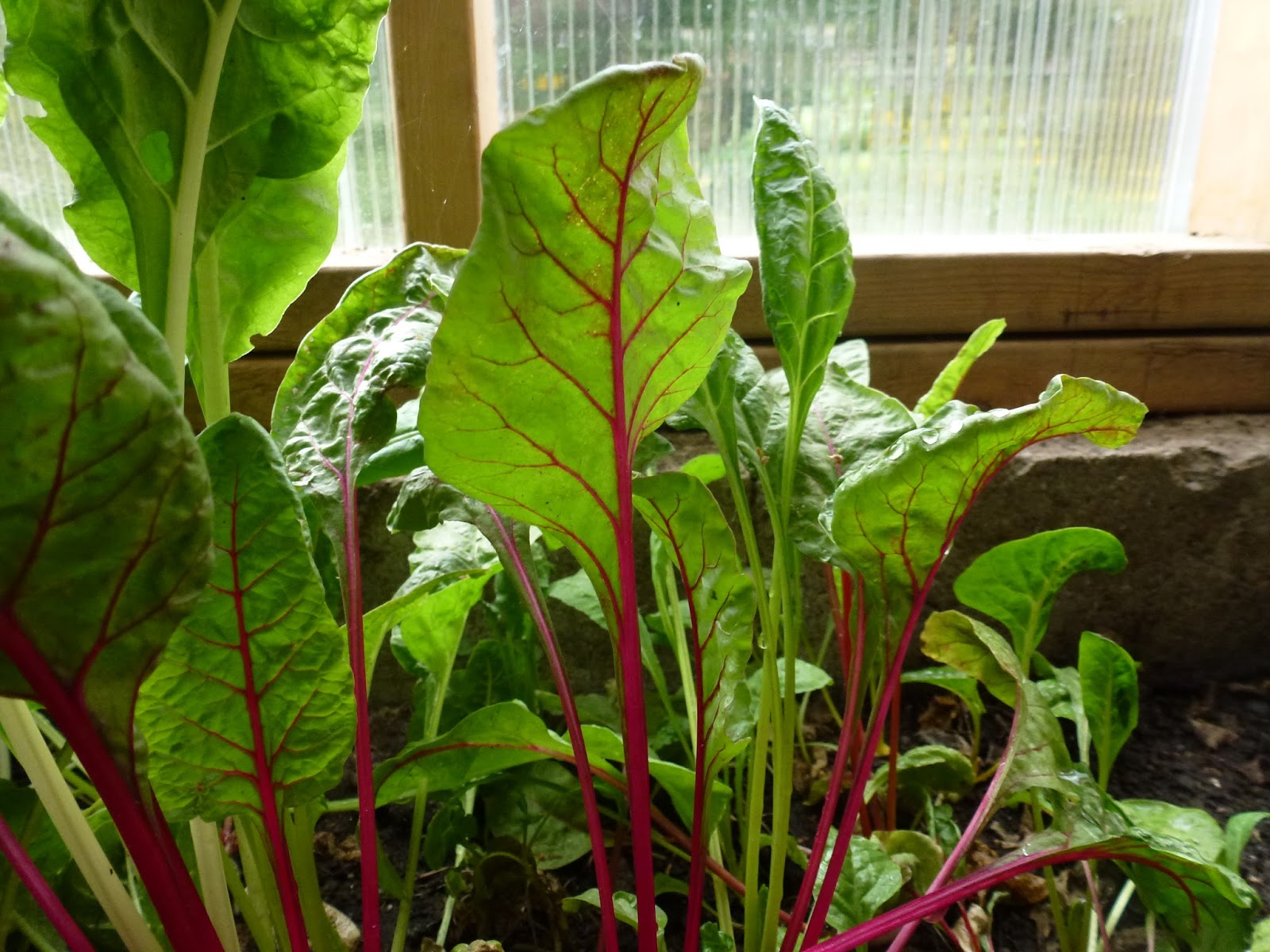
These warm sunny days bring our passive solar greenhouse temperatures up over 30C, and it's such a joy to go in there and feel the heat. The microgreens and baby greens are thriving - we have our raised growing bed that runs along the south-facing greenhouse windows filled with sprouts of lettuces, chard, kale, mizuna, arugula. The counter is full of small seedlings growing quickly, soon ready for transplanting. The grow rack is full of trays of luscious pea shoots and buckwheat sprouts (grown with seeds from our favourite Canadian sprouting seed source Mumms), everything growing full force and a pleasure to eat in mid-February.
Showing posts with label winter greens. Show all posts
Thursday, March 02, 2017
Monday, October 24, 2016
Sprouting basics for fall & winter health!
Thanks to everyone who dropped by our Little City Farm booth at the Kitchener Public Library's 2nd annual DIY Festival. We were there to share basic homesteading skills, and we decided to talk about how to grow sprouts at home. Here are a few basic tips and suggestions for successful sprouting, perfect to get started now that the weather is turning colder and we are no longer eating fresh greens (other than kale and chard) from our local gardens!
The Basic Steps of Sprouting
- Rinsing – water is key – use lots, rinse 2-3 times per day, keep sprouts in cool location.
- Draining – it is essential that sprouts are well-drained after rinsing!
- Air Circulation – keep sprouts in well-vented area with good air circulation, not in a closed cabinet.
- Cleanliness – start with clean seed, sterilized containers, and wash well between uses.
- Storage – store completed sprouts in fridge – some sprouts can keep up to 6 weeks if stored properly.
Hints and suggestions for sprout success
- Alfalfa and other small seeds can be grown up to 4 cm long. A 25 g bag of alfalfa seed can grow 45 cups of sprouts!
- Lentils & peas are best small, with sprouts up to 1 cm long. They get tougher with more growth.
- Miss a rinsing? Just continue normally if sprouts seem alive and show no signs of mold. They should be fine.
- Mold – if you see a spot of mold, remove it with a good margin of healthy sprouts. Don’t mistake the fuzzy white root hairs of radish, canola, mustards, and other crucifers for mold.
- Taste – be sure to taste sprouts as you go along; use them when you like them.
- Greening – to green up sprouts (chlorophyll), leave them without a cover for a few hours in bright light (not direct sunlight).
- Temperature – sprouts grow best between 18C-25C (65F-75F). Use lukewarm water for soaking and rinsing in a cooler temperature, and cold water in a warmer room temperature.
- Drainage – drain the sprouts well before they go in the fridge. Rinse in the morning, cover, and refrigerate in the afternoon.
- Mung beans – grow best in a drainable tray or basket. They like extra rinsing, and are best grown in complete darkness to prevent bitterness.
Benefits
of Growing Sprouts at Home
the
fastest, easiest, most affordable way
to
grow your own food!
- very affordable food source
- accessible food source (grow right in your kitchen)
- allows you to eat extremely local all year round
- sprouts are nutrient-dense food, high in vitamins and minerals
- enjoy unique flavours & textures
- sprouted food is easier on the digestive system
- sprouts are living foods full of health and vitality for us
- sprouting makes nutrients more available to our bodies
- easy to grow (takes only a few minutes per day)
- sprout growing takes up little space (a kitchen counter or top of fridge)
- organic and non-GMO food source
- gardening satisfaction for you (even in winter)
| Microgreens (e.g. arugula, brassicas, chard, radish) | Micro-herbs (e.g. basil, dill, cilantro, chives) | |
| Leafy greens & shoots (e.g. peas, sunflower, buckwheat, wheatgrass) | True sprouts (e.g. alfalfa, red clover, radish, mustards, brassicas) |
| Legumes & pulses (e.g. peas, chickpeas, lentils, mung, adzuki) | Grains (e.g. rye, wheat berries, spelt) |
| Nuts & seeds (e.g. sunflower, almond, sesame) | and more! |
Simple
Mason Jar Sprout Method
-
Soak seeds in cool filtered water. Use aprox. 2 Tbsp seeds per 500 ml jar.
-
Cover with mesh lid and let soaking seeds sit at room temperature for 4-12 hours (depending onsize of seeds).
-
Drain & rinse in the jar until water runs clear.
-
Prop jar on angle to drain completely.
-
Repeat 2 times per day. Sprouts are ready to eat in about4-8 days, depending on size of seed. Store in fridge for about one week (drain completely before storing).
Information, seeds & sprouting equipment
Mumms
Sprouting Seeds (Saskatchewan) – www.sprouting.com
Sproutman
Publications – www.sproutman.com
Toronto Sprouts
– www.torontosprouts.com
International Sprout Growers Association – www.isga-sprouts.org
The Sprout People – www.sproutpeople.com
Ann Wigmore Institute – www.annwigmore.org
Sprout
Master (Ontario) – www.sproutmaster.com
Saturday, October 03, 2015
Planting the winter garden!
We are a little late this year with our winter garden - the season just got away on us. But yesterday we planted up the cold frame grow tunnel with winter hardy greens, and several days earlier the greenhouse bed was filled with new seeds as well. We hope to have a good harvest of fresh greens from the greenhouse all winter long, and the grow tunnel will give us a head start in late winter with new greens coming up ahead of the rest of the garden.
We are always trying to experiment with stretching the growing season. In our climate, we need to use hardy greens and vegetables for winter growing but it is definitely possible - not to mention the huge variety that we can provide. Eliot Coleman suggests over 30 varieties to grow in the winter, as well as innovative planting methods, scheduling ideas and garden designs for winter, in his inspiring book The Winter Harvest Handbook. There are the usual suspects - kale, chard, spinach, arugula - but then also many other interesting options such as mache, claytonia, cress, tat soi, mizuna, scallions, garlic greens, turnip greens, beet greens, hardy winter lettuces...
Yesterday we started with 3 kinds of spinach including a "winter spinach", wild arugula, mizuna, tat soi, 3 kinds of kale (red, green curly, and lacinato), hardy winter lettuces, beets and turnips for their leafy greens, mustard greens, mesclun mix. The grow tunnel still has baby chard, kale, spinach, mustard, chives, oregano, red and green lettuces, and arugula already growing, so that is a nice head start. We'll be keeping regular updates here on the status of the winter greenhouse and winter garden so please continue to read (and grow) this winter with us.
We are always trying to experiment with stretching the growing season. In our climate, we need to use hardy greens and vegetables for winter growing but it is definitely possible - not to mention the huge variety that we can provide. Eliot Coleman suggests over 30 varieties to grow in the winter, as well as innovative planting methods, scheduling ideas and garden designs for winter, in his inspiring book The Winter Harvest Handbook. There are the usual suspects - kale, chard, spinach, arugula - but then also many other interesting options such as mache, claytonia, cress, tat soi, mizuna, scallions, garlic greens, turnip greens, beet greens, hardy winter lettuces...
Yesterday we started with 3 kinds of spinach including a "winter spinach", wild arugula, mizuna, tat soi, 3 kinds of kale (red, green curly, and lacinato), hardy winter lettuces, beets and turnips for their leafy greens, mustard greens, mesclun mix. The grow tunnel still has baby chard, kale, spinach, mustard, chives, oregano, red and green lettuces, and arugula already growing, so that is a nice head start. We'll be keeping regular updates here on the status of the winter greenhouse and winter garden so please continue to read (and grow) this winter with us.
Sunday, November 09, 2014
First snow today - beautiful and fleeting
Thankfully this morning's beautiful dusting of snow has already melted. We still have so much to do around here! The barn/greenhouse reno needs to be closed up - the roof is on, the greenhouse glass is being put on today, one door is framed, a few others need to come...
But the yard and garden were beautiful none the less, and quite thrilling to our daughter, and maybe even the chickens who were not quite sure what to make of it. Some of the herbs (like the mints, chives, parsley, dill, sage, thyme and savory) are still looking just fine for harvesting, and our cold frame still holds kale, chard, spinach, and fresh cilantro, and we have planted to covered grow beds with meslun and other greens for late winter eating. I also found a few handfuls of the sweetest wild grapes still left clinging to the vines on the back porch. However, it does feel like we are coming to the ending of this season.
Tuesday, November 04, 2014
Greenhouse & Barn Reno
Fall is always busy, but this fall we are especially caught up in the project of completing the renovations to our barn/greenhouse. This old "barn" as we love to call it was really a drive shed for the earliest owners of this property (lots of interesting old newspapers were found stuffed in the walls as insulation). They would have kept a cart, possibly even a horse (!) and definitely chickens in here at one point.
We had already attached a passive solar greenhouse to the barn about 12 years ago when we were first getting settled on this property. However, it was time to reorganize the space, expand the growing area, and fix up the building so it was weather and rodent proof. It's been a huge, and exciting venture, much bigger than we thought when we started since trying to work with salvaging/reusing existing materials and keeping intact the structure of an old building can be tricky. We hope to have this building set up by mid winter, for growing winter greens (lettuces, Asian greens, braising greens, chard, kale, spinach) through the cold months - inspired by ideas from Eliot Coleman's Winter Harvest Handbook, among other books. There will be space for spring seedlings, herbs, sprouting (peashoots, buckwheat, wheatgrass), and using it as a teaching space. Let's hope the cold weather holds off just a little bit longer. Note this is a work in progress, and window, doors, roof, wood siding and a porch are still coming ...
Tuesday, February 25, 2014
Oh to grow! (seedlings, sprouts...)
There are days lately when February seems unending and spring still seems so far off. It's been a cold long winter, with more snow that we've can remember in a very long time, and a conversation today with a seasoned local organic farmer confirmed for me that it looks like it's going to be a cold March and late arrival of spring. A cure for the winter blues? Putting your hands into warm, rich earthy-smelling soil on a chilly February morning...so that's what we have been doing.
All winter long we grow trays of sprouts - mostly pea shoots, sunflower greens and buckwheat greens - which keeps us active in the soil every few days if we get our rhythm right. The sprouts take about 10 days in a cool house in winter season to grow from seed to edible sprout size. Every few days a new jar of seeds is soaked overnight, for planting the next day so that we have ongoing greens ready to harvest.
In the coming weeks it will be time to start the seedlings for this year's garden - tomatoes, basil, eggplants, kales, and more! Our arrivals of seed packages into the house has brought a steady sense of joy and anticipation. Some wishes for this year's garden include trying new varieties of spicy lettuces, new (and old favourite) heirloom tomatoes, purple peas, loads of beans and more beans, and more Asian greens, and rainbow carrots...
Our favourite seed suppliers that offer heirloom and organic non-GMO seeds include Cottage Gardener; Hope Seeds; Hawthorne Seeds; High Mowing; Urban Harvest; and Greta's Organic Seeds. And we've been buying our sprouting seeds (for eating and juicing sprouts) for many many years from Mumm's in Saskatchewan!
Check out our Planting Guide here for details on when to start your own seedlings at home. If you don't get a chance to plant everything you need, or are looking for unique and heirloom seedlings, come on out to our Annual Seedling Sale on Saturday May 24 morning!
All winter long we grow trays of sprouts - mostly pea shoots, sunflower greens and buckwheat greens - which keeps us active in the soil every few days if we get our rhythm right. The sprouts take about 10 days in a cool house in winter season to grow from seed to edible sprout size. Every few days a new jar of seeds is soaked overnight, for planting the next day so that we have ongoing greens ready to harvest.
In the coming weeks it will be time to start the seedlings for this year's garden - tomatoes, basil, eggplants, kales, and more! Our arrivals of seed packages into the house has brought a steady sense of joy and anticipation. Some wishes for this year's garden include trying new varieties of spicy lettuces, new (and old favourite) heirloom tomatoes, purple peas, loads of beans and more beans, and more Asian greens, and rainbow carrots...
Our favourite seed suppliers that offer heirloom and organic non-GMO seeds include Cottage Gardener; Hope Seeds; Hawthorne Seeds; High Mowing; Urban Harvest; and Greta's Organic Seeds. And we've been buying our sprouting seeds (for eating and juicing sprouts) for many many years from Mumm's in Saskatchewan!
Check out our Planting Guide here for details on when to start your own seedlings at home. If you don't get a chance to plant everything you need, or are looking for unique and heirloom seedlings, come on out to our Annual Seedling Sale on Saturday May 24 morning!
Thursday, February 28, 2013
Winter sprout kitchen
It still feels like winter with all the extra snowfall lately. Although we are starting our seedlings, it's still a long way from getting regular fresh greens from the garden. By growing sprouts in our indoor "kitchen garden" we have a great way to eat fresh local nutrition-packed greens during the cold winter months.
How to sprout? It's easy! We prefer the old fashioned methods of either using soil in trays (for pea shoots, wheatgrass, buckwheat or sunflower greens); or glass mason jars with mesh screens (for the small sprouts like microgreens, and small legumes). Other sprouting methods can be using special sprout bags, sprouting tray systems, or hydroponic systems. We like to keep things simple, efficient and cheap which is why we use containers we have around the house.
Remember, sprout seeds need to be pre-soaked in cool water so they germinate. Smaller seeds require less soaking time. If you stay on a regular soaking/sprouting schedule you will have a continuous supply of delicious greens. Our favourite place to buy organic sprout seeds is Mumm's, a Canadian company offering certified organic non-GMO seeds and sprouting supplies. Here's how we sprout:
Tray Sprouting Method
(for cutting greens such as peas, wheatgrass, buckwheat, sunflower and lettuce mixes):
1. Soak sprout seeds in cool water for 24 hours.
2. Fill a garden seedling tray half way full with moist organic potting soil.
3. Spread one layer of the soaked, drained sprout seeds evenly across the soil.
4. Cover sprout seeds with another layer of moist soil, just to cover.
5. Place clear plastic tray lid on top and set tray on top of refrigerator (where it's warm), or on a kitchen counter, or a grow rack if you have one.
6. Water with mister every day, keeping soil moist. Sprouts will start to grow in 3-4 days, and be ready to harvest within about 7-10 days. Some greens can be cut and grow again (e.g. pea shoots) and others are a one-time harvest only.
7. Eat fresh in salads, sandwiches, or juice the sprouts.
Mason Jar Sprouting Method
(for microgreens such as broccoli, mustard, alfalfa, also lentils, mung, adzuki, chickpea, radish, etc)
You will need:
- wide mouth large glass mason jar
- piece of fine mesh screening or cheesecloth
- rubber elastic band
- sprout seeds
1. Soak sprout seeds in water (2-24 hours, depending on size of seed - usually they tiny seeds like broccoli only need 2 hours, but larger seeds and beans need upto 24 hours soaking time).
2. Drain seeds well. Add about 1 Tbsp seeds to 1 large mason jar. Close tightly with mesh screen.
3. Tip jar upside down into a small bowl at an angle so the water drains completely.
4. Continue to rinse and drain your sprouts twice a day, using cool clean water.
5. After about 4-7 days your sprouts will be ready to eat. Taste them throughout the sprouting period to see when they are ready. Store sprouts (completely drained) in refrigerator for several days once they are fully sprouted.
Eat on your favourite wholegrain seed crackers (see our recipe here), in salads, sprinkled on soups or stir-fry, sandwiches, etc.
How to sprout? It's easy! We prefer the old fashioned methods of either using soil in trays (for pea shoots, wheatgrass, buckwheat or sunflower greens); or glass mason jars with mesh screens (for the small sprouts like microgreens, and small legumes). Other sprouting methods can be using special sprout bags, sprouting tray systems, or hydroponic systems. We like to keep things simple, efficient and cheap which is why we use containers we have around the house.
Remember, sprout seeds need to be pre-soaked in cool water so they germinate. Smaller seeds require less soaking time. If you stay on a regular soaking/sprouting schedule you will have a continuous supply of delicious greens. Our favourite place to buy organic sprout seeds is Mumm's, a Canadian company offering certified organic non-GMO seeds and sprouting supplies. Here's how we sprout:
Tray Sprouting Method
(for cutting greens such as peas, wheatgrass, buckwheat, sunflower and lettuce mixes):
1. Soak sprout seeds in cool water for 24 hours.
2. Fill a garden seedling tray half way full with moist organic potting soil.
3. Spread one layer of the soaked, drained sprout seeds evenly across the soil.
4. Cover sprout seeds with another layer of moist soil, just to cover.
5. Place clear plastic tray lid on top and set tray on top of refrigerator (where it's warm), or on a kitchen counter, or a grow rack if you have one.
6. Water with mister every day, keeping soil moist. Sprouts will start to grow in 3-4 days, and be ready to harvest within about 7-10 days. Some greens can be cut and grow again (e.g. pea shoots) and others are a one-time harvest only.
7. Eat fresh in salads, sandwiches, or juice the sprouts.
Mason Jar Sprouting Method
(for microgreens such as broccoli, mustard, alfalfa, also lentils, mung, adzuki, chickpea, radish, etc)
You will need:
- wide mouth large glass mason jar
- piece of fine mesh screening or cheesecloth
- rubber elastic band
- sprout seeds
1. Soak sprout seeds in water (2-24 hours, depending on size of seed - usually they tiny seeds like broccoli only need 2 hours, but larger seeds and beans need upto 24 hours soaking time).
2. Drain seeds well. Add about 1 Tbsp seeds to 1 large mason jar. Close tightly with mesh screen.
3. Tip jar upside down into a small bowl at an angle so the water drains completely.
4. Continue to rinse and drain your sprouts twice a day, using cool clean water.
5. After about 4-7 days your sprouts will be ready to eat. Taste them throughout the sprouting period to see when they are ready. Store sprouts (completely drained) in refrigerator for several days once they are fully sprouted.
Eat on your favourite wholegrain seed crackers (see our recipe here), in salads, sprinkled on soups or stir-fry, sandwiches, etc.
Subscribe to:
Comments (Atom)