Pages

Showing posts with label wood-fired. Show all posts

Monday, September 02, 2013

Harvest foods

Now that our Symposium is over and the calendar page has turned to September, it's time to work on finishing our garden harvest, canning & preserving, drying, fermenting & pickling for the winter months.  The greenhouse shelves are stacked with drying racks layered with herbs; our kitchen counters are lined with jars of beans and cucumbers that are being lacto-fermented; our counters are covered in bowls and containers brimming with tomatoes, basil, eggplant and beans to be preserved into sauce, pesto and ratatouille.

And our meals these days are simple, but fresh and glorious with the abundant garden harvest - kale, chard, beans, various pestos, tomatoes tomatoes tomatoes every day!  Using these veggies on different kinds of pizzas has been a fun way to experiment lately.  We were recently at a wedding in Muskoka where pizza was served by All Fired Up, a portable wood-fired pizza catering business.  We loved their pear-pesto-arugula-goat cheese pizza, and made our own version of it last night using all these ingredients sourced from our yard (we even have our own pears this year!).  Yumm!

Fresh Pear-Pesto-Arugula Goat Cheese Pizza
Ingredients:

Fresh pears, 2 sliced thinly
Freshly made Pesto (our version uses fresh basil, sunflower seeds, olive oil, garlic, nutritional yeast, lemon juice, sea salt)
Fresh arugula, about 20 leaves (we used Surrey Greens, a spicy arugula-type leafy green)
Fresh soft goat cheese

Roll out thin whole-grain pizza dough.  Let rest 15 minutes on your pizza pan, pizza stone, or peel.  Spread with thin layer of pesto to cover whole dough.   Cover in concentric circles with sliced pears.  Sprinkle with arugula leaves, and dot with clumps of fresh soft goat cheese.  Bake at 500F for about 6 minutes!  Serve hot with fresh arugula leaves tossed on top.


Wednesday, August 07, 2013

Wood-fired baking!

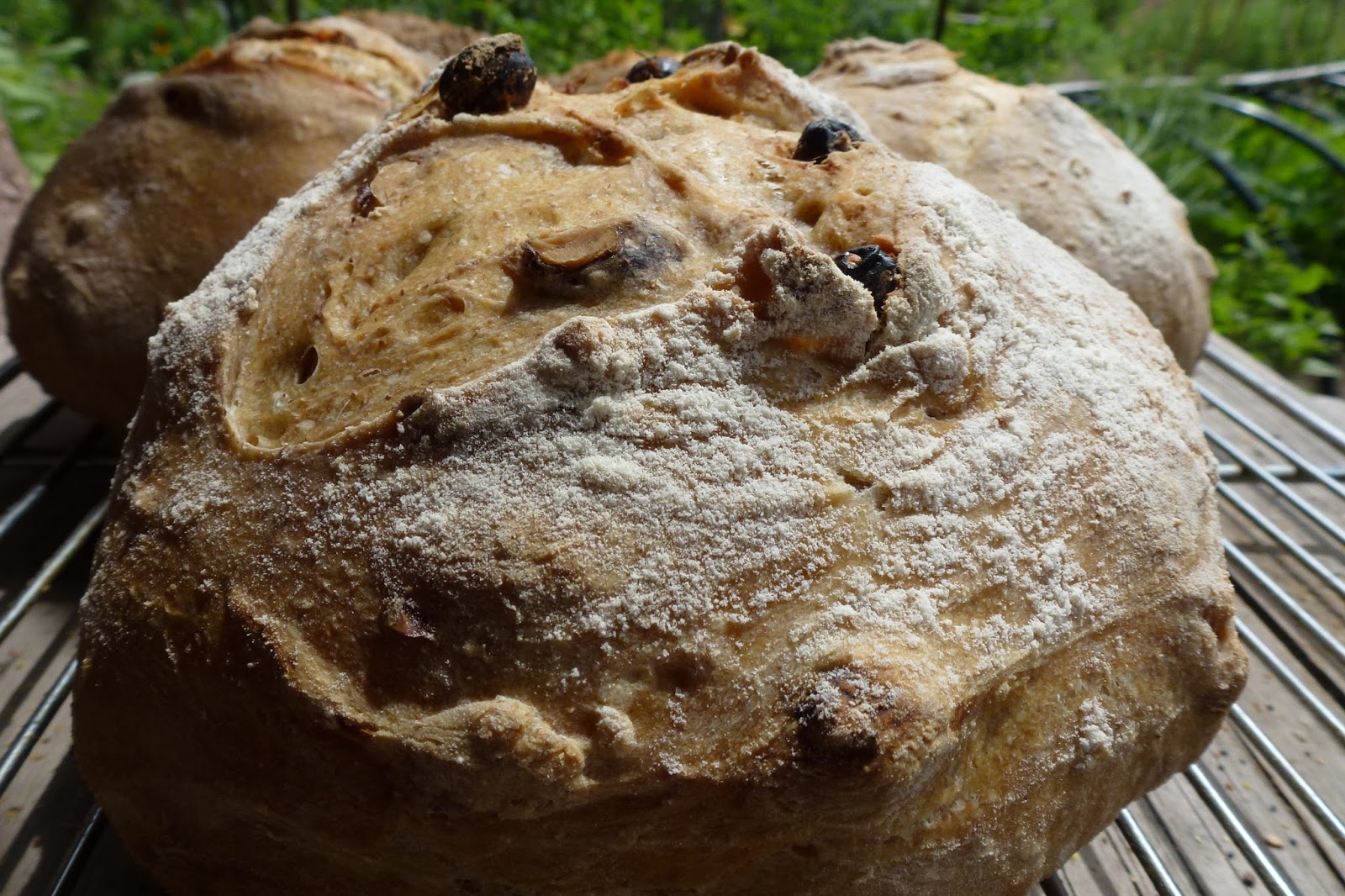
Each week during the summer months we have a CSA (community supported agriculture) food pick-up here.  Our friend, Angie from Fertile Ground CSA, brings her gorgeous organic produce and her members pick up their bounty.  We offer fresh bread and baked goods, made in our wood-fired oven.  It allows us the joy of baking for a crowd each week, with freedom to experiment and try new recipes out, as well as many favourite repeats that members ask for.  The favourite breads include: Superseed Bread; Walnut-Raisin; and Potato-Roasted Garlic-Rosemary Bread; and treats such as Vegan Pesto Rolls; Gluten-free Brownies (made with quinoa); White-Chocolate Roasted Almond Cookies; and Whole Wheat Sticky Buns.  All our baking is made with organic flour, organic seeds, and healthful whole ingredients (including basil, zucchini, beets and other veggies as they come into season), with our grains mainly sourced from the local organic flour mill at Oak Manor Farms.  Best of all, we get to bake in our outdoor wood-fired cob oven.  We love so many elements of this oven - it was made by us with the help of family; is made of natural materials; it's fun to play around with the wood-firing learning to heat the oven just right for long enough baking time; we often eat a garden-fresh lunch while baking; and we get to be outdoors while we work.  Here are some photos of this week's baking day.


Sunday, June 16, 2013

Cob Oven Workshop

We are back into the swing of workshops now that the garden has been planted.  Little City Farm hosts several workshops each month, Saturday afternoons, on the topics of sustainability, homesteading skills, permaculture, natural building, organic gardening and more...

This weekend's workshop was on the topic of building with cob, and more specifically building a cob oven.  We have a wonderful little cob oven in our backyard that is absolutely delightful for an aspiring or professional baker - especially if you like fires and working outdoors.  We usually bake twice a week here, once to make bread and once for pizzas.  The cob oven can also be used for baking all kinds of other things (cookies, pies, etc), plus roasting vegetables, drying herbs, making yogurt, and so on. 

Cob is a mixture of sand, clay and straw (aprox 9 parts sand : 1 part clay and a little straw chopped into the mix for insulation value on one of the layers of the cob oven).  Cob building is a very intuitive process and has been done in all parts of the world (i.e. earth building) in various forms - adobe, mud huts, cob cottages, and so on.  It's an ancient building technique that anyone can easily learn.  We like to recommend making cob bricks or balls before you start a project, in order to test your cob mix.  There are only a few technical details to consider - the ratio of oven base to oven height; and the ratio of oven door height to height of dome.  There are great books that walk you through the process step-by-step: books like Build your own Earth Oven by Kiko Denzer; The Cob Builder's Handbook by Becky Bee (a pdf version is here), The Hand-Sculpted House by Ianto Evans, and The Cobber's Companion by Michael Smith.

And for further inspiration, here's a slideshow we found online of handbuilt cob houses, cottages, garden walls, sheds, sauna, and several bake ovens...

Here are a few pictures from our cob oven workshop (with some participants getting muddier than others!), and baking pita in the oven:


Tuesday, November 01, 2011

This Moment

{This moment} - This moment - an end of week ritual, no words, just a special photo to remember, savour, enjoy. 

Friday, September 30, 2011

Winter firewood

Getting ready for winter.  Collecting, chopping and stacking firewood has been top of the list for a while now.  Our strawbale living quarters are very well insulated, so we only tend to keep a small fire going most days in the winter months.  Still, each year we wonder if we'll have enough wood ready.  We were hoping to build a woodshed/bike shed this season, but time seems to have slipped away.  For now the large back porch will do.  Oh, the hours of enjoyment, with our little eager helper working side-by-side with her papa...


Tuesday, June 21, 2011

Father's day...

We've been off the computer for a few days as we took a mini "family holiday" here at the homestead.  Greg's been digging a second backyard pond for our greywater recycling system, so we've seen a lot more of him during the daytimes - which means helping with the pond, taking picnic lunch breaks together, enjoying these long days late into the evening...but for father's day we decided to head to Elora for a hike at the conservation area and our first swim of the season at the quarry, then a wood-fired pizza dinner and bonfire at home.  Lovely day!


Wednesday, July 01, 2009

100-Mile Desserts: Vegan Peanut Butter Cookies


Along with our wood-fired pizza (see previous post) we also baked some dessert. A friend had made an apple crisp, and we made a batch of 100-mile peanut butter cookies. Finally, a local dessert recipe that is vegan-friendly (no eggs or dairy!). It's nice to use the heat of the oven while we have it. Here is the recipe - very quick and simple to make. Ours were wood-fired, but here is the household oven version:

Peanut Butter Cookies (adapted from Simple Treats)

3/4 cup rolled organic oats, ground to a powder
1 cup crunchy peanut butter
1/2 cup plus 2 Tbsp maple syrup
1/4 cup plus 2 Tbsp canola oil
1 cup organic spelt flour
1/2 tsp baking soda
1/2 tsp baking powder

1) Preheat oven to 350F. Mix dry ingredients in a bowl.
2) In separate bowl mix wet ingredients, stirring until smooth.
3) Pour wet into the dry ingredients and stir until everything is well incorporated.
4) Bake for about 15 minutes on well oiled baking sheets, until cookies are golden brown.
5) Let cool about 5 minutes before removing from baking sheets.

Makes 12 large cookies.

Sunday, April 19, 2009

Bread in cob oven


Spent all of this past weekend outside - the weather was amazing - upto 21 C on on day, and sunny! Bare toes were out, sweaters off, sunhats on...

We seeded onion sets, carrots, swiss chard, radish, cilantro, fava beans, snow peas into the garden beds after they were prepped with compost and cleared of last year's mulch. We weeded the cold frames, picked arugula, chives and greens for a fresh salad, and ate our lunch outdoors on the patio. In the greenhouse we continued with transplanting, having completed the hundreds of tomatoes, and now moving on to kale, broccoli, peppers, basil, and other herbs. We also planted seeds of zucchini, squash, pumpkin and cucumbers in flats, which will be ready in time for the May seedling sale. Busy, exciting time of the year. We are grateful for longer days...the sun is now rising around 6:30 am and setting after 7 pm and we still have about two months of longer days to come.

While we were gardening we decided to fire up the cob oven - I had made up several batches of bread dough earlier in the morning, and it was on it's first rising. If a good fire is made during this time, letting it burn large and hot during the two bread rising stages, it gives just enough length of heat to bake a large batch of bread and some cookies, and doesn't make for too long a day tending fire. After only about 20 minutes of actual baking time we came out with 6 tasty loaves of bread - cornmeal, caraway rye, oatmeal sunflower, flax & sesame, ready just in time for making sandwiches with the fresh greens for our lunch break. Mmm....

Thursday, April 16, 2009

First campfire of the season


A few days ago, when the weather was so lovely that we had spent all day outside and couldn't bring ourselves to head back into the house, we decided to have our first campfire of the season (and baby Maya's first campfire ever). Throughout the summer-fall we spend many many evenings outdoors, cooking over the fire and eating on our back patio. It's an easy way to relax, tend to the fire while harvesting or weeding in the garden until dusk, pick produce off the vine which goes directly into the cooking pot, and eat a great hot meal without having to heat up our house. We often bake in the cob oven as well, and when all the bread is done, transfer our leftover embers into the campfire pit where we can watch the fire while sipping homemade wine or hot cups of cider. Here's to warmer weather and more evenings outdoors!

Wednesday, October 03, 2007

Affordable homemade wood-fired hot tub!


As a new feature for our homestead my partner is currently working on a wood-fired hottub. His design is based on a combination of cedar tubs from out West that are fired up with a chofu heater, ancient soaking tubs from Japan, and small Dutch wood-fired tubs (www.dutchtub.com). The plan is to build an efficient, beautiful, and inexpensive tub, using materials we have on hand.

The basic idea is to start with the size of tub you want - either build one (from cob, cement, metal), retrofit an existing bathtub/clawfoot tub, or, in our case, buy a 150 gallon stock tank from the local farm store. Secondly, insulate the tub as necessary, to help hold in the heat of the water. Thirdly, find a way to heat your water. This can take many forms - either a woodburning stove with a water coil wrapped around, a chofu heater (* see note below), or solar-heated tank. I once lived on an organic farm near Nelson, BC that heated water for their outside shower and bathtub in a large black plastic barrel that was ontop of the shower structure. We took baths or showers at night if we wanted warm water (after the sun had warmed the tank all day long), or cool showers in the morning. This was a very simple design, that is easily manageable for the novice builder - but your property needs adequate access to sun.

In our case, we are hoping to buy an old woodstove, and use a coiled pipe wrapped around it to heat our water. Currently we are heating water in a very rustic way, by the kettle on our firepit which is located beside the tub. Once the main body of water is heated it's actually not that much effort to continue to heat water by the kettle to top up the tub, and have a cozy campfire burning beside us as we lounge in the tub under the stars! For our guests, the woodfired model would be more suitable.

The photo shows our tub, with two sitting benches inside, and the insulation layer. We have a large volume of old tongue&groove boards in our barn, and this is going to be the outer covering, followed by a wider platform on which to sit around the edge of the tub. More photos to come as this project unfolds...

* Note on the chofu: The chofu is a precision built wood-burning water heater designed specifically for hot tubs. It circulates water using the principal of thermosiphon (the pumping action created by rising hot water), eliminating the need for a circulating pump or electricity. This unique feature opens up a whole new range of possibilities for alternative hot tubs. Now you can have a basic soaking tub without pumps, chemicals, or high maintenance. With the chofu heater you can retrofit an existing tub or put together a low-cost soaking tub, using a wooden tub or stock tank (from www.islandhottub.com).