Pages

Showing posts with label bread. Show all posts

Wednesday, January 07, 2015

Fluffy Chia Spelt Biscuits

Oh yum!  We've been enjoying winter soups and stews to warm us these past colds days.  I love to always keep a pot of soup going on the stove, ready for a cozy quick nourishing meal.  We like to have sourdough bread or these chia biscuits alongside a bowl of hearty soup.  Here is a simple recipe for the fluffiest chia biscuits I have ever made.  We experiment with different grains, but like whole spelt flour the best.  They can also be made gluten-free by substituting GF flours for the spelt.  These biscuits cut out well, and are fun for kids to shape or cut to their heart's desire.  Isn't eating a star or heart shaped biscuit more delicious, especially if it was made by little hands?

Fluffy Chia Spelt Biscuits
Yields: approx. 10 large biscuits

1 1/4 cups whole spelt flour (or flour of your choice)
3/4 cup arrowroot flour
1 Tbsp baking powder
3/4 tsp sea salt
10 Tbsp organic butter
1 cup coconut milk (or other dairy or substitute)
2 Tbsp black chia seeds, ground finely

1) Preheat oven to 425 F.
2) Lightly oil baking sheet or line with parchment paper.
3) Mix together the dry ingedients in one bowl, and then add butter.
4) Blend butter using your fingers so the mixture resembles coarse crumbs.  It's ok to have pieces of butter left in the mixture as this makes the biscuits flaky.
5) Mix wet ingredients in another small bowl and let sit for 5 minutes to thicken.
6) Then form dough by mixing wet into dry.  Mix lightly to knead dough into two balls.
7) Pat dough into 1 inch rounds on a floured surface.  Cut into rounds or shapes.
8) Bake for 15 minutes.  Serve warm with butter or another delicious spread.


Saturday, April 12, 2014

Sourdough Workshop

We had one of our regular Saturday homesteading workshops here today.  This was the third workshop of a four-part "cultured kitchen" series which included four classes about creating live cultured foods at home - sauerkraut/kimchi, yogurt making, and sourdough bread (and apple cider vinegar is coming in the fall).

During today's workshop we walked through the steps of making and maintaining a sourdough starter, proofing the starter before bread baking (at least 8-12 hours), making the dough, and shaping loaves.  We were working with real sourdough (not preferments or recipes that use commercial yeast) - so ingredients are basic and wholesome - organic hard bread flour, cool filtered water, sea salt, and wild yeast!  The process really is quite simple, it's just a matter of making it part of a regular rhythm of your own weekly kitchen activities. 

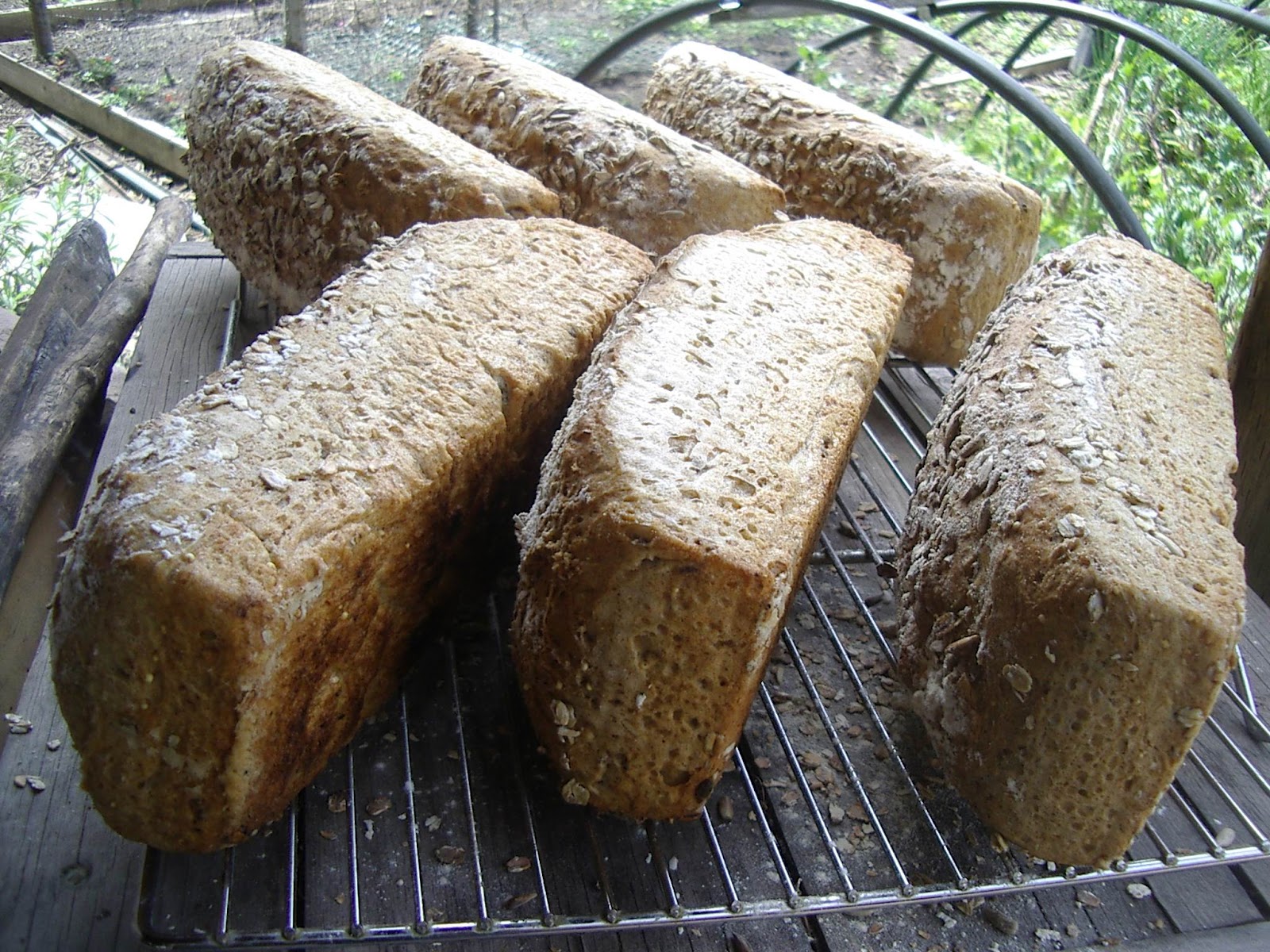
Participants made their own sourdough starters to take home (which now need to be fed for the next 10 days, and maintained after).  We also sampled two sourdough breads I had made the night before, so that participants could see the full range of bread making from start (starter) to finish (eating) but still fit this all - a normally 2 day experience - into a 2 hour class.  We tried sesame caraway rye (made with a 100% organic rye starter); and wholegrain country sourdough loaf with millet & sunflower seeds.  Here are photos of the bread baking after today's workshop. 


Wednesday, August 07, 2013

Wood-fired baking!

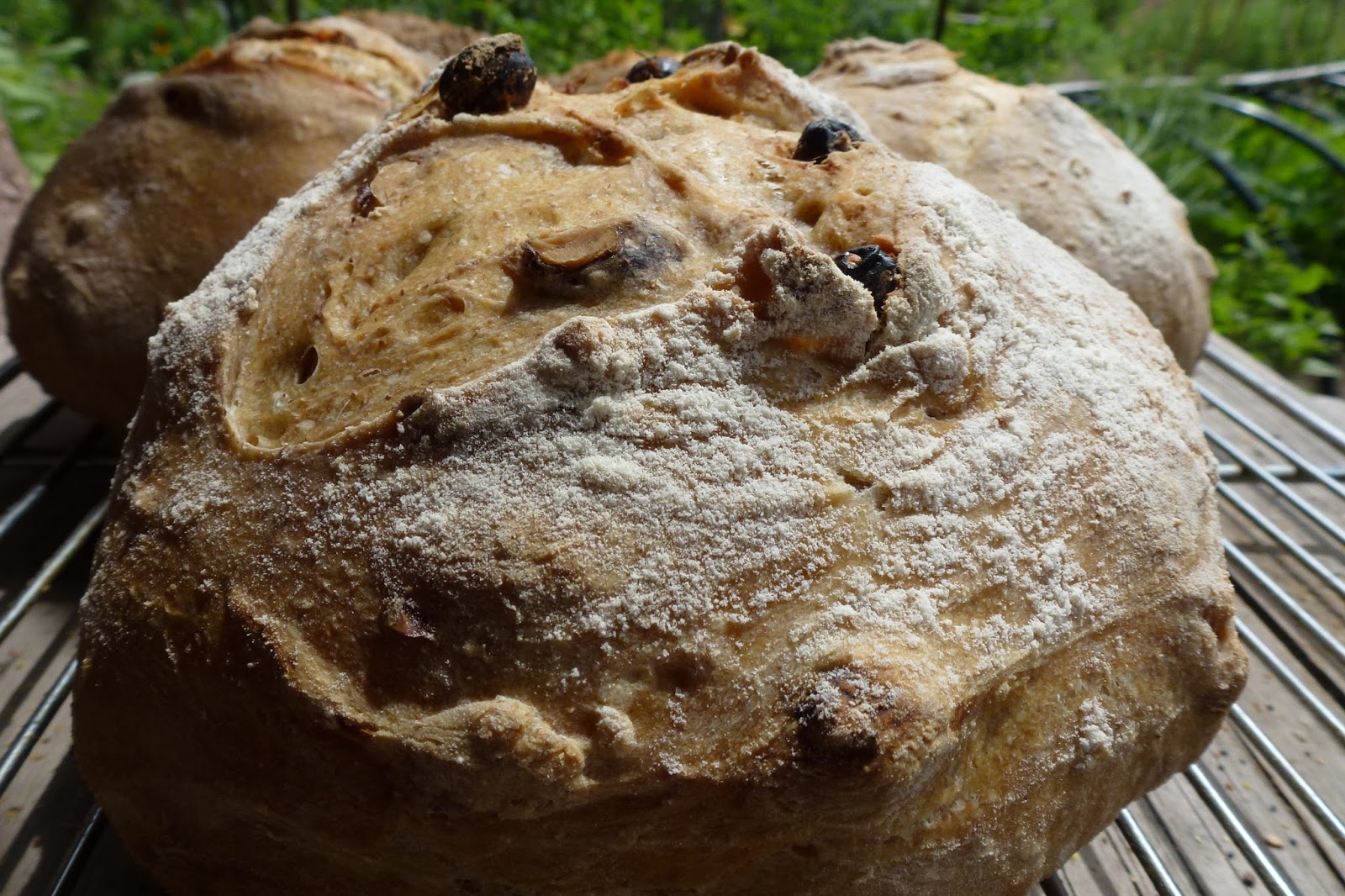
Each week during the summer months we have a CSA (community supported agriculture) food pick-up here.  Our friend, Angie from Fertile Ground CSA, brings her gorgeous organic produce and her members pick up their bounty.  We offer fresh bread and baked goods, made in our wood-fired oven.  It allows us the joy of baking for a crowd each week, with freedom to experiment and try new recipes out, as well as many favourite repeats that members ask for.  The favourite breads include: Superseed Bread; Walnut-Raisin; and Potato-Roasted Garlic-Rosemary Bread; and treats such as Vegan Pesto Rolls; Gluten-free Brownies (made with quinoa); White-Chocolate Roasted Almond Cookies; and Whole Wheat Sticky Buns.  All our baking is made with organic flour, organic seeds, and healthful whole ingredients (including basil, zucchini, beets and other veggies as they come into season), with our grains mainly sourced from the local organic flour mill at Oak Manor Farms.  Best of all, we get to bake in our outdoor wood-fired cob oven.  We love so many elements of this oven - it was made by us with the help of family; is made of natural materials; it's fun to play around with the wood-firing learning to heat the oven just right for long enough baking time; we often eat a garden-fresh lunch while baking; and we get to be outdoors while we work.  Here are some photos of this week's baking day.


Tuesday, April 09, 2013

Sap boiling day...and fresh oatmeal bread

We decided today was the day.  We've been storing our sap long enough, and the days are getting warmer.  We started out with sap boiling outside, and this went well for several hours.  While boiling we enjoyed the first really sunny spring day, with an outdoor lunch picnic, and planting up the cold frame with lettuce, chard and spinach greens.  Then the sunshine turned into a surprise spring rainstorm...not so great for an outdoor boiling event.  The sap boiling was moved indoors - given we are doing a very small batch this didn't seem so bad to have some of it be done on the stove.  Hoping for sunshine tomorrow to take the boil outdoors again.   And, if we ever do this on a bigger scale we'd set up a proper fire pit and evaporator...some day.

During the boil day we were staying close to the house, so it seemed like a great day for baking bread.  Having it rising while we checked and stirred the sap, and freshly baked when we came in from the cold rain, was perfect!  We adjusted our favourite oatmeal bread recipe to use up this morning's left over oatmeal.  Yum!

Here's the recipe:

Oatmeal-Rye 4 grain seeded bread
2 cups left over cooked oatmeal
1/2 cup molasses
1/4 cup honey or maple syrup
3 Tbsp butter
2 tsp sea salt

Combine the above ingredients in a large bowl.

2 cups warm water
1 Tbsp quick yeast

Mix the water and yeast in a large measuring cup.  Stir, then let sit for about 5 minutes until it foams.

6 cups unbleached wheat or spelt flour
2 cups whole rye flour
1/4 cup millet grains
1/4 cup flax seeds
1/4 cup sunflower seeds
Extra oats and sesame seeds to sprinkle on top of risen loaves

When yeast has foamed, mix this with the wet ingredients.  Then add flour and seeds and mix well.  Knead about 10 minutes to make a soft dough. 

Put dough back into the large bowl that has been oiled, and cover with a cotton cloth.  Let rise 1 hour, or until double. 

Form dough into 3 medium sized loaves and place into lightly oiled loaf pans.  Wet top of loaves lightly with water, and sprinkle with oats and sesame seeds.  Let rise again for about 45 minutes in a warm room (near your stove that is preheating to 400F). 

Bake at 400F for 5 minutes, then lower heat to 350F and bake another 30-40 minutes until golden brown.
Let cool before slicing.


Monday, May 07, 2012

This weekend

This weekend:
~ hosted walking tour group during this weekend's neighbourhood Jane's Walk (talked on the theme of moving from an industrial focus to post-industrial sustainable neighbourhood)
~ baked wholegrain bread loaves in the outdoor wood-fired cob oven to share with the tour group
~ harvested first rhubarb from this spring's garden for batch of pies (to be sold at our seedling sale)
~ cleaned and organized garden tools, finally
~ took walks to watch the 6 new baby goslings that have hatched in a nearby storm water run-off pond

Sunday, February 05, 2012

The radical act of baking bread

"Creating something meaningful by hand using simple materials and tools is how we begin to re-skill ourselves and our communities.  We begin to see ourselves as active producers, rather than passive consumers.  We lessen our dependence on corporations, fossil fuels and unsustainable purchases.  Once we become empowered there is no end to what we can do."  This was how I introduced a "radical bread baking" workshop I led on the weekend. 

How can bread baking at home can be a radical act?
1. Moving us from being consumers to active "producers"
2. Choosing organic non GMO ingredients (a vote against corporations like Monsanto)
3. Supporting local farmers growing grains, and local mills that grind the flour
4. Realizing a connection to people of all cultures, all times, all walks of life
5. Having the ability to teach others how to bake bread
6. Sharing nourishing healthful food with others
7. Slowing down and taking time to be grateful for this food

Not to mention the satisfaction of making something yourself by hand, superior flavour and freshness, cost effectiveness, and artful elements of bread baking...


Monday, July 18, 2011

Summer kitchens, fire & bread

What a pleasure to use the outdoor cob (wood-fired) oven for summer baking!  On these hot days I am so relieved to keep the house cool and do my weekly bread baking outside - either early morning, or early evening.  I can understand the usefulness of the old fashioned "summer kitchen" (here are some modern design ideas), usually separated from the main house, to do the canning, preserving, summer cooking and dish washing.  It makes so much sense.  This week's breads for the CSA included broa (Portuguese corn bread), 10-grain rustic peasant loaves, multigrain flax Italian sourdough, and savoury pesto rolls.  Each week I get a little better at this, learning the cob oven temperatures and firing techniques to get the proper length of baking heat for the amount of baking I need to get done.  And I am fascinated by the parallels between the fire and the bread - making a fire for a few hours in advance in the same duration of time that the dough is rising, both are an ancient meditative process, both take and give energy, and both are not to be rushed.  I love this cob oven!


Tuesday, June 21, 2011

Summer solstice!

In celebration of summer's beginning...

today we had the first CSA pick-up with Fertile Ground CSA, just around the corner from our place.  It's a fabulous CSA (community supported agriculture) and such a great opportunity for folks in this neighbourhood to meet each other and share a common interest in supporting a local farm through purchasing beautiful top quality organic produce!  Tuesday afternoons always become a major social gathering over at the CSA pick up.  We are there each week with a baked goods table - we will feature various breads (wood-fired and otherwise) made with wholegrains and local organic flour.  Today's offerings were focaccia, broa (Portuguese cornbread), rustic apple-rhubarb tarts, spelt chocolate chip cookies, rhubarb pies, and multigrain flax sourdough breads. All sold out by 6:15 pm - long day, but so exciting!  Maya (my trusty helper) fell asleep 5 minutes after we walked home - she loves CSA days because of all the neighbourhood kids she gets to see - but was exhausted!


Wednesday, June 15, 2011

Whole-grain breads starting at CSA next week!

I can't believe it's CSA season again - next Tuesday marks the first CSA pick-up for 2011 for the Fertile Ground CSA which has it's drop off in our neighbourhood.  We'll be back again this year with our little baking stand, selling freshly baked organic whole-grain breads and other assorted surprise goodies (bagels, pies, cookies, jams, soaps) each week from 3:45-6 pm.  This is one of our social highlights of the week - see you there!


Saturday, June 11, 2011

Cob oven workshop

A busy Saturday here at Little City Farm leading a cob oven building workshop.  We fired up the oven, demonstrated raking and soaking it in preparation for baking, mixed up a batch of cob, formed cob around a mini oven dome (sand form), tested cob bricks, and (of course) baked fresh bread that was ready for eating just as the workshop wrapped up!  Our ongoing theme with these cob workshops is to demystify building and inspire people to have the confidence to build an oven for themselves.  Cob is an age-old building material that anyone can learn to work with, and cob ovens do not require a high level of building experience to turn out beautifully.  Cob ovens are made with simple tools and materials (clay, sand, straw) that are affordable and can be locally sourced, and really just need a generous amount of labour, love and experimentation to build and learn to bake with. Kiko Denzer's book, Build your own earth oven, is our favourite resource on cob oven building - and we recommend this as a must-have book for anyone thinking of making a cob oven.