We are currently running our Practical Home Herbalist series again. This is a four-part series of herbal classes for those who want to delve deeper into their relationship with healing herbs and remedy-making for home use. We have a wonderful group of ten women taking part this time around, and also a local photographer who is going to document our classes for us. Classes offer hands-on remedy making with samples to take home, harvesting and tasting herbs, plants to take home for creating their own herbal garden, learning about four focus plants each week, learning through artwork (each participant creates a traditional "herbarium" or herbal botanical journal as part of this series). The hope is to provide participants with practical skills and knowledge for making simple safe remedies for their own friends and families, as well as building deeper understandings of the beautiful healing plants that are our allies. This series is so much fun to create, host and offer to our community! I look forward to sharing more - for now here are a few photos from our first session in which we featured: plantain, dandelion, nettle and lemon balm. With these herbs we enjoyed making herbal shampoo (nettle, lemon-balm), herbal pesto (dandelion-plantain), herbal vinegar (nettle), and drinking deep dark green herbal nettle infusions. Read more about the Practical Home Herbalist series here.
Showing posts with label spring edibles. Show all posts
Thursday, May 18, 2017
Monday, April 17, 2017
Wild Violet Syrup Making - a spring ritual
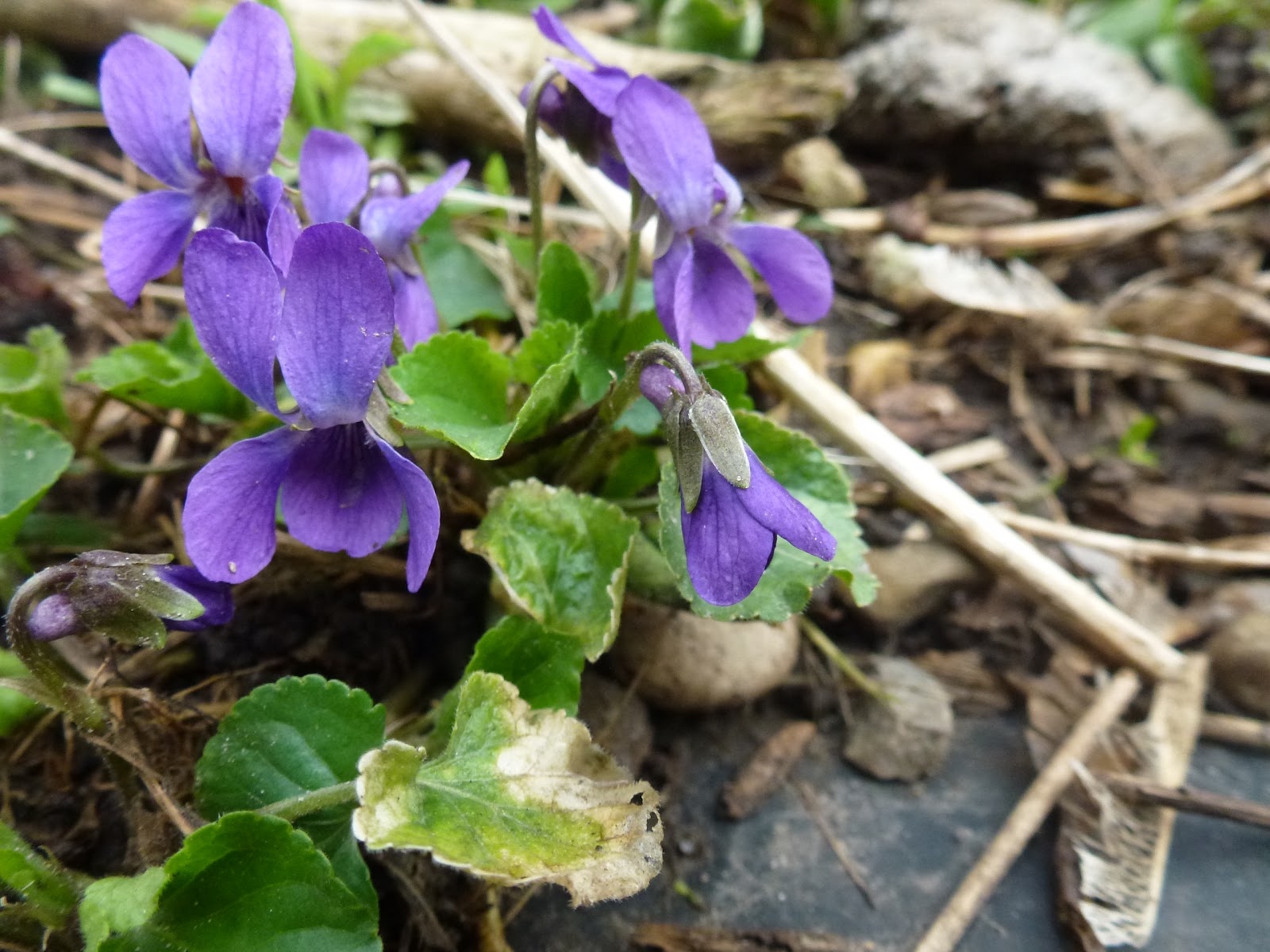
Making violet syrup with wild flowers is our favourite spring ritual. We've been doing this for a few years now, usually in mid to end of April when the violets are in full bloom and ready to be picked. They are abundant, so there is no great worry about overharvesting, though care should still be taken when wildharvesting so that we leave enough to be enjoyed in another year.
Here is our recipe for Wild Violet Syrup! When it's made with sugar the syrup turns a bright light pink colour - but honey does not give it this colour (though the honey version is much healthier and also just as delicious). We serve our syrup with sparkling water as a refreshing floral spring tonic.
How to make Violet Syrup
You will need:
4 cups fresh violet flowers (not washed)
4 cups water that has just boiled
2-4 cups sugar (or honey)
8 Tbsp lemon juice
1) Place fresh violet flowers into a glass jar or measuring cup. Cover with water that has just boiled, and place a lid or plate on top. Steep this infusion for 24 hours (covered).
2) After 24 hours, strain the infusion. Compost flowers, reserve the infused water.
3) Put infusion into a stainless steel pot, add sugar and lemon and bring to a boil. Then turn down heat and simmer until sugar (or honey) is dissolved and syrup starts to thicken. Stir constantly until syrup coats the back of the wooden spoon. This can take from 15-30 min depending on how thick you want your syrup to be.
4) Bottle in glass jars, cap and store in the fridge. Keeps 3 months in fridge.
5) To use: add about 1/4 cup syrup to a glass, top with sparkling water and add fruit or ice cubes. This is a delicious sweet and refreshing tonic to lighten your heart and put a spring in your step.
Here is our recipe for Wild Violet Syrup! When it's made with sugar the syrup turns a bright light pink colour - but honey does not give it this colour (though the honey version is much healthier and also just as delicious). We serve our syrup with sparkling water as a refreshing floral spring tonic.
How to make Violet Syrup
You will need:
4 cups fresh violet flowers (not washed)
4 cups water that has just boiled
2-4 cups sugar (or honey)
8 Tbsp lemon juice
1) Place fresh violet flowers into a glass jar or measuring cup. Cover with water that has just boiled, and place a lid or plate on top. Steep this infusion for 24 hours (covered).
2) After 24 hours, strain the infusion. Compost flowers, reserve the infused water.
3) Put infusion into a stainless steel pot, add sugar and lemon and bring to a boil. Then turn down heat and simmer until sugar (or honey) is dissolved and syrup starts to thicken. Stir constantly until syrup coats the back of the wooden spoon. This can take from 15-30 min depending on how thick you want your syrup to be.
4) Bottle in glass jars, cap and store in the fridge. Keeps 3 months in fridge.
5) To use: add about 1/4 cup syrup to a glass, top with sparkling water and add fruit or ice cubes. This is a delicious sweet and refreshing tonic to lighten your heart and put a spring in your step.
Signs of spring
There are sure signs of spring popping up around the yard and garden all around us. Every year it's the same happy pattern - first the wild greens (the nettles, the dandelions, the wild garlic that we start nibbling on); then the wild violets that we pick for syrup and salads; then the other wild herbs & flowers that we've planted into our shade gardens (the trout lilies, the bloodroot, the wild ginger that have all been planted to create woodland areas in our yard); and then the rhubarb growing bigger by the minute! The sorrel leaves, the asparagus poking up, the chives, the mint patches, the lemon balm, the catnip, the yarrow...These are our favourite early days of spring, when it's all so hopeful and fresh, the flavours are new and exciting, vibrant and healthful for us again after our winter.
Tuesday, April 26, 2016
Wild Harvest - Violet Syrup
Finally spring has fully arrived, and the first violets are in full bloom. There were enough this week for our daughter and friend to harvest a nice basket full from our yard and a nearby field, and we made violet syrup together. It took us about half an hour to pick the 4 cups violets we needed for this recipe. Violet syrup is a beautiful pink colour and can be used to make delicious healthful drinks (see below). Violets are high in Vitamin C, and are traditionally said to calm and uplift the spirits - thus also known by the common name "heartsease". They are a gorgeous deep purple, with small heart-shaped leaves which are also edible. To learn more about wild edibles of spring consider taking one of our Wild Edibles Workshops (April 30 and May 28) here at Little City Farm.
While we were out picking, the girls and I talked about three rules for ethical wild harvesting that are good to remember:
a) know your plants - properly identify the plant before harvesting and using (using a reputable plant ID book, or going with a knowledgeable person), know which parts to use, what time of season to harvest, and how to properly prepare the plant as some wild edibles should not be eaten raw
b) harvest respectfully, carefully and sparingly - only harvest about 1/4-1/3 of the plant collections you find so there are always enough left for other harvesters, as well as to go to seed and continue a strong plant for next season - it should basically not look like you have done any harvesting at all after you are done
c) choose plants from a safe and healthy location - avoid harvests near roadways, dog walking areas, and of course any areas where pesticides may have been sprayed
How to make Violet Syrup
You will need:
4 cups fresh violet flowers (not washed)
4 cups water that has just boiled
2-4 cups sugar (or honey)
8 Tbsp lemon juice
1) Place fresh violet flowers into a glass jar or measuring cup. Cover with water that has just boiled, and place a lid or plate on top. Steep this infusion for 24 hours (covered).
2) After 24 hours, strain the infusion. Compost flowers, reserve the infused water.
3) Put infusion into a stainless steel pot, add sugar and lemon and bring to a boil. Then turn down heat and simmer until sugar (or honey) is dissolved and syrup starts to thicken. Stir constantly until syrup coats the back of the wooden spoon. This can take from 15-30 min depending on how thick you want your syrup to be.
4) Bottle in glass jars, cap and store in the fridge. Keeps 3 months in fridge.
5) To use: add about 1/4 cup syrup to a glass, top with sparkling water and add fruit or ice cubes. This is a delicious sweet and refreshing tonic to lighten your heart and put a spring in your step.
While we were out picking, the girls and I talked about three rules for ethical wild harvesting that are good to remember:
a) know your plants - properly identify the plant before harvesting and using (using a reputable plant ID book, or going with a knowledgeable person), know which parts to use, what time of season to harvest, and how to properly prepare the plant as some wild edibles should not be eaten raw
b) harvest respectfully, carefully and sparingly - only harvest about 1/4-1/3 of the plant collections you find so there are always enough left for other harvesters, as well as to go to seed and continue a strong plant for next season - it should basically not look like you have done any harvesting at all after you are done
c) choose plants from a safe and healthy location - avoid harvests near roadways, dog walking areas, and of course any areas where pesticides may have been sprayed
How to make Violet Syrup
You will need:
4 cups fresh violet flowers (not washed)
4 cups water that has just boiled
2-4 cups sugar (or honey)
8 Tbsp lemon juice
1) Place fresh violet flowers into a glass jar or measuring cup. Cover with water that has just boiled, and place a lid or plate on top. Steep this infusion for 24 hours (covered).
2) After 24 hours, strain the infusion. Compost flowers, reserve the infused water.
3) Put infusion into a stainless steel pot, add sugar and lemon and bring to a boil. Then turn down heat and simmer until sugar (or honey) is dissolved and syrup starts to thicken. Stir constantly until syrup coats the back of the wooden spoon. This can take from 15-30 min depending on how thick you want your syrup to be.
4) Bottle in glass jars, cap and store in the fridge. Keeps 3 months in fridge.
5) To use: add about 1/4 cup syrup to a glass, top with sparkling water and add fruit or ice cubes. This is a delicious sweet and refreshing tonic to lighten your heart and put a spring in your step.
Saturday, April 16, 2016
Seeds, Soil, Sourdough Event - Sat, April 23 from 10 am-1 pm at Little City Farm
Saturday, April 02, 2016
Spring on the homestead
There are signs of spring everywhere we look! We've been out hunting for greens, buds and shoots - in the garden and around town. We see:
~ wild edibles: like dandelion, nettles, and ramps starting to peek out tiny green tips from the undergrowth;
~ in the garden: shoots of garlic, green walking onions, sorrel, and herbs like mint, lemonbalm, motherwort;
~ on the trees: buds of service berries are gorgeously pink against the dark branches;
~ in the cold frame: our spring crop of micro kale, chard, spinach, mizuna, arugula and lettuce leaves.
What is greening up in your yard? What are you harvesting? What are you planting?
~ wild edibles: like dandelion, nettles, and ramps starting to peek out tiny green tips from the undergrowth;
~ in the garden: shoots of garlic, green walking onions, sorrel, and herbs like mint, lemonbalm, motherwort;
~ on the trees: buds of service berries are gorgeously pink against the dark branches;
~ in the cold frame: our spring crop of micro kale, chard, spinach, mizuna, arugula and lettuce leaves.
What is greening up in your yard? What are you harvesting? What are you planting?
Sunday, April 20, 2014
Spring in the garden
There are signs of spring everywhere! Today: garlic shoots poking up from the soil, kale ready to harvest in the grow tunnel, new seedlings sprouting in the cold frame, bare feet running through the yard, splashing in the back pond, supper on the patio outside, and a night time campfire. Lovely!
For those who wish to learn more about spring edibles, especially wild spring greens that are going to be ready to harvest shortly - consider taking our Wild Spring Edibles Workshop on Sat, May 10.
Subscribe to:
Posts (Atom)