Pages

Sunday, May 23, 2010

Healing power of herbs! Urban Wild Foods Recipe 2: Stinging Nettle Tea


Well, we thought we'd celebrate our successful seedling sale by ordering a special treat of Indian food. Very tasty, but about an hour after eating I broke out in itchy red hives! Upon reading about the possible causes of hives, I found out they are related to allegies (food allergies, seasonal allegies), stress, and various other factors. Connection to restaurant food with examples such as Indian food, Thai food or Chinese food, are common due to the MSG which is often used at these establishments. I should have known - MSG is not only usually hidden in the spice blends, but also in the red and yellow dyes which are sometimes used to colour the curries, etc. MSG is so prevalent in most processed foods that I basically need to stay away from anything with suspect labelling (MSG is hidden under various names and guises), not that I mind as we try to eat a fresh local seasonal diet when we're at home - but it makes going to restaurants treacherous sometimes.

So I tried a few home remedies to deal with the itchy hives - baking soda poultices (short-term relief), homeopathic gel for bites (not effective), and then I drank the miraculous stinging nettle tea. Within about half an hour of taking one strong cup of this tea all the itching subsided and swelling/redness was greatly reduced! It's actually interesting that this healing action is similar to the homeopathic approach - which may seem counterintuitive to some people - that of using a plant which causes a reaction in the body to heal the same condition. For example, the nettle plant can causes red, stinging itching welts (similar to hives) when it's picked without caution. However, taking nettle internally (as tea) over time can build an immunity to this stinging, and drinking nettle tea can also heal hives. In homeopathic medicine there are many such examples, e.g. apis (made from the body of the honeybee) is the main healing remedy for bee stings. Also, I remember seeing this same principle in action while I was working at the Algonquin Tea Company up near Ottawa. If one observes a plant and our reactions to a plant closely, it is possible to give a well-educated guess at it's healing properties. We were washing the dirt off of a massive pile of astragalus root that had just been harvested. While we were cleaning the astragalus root it caused our noses to run and eyes to water - and it turns out that astragalus root is an amazing plant which has been used for centuries in healing colds, flu and breathing problems. Interesting! We only need to take the time to observe plants, understand them and learn from them - the plants will teach us.

Back to the nettle plant - I am so fortunate to have this wonderous plant growing in our woodland section at the back of the yard. Nettle has many healing properties, including being a blood purifier (which means it helps to heal inflammation, eczema, arthritis, etc by tackling these conditions internally). Many herbal sources recommend to take a strong nettle infusion for a week, at least 2 times per year (generally best in spring when it's freshly available) to help with this blood purification. Nettle is also rich in iron, minerals, calcium (increasing bone density) etc etc. It can be made into a soup (cream of nettle is nice), added into sauces or steamed. I made a nettle-kopita last year that we are still talking about. Definitely need to do that again!

But to keep things really simple, the wild food recipe for this weekend is an easy one - nettle tea. Here is how to make a strong healing infusion, which can be taken hot, cool or as iced tea.

May 23: Nettle Tea
Steep 1 large handful of fresh nettle leaves in 2 cups of water that has just boiled. Let steep for at least 30 minutes. This creates a strong medicinal infusion. Sweeten if desired with honey or organic sugar. Drink 1-2 cups nettle tea per day for one week, as a spring blood purification tonic. The root of nettle is also very potent, if not more so than then leaves, so harvest this carefully if you have access to some fresh plants. Root can be made into a tincture (steeped in an alcohol base), or a decoction (boiled in water like a strong earthy tea).

Saturday, May 22, 2010

Don't forget the pies


24 lovely organic pies baked for the seedling sale...apple, apple-rhubarb, sour cherry, five fruit (with wild harvest mulberry & blueberry), butter pecan, and vegan mud pie...mmmmmm

We'll have our fruit pies and sourdough breads available each Tuesday from 3:30-6 pm at the Fertile Ground CSA vegetable pick up on Guelph St (between Moore & DeKay) just around the corner from us! From June-October.

8th Annual Seedling Sale!


We held our annual seedling sale today - and despite the drizzle and grey weather we were amazed by the fantastic crowds that showed up! Again, we were sold out in two hours, more than 2000 seedlings, baked goods (all 24 pies) and all! Speaks well of the huge interest in this community for a resurgence of the desire to grow food for ourselves, and not just that but heirloom and organic food. This is by far our favourite event of the year, and it's the 8th season we've held this sale. A huge thank you to our trusty volunteers Mike, Julia, Beth, Jana and Dave; our talented vendors/organic farmers Angie, Taarini and Sarah; and of course to all the wonderful customers who braved the rain to attend this sale and make is such a grand success! We only wish we would have had more time to talk to each of you - we wish everyone all the best for this gardening season ahead! Please come again next year - always the Saturday of the May long weekend. Next year we'll try to have fair trade organic coffee available for the early birds who waited patiently in line until we were ready to start our sale :)

And...please stay tuned for more details about our first annual fall harvest festival, which we hope to host here around the September equinox - including beekeeping demonstrations and a fall honey harvest celebration (with our beekeeping friend Sarah), preseves & pickle tasting, tasty fresh pies, wood-fired oven demonstrations, and some live bluegrass music in the backyard...

Tuesday, May 18, 2010

Urban wild food foraging tips, AND Urban Wild Foods Recipe 1: Lilac-Violet Jelly


Urban homesteading is about being productive on the homefront, but, since we urban homesteaders live on properties with much more limited growing space than on a rural acreage good basic urban homesteading skills should also include a basic knowledge of wild edibles. It's amazing what is available when you start looking - when you take into account roots, shoots, berries, fruit, leaves, flowers, herbs, nuts, even bark and sap - these highly nutritive edibles are abundant in urban spaces, usually vastly overlooked, underappreciated, and generally forgotten. These wild foods can usually be eaten fresh on their own, added to salads, or steamed, dehydrated, made into wines, teas, syrups, jams, ferments, sauces, vinegars, flavoured honeys, baked into breads, added to desserts, and so much more...

Wild foods we can harvest include plants some people write-off as problematic "weeds" (such as dandelion, nettles, lambsquarters, burdock, wood sorrel, shepherds purse, purslane/portulaca, wild grape, etc); woodland type edibles that may grow in city parks or unruly wild spaces (such as wild leeks/ramps, puffball mushrooms, fiddleheads, wild asparagus, or wild ginger); medicinal herbs that grow abundantly in our urban spaces, often sending hardy runners up through cracks in the sidewalk or slowly overtaking the lawn (such as wild fennel, yarrow, chamomile, plantain, mullein, tansy); edible wild flowers (such as red clover, rose, violet, lilac); wild fruits and berries from abandoned or long forgotten trees (such as crab apples, pears, service berries, mulberries, wild raspberries, wild strawberries); nuts (acorns, chestnuts, even the much maligned black walnut); and sap for syrup from trees such as maple (Norway and Manitoba maple too, birch, black walnut)!

My plan for the summer to fall season is to harvest at least one new wild edible each week, and create a simple recipe using it. We already make a habit of eating wild foods from around our property - dandelion fritters, cream of nettle soup, wild grape dolmades, johnny-jump-ups to garnish desserts, and I've even made one cake with black walnuts (though it took hours to crack open enough walnuts to flavour it!). I hope to branch out a little more this season, and write about it here. I've already missed wild leek season, and although fiddleheads are currently at prime picking I am not a huge fan having had a bad culinary experience a few years ago being served undercooked fiddleheads (take note - it's very important to properly identify the plant, and know how it is properly prepared - case in point, fiddleheads need to be boiled in several changes of water, not just lightly steamed like asparagus, or they will cause great gastro-intestinal upset!)

So, a few quick reminders about ethical wild harvesting:
a) properly identify the plant using a reputable plant ID book or going with someone who is knowledgeable
b) know when to pick the plant (when is it at it's peak?), and what parts are edible
c) know how to properly prepare the plant (can it be eaten raw, does it need cooking)
d) do not over-harvest (generally the rule is to pick no more than 1/4-1/3 of a plant so it continues to thrive and grow back next season)
e) do not harvest endangered plants
f) pick in areas that are not chemically sprayed, not near traffic exhaust (e.g. right beside roadways), or near dog-walking areas
g) bring proper tools and clothes for harvesting (e.g. pruners, gloves for nettle)
h) general respect and care for the plant and the property you are harvesting from goes a long way - especially in urban areas you will be noticed while you are foraging/picking, always best to ask first if you are interested in harvesting on someone else's property!

May 19 - Lilac Jelly
Today's experiment was a lilac jelly, made with a cup of fresh lilac blossoms (plus a few wild violet blossoms and lavender leaves thrown in), 1/4 cup local honey, about 1/8 cup lemon juice, 1 cup water and 1 package of pectin. Follow directions for cooking jelly as listed on the pectin package. So simple, and this turned into a gorgeous pinky-purple jelly that has a mild delicate flowery flavour. It would be very nice on light crackers or a crumpet with afternoon tea! This could also be made into a syrup and added to sparkling water for a sweet refreshing early summer drink.

Saturday, May 15, 2010

Permaculture design workshop


We had our friend Tracie Seedhouse (of Earthchild Designs) come to lead an "intro to permaculture design" workshop this weekend. Tracie has offered this inspiring introduction to permaculture here at Little City Farm four times, and with each session I still learn so much. In particular, having participants each work on their own designs for their home property (or community garden plot, etc) using the permaculture ideas just learned, puts these ideas into real practice and generates beautiful sketches, visionary designs, and hopefully successful outcomes!

Permaculture (from "permanent culture" and "permanent agriculture") is a whole lifestyle and way of thinking, on more than just the level of garden design or agriculture, but can also be applied to architectural design, social relationships, community based initiatives, even financial institutions (I have read about credit unions based on permaculture principles). Permaculture in many ways is not a new way of thinking, but getting back to older more traditional methods - observing nature, learning to minimize waste, creating systems that are self-reliant, using small and slow solutions to problems, etc. The term permaculture, and system of thinking developed under this banner, originated in Australia in the 1970s with Bill Mollison and later, David Holmgren. Now there are countless permaculture institutes, schools, courses, books, resources, and initiatives happening around the globe, each with their own take on the idea based on their own situation, climate, and other variables. It's an exciting way of thinking, and tries to keep in mind the principles of "fair share", "earth care" and "people care".

David Holmgren's 12 design principles

These restatements of the principles of permaculture appear in Holmgren's Permaculture: Principles and Pathways Beyond Sustainability; also see permacultureprinciples.com;

1. Observe and interact - By taking time to engage with nature we can design solutions that suit our particular situation.
2. Catch and store energy - By developing systems that collect resources at peak abundance, we can use them in times of need.
3. Obtain a yield - Ensure that you are getting truly useful rewards as part of the work that you are doing.
4. Apply self-regulation and accept feedback - We need to discourage inappropriate activity to ensure that systems can continue to function well.
5. Use and value renewable resources and services - Make the best use of nature's abundance to reduce our consumptive behaviour and dependence on non-renewable resources.
6. Produce no waste - By valuing and making use of all the resources that are available to us, nothing goes to waste.
7. Design from patterns to details - By stepping back, we can observe patterns in nature and society. These can form the backbone of our designs, with the details filled in as we go.
8. Integrate rather than segregate - By putting the right things in the right place, relationships develop between those things and they work together to support each other.
9. Use small and slow solutions - Small and slow systems are easier to maintain than big ones, making better use of local resources and producing more sustainable outcomes.
10. Use and value diversity - Diversity reduces vulnerability to a variety of threats and takes advantage of the unique nature of the environment in which it resides.
11. Use edges and value the marginal - The interface between things is where the most interesting events take place. These are often the most valuable, diverse and productive elements in the system.
12. Creatively use and respond to change - We can have a positive impact on inevitable change by carefully observing, and then intervening at the right time.

Thursday, May 13, 2010

Little City Farm featured in May/June Natural Life Magazine!


We're so pleased to have an article telling a little of our story in the most recent Natural Life Magazine (May/June 2010 issue). I wrote this article a few months ago and pitched it Wendy Priesnitz (the editor), in hopes that it would fit with their mandate. They had just published a story about the transition town movement, which aligns very well with urban homesteading principles, and so she was happy to include our story! I wanted to inspire others to see urban homesteading as a viable option for those of us living in cities but seeking a more sustainable way of living - and along with the article have also included ten suggestions on how to get your own urban homestead started. Check it out:

http://www.naturallifemagazine.com/1006/Natural_Life_May_June_2010_index.htm

Sunday, May 09, 2010

Transplanting seedlings


We're upto our elbows in seedlings now - tomatoes, peppers, eggplant, zucchini, cukes, basil, marigolds, etc, etc! We counted over 1100 seedlings that are now filling the greenhouse shelves and slats we've set out across the entire raised bed floor area - basically soaking up any sunny space we can squeeze them into. And, more waiting in the house, still under grow lights but ready for transplanting. It was 52C in the greenhouse today, even though it was cool enough outdoors to need a jacket and hat (and they are predicting a light frost tonight). It's amazing how quickly the sun warms the greenhouse and how long the warmth is held - we need to watch that seedlings don't dry out, and remember to open the vents and door during the daytime.

It's been a little crazy around here, trying to get everything transplanted this weekened as we wanted to give the plants at least a week to adjust to their new containers and then some time to harden off before they are sold during our May 22 seedling sale. Luckily, my parents were visiting and so dad was on plant labelling duty while my mom single-handedly transplanted about 500 tomatoes into larger pots! My parents were happy to participate in our farm life - helping feed the hens and collecting the eggs, plus weeding the herb garden and picking fresh salad greens from the coldframe, brought back memories of growing up on a self-sufficient farm in the 1950s for my mom. As it's now May 9, the seedlings have just less than 2 weeks left to grow and prepare for their move to the outdoor gardens around this city! Yes, we'll soon be passing off all these babies we've been tending so carefully since February to their new summer homes...

and, p.s. the fig tree has sprouted it's first fig! Unbelievable! They told us we'd be eating our own figs by the second year.

Wednesday, April 28, 2010

Mint, spinach, asparagus & rhubarb


Signs of spring...fresh mint tea, young spinach greens, steamed asparagus picked from the garden, and tangy rhubarb. Oh, do I ever love rhubarb! Rhubarb crisp, apple-rhubarb pie, rhubarb muffins, strawberry-rhubarb jam, rhubarb sauce over vanilla icecream, and rhubarb drinks. Here is a recipe I've been asked for by several people, a perfect light fruity drink for a warm spring day: rhubarb cordial (other fruit or berries can be substituted to make a wide variety of old-fashioned fruit cordials).

Rhubarb Cordial


1 1/2 cups rhubarb, roughly chopped
1 Tbsp grated fresh ginger, optional
1 cup white sugar or honey
1 1/2 cups water
Mineral water/sparkling water
ice, optional
Fresh mint sprigs

1) Place rhubarb, ginger, sugar and water in saucepan. Boil, then turn down to simmer. Cook for 15-20 minutes, until the mixture forms a bright pink syrup. This is your fruit syrup.

2) Turn off heat and allow syrup to cool. Strain into a large mason jar. This syrup stores for about 2 weeks in the fridge, but you will surely use it sooner!

3) To serve a fruit cordial, measure 1/4 cup rhubarb-ginger syrup into a glass. Add Mineral water/sparkling water to fill the glass 2/3 full. Stir to mix well, then add ice. Garnish with fresh mint sprigs.

Greenhouse back in action


We posted a request for a power washer a few weeks ago on this blog, and were incredibly grateful to one of our local readers for loaning us one - in exchange for some chickenkeeping advice, and fresh eggs from our hens! What a deal! The greenhouse panels, as well as the interior of the chicken coop, have been given a thorough spring cleaning, and are hospitable again. We can actually get maximum solar gain in the greenhouse again, just in time for seedling season.

It seems like all my seedling photos recently have been basil, but we are certainly growing a lot of basil, amidst everything else! I transplanted 50 basil today and they are having their first night out in the greenhouse, hopefully not in too much shock. It is actually quite warm in there, and the heat of the sunny mid-day (over 35C if the door does not get opened) will probably be worse for the basil at first then the cold evenings. We have two solar-powered fans that run when the sun is out, and help to ventilate the greenhouse a little. Greg likes the synergy of this arrangement - they are small RV fans, hooked directly to the solar panel on our southern exposure barn roof - when the greenhouse is hottest and needs air movement, they will surely be running. Very efficient and convenient.

Here's also a photo of our Chicago Hardy Fig, which is indeed proving to be hardy as it's over-wintered the first year in the greenhouse having been buried in a mound of straw. We've unearthed it, and it's sprouting many new shoots and leaves. We were told we would have our first harvest of figs this second year, and we are eagerly awaiting to see if this will really be the case! Our hazelnut tree, and the pear tree that was damaged last year (by a falling branch), are making amazing comebacks - both in full leaf already. We noticed one of our apple trees is not doing well, no leaves or buds at all, and it may have gotten a blight last year (I remember the leaves withering and falling off, just after apple season but too early for regular fall season). We were planning to plant a few more fruit trees this year anyway, but may have to look at replacing this one too. Sadly, this apple was actually already bearing nice fruit for a few years - it's about seven years old. There's so much more to learn about fruit trees.

Then there is the wild fruit harvest, which we are anticipating again this year. What a joy to discover forgotten gems of berry bushes, abandoned fruit trees, and wild greens all across the city (many in our own neighbourhood). Nettles are ready for harvest, as are dandelion greens of course. Wild leeks have almost come and gone, and soon it's time for other wonderful wild foods like mulberries...

Soaps for LOFT Market


We had a very special custom order for more than 100 guest soaps this week! It was for LOFT Market - which stands for "local organics fairly traded". LOFT Market, (not to be confused with LOFT, which is a producer co-operative of local farmers who supply LOFT Market), offers a large-scale local organic food box program here in the area, with 10 depot/pick up locations (Cambridge, Guelph, New Hamburg, Waterloo and Kitchener). We were so pleased to be asked to contribute soaps for their last winter box! They were interested in our soaps because we are a small local business that uses local organic ingredients - like herbs from our gardens, local oats & honey, local goatmilk, and even local beer & egg for our shampoo bar. We provided bars made with medicinal herbs, including chamomile, rosemary, lavender, calendula, and sage. We wish LOFT Market, and their farmers, well for the new 2010 season ahead!

Check out LOFT Market - to become a member or find out more go to:
http://loftmarket.ca/

Garden Weekend - wood-fired baking, cold frame & seedlings


A few updates on the garden - we are working at establishing more permaculture style keyhole beds, and also reorganizing our herb gardens. We've set up a second cold frame infront of the greenhouse, which will be used to harden off the seedling in preparation for the May 22 sale. This cold frame is simply a large rectangular box made of recycled wood, covered with glass windows.

The cold frame raised bed that contains our spring greens is bursting! We've been eating salad, dandelion greens, spinach, arugula, chives, etc for the whole month - and now with the warm days, many of the lettuces are starting to go to seed! I pulled out much of the spinach yesterday, as we are vowing this year to eat the greens when they are at their peak, rather than waiting until they go to seed and get bitter (which often seems to happen). We made two huge pizzas and loaded them with spinach and fresh oregano from the garden...baked in the wood-fired oven, yummm! See before and after photos here :)

The first round of basil is ready for harvest, and I've transplanted much of it into larger containers. We need the space on our indoor grow racks for new seedlings. Kale and broccoli have been moved to the greenhouse, and it's time to get the squash and zucchini started. These can also be planted directly outdoors later. We've started carrots and peas, plus sunflowers and some other flowers, out in the garden already. Of course, our little helper is doing a great job of watering and tending the plant babies.

Lavender-Infused Chocolate Cupcakes - Mother's Day Treats


To those of you who are local, we are offering *special baking* once again, for the upcoming Mother's Day next Sunday. This time it's delicious spring inspired lavender-infused chocolate vegan cupcakes with lavender buttercream icing (made by steeping lavender as tea, which is added to the icing for a sweet subtle flavour). Here's a photo to give you an idea...check our website for ordering details.

Bloomin' Earth Festival


We've had a busy weekend - took part in the local Bloomin' Earth festival at Kitchener Market, along with 70 other craft vendors! What an array of creative talents, so many local, and with a focus on earth-friendly goods! It was great to see so many familiar faces who stopped by our booth. We were sharing tent space with the talented Amaryah of Sew Oiseau, and next to us was Eve from Eve's Little Earthlings!

Friday, April 23, 2010

Come Visit! Local Festivals & Events - find seedlings, handmade goods, local food and more

Happy Earth Week, and the start of garden season, to all you local Foodies, Transition Towners, Gardeners, Permaculturists, and Urban Homesteaders! 

There are several WONDERFUL LOCAL FESTIVALS & EVENTS COMING this next month celebrating local food, local crafting & arts, and creating vibrant communities!  Please read the list below and follow the links for more details. 

COME SAY HELLO!  Little City Farm will be vending our seedlings, soaps & botanicals, and baked goods at these various events - so please drop by and say hello!  We'd love to see you, and if we haven't met in person, please come introduce yourself!

Bloomin' Earth Festival
Sat, April 24 from 9 am -4 pm
at Kitchener Market in downtown Kitchener
More than 60 vendors confirmed for this amazing handmade craft/art sale!   Plus junkyard symphony, recycled fashion show and more!

Stitch' n ' Kitsch Craft Show & Sale
Sat, May 1 from 10 am-5 pm
at First United Church, corner of King & William St, uptown Waterloo
Handmade pottery, soap, jewellery, bags, knitwear, dolls, children's items, accessories, paper goods, art, and so much more!

 Waterloo Farmers and Crafters Market
Every Thursday from 4-8 pm, May through October
at the Uptown Waterloo new public square
An exciting new market where you will find local organic produce, and handmade artisan/crafters goods, and so much more!  Little City Farm will be there with our handmade soaps & botanicals!

Little City Farm 8th Annual Seedling Sale!!
Sat, May 22 from 9 am -12 noon
at Little City Farm location, 508 Duke St W, Kitchener
Organic heirloom varieties of vegetables and herbs.  Specializing in heirloom tomatoes - more than 20 kinds available.  Also baked goods, gardener's soaps/salves, handmade garden aprons, and more exciting finds!  3 vendors, more than 1000 seedlings!  Come early for best selection and plan to stay for a while to meet local foodies & urban gardeners!

http://www.littlecityfarm.ca/workshops-1.php

Friday, April 16, 2010

Urban homesteading day...


Enjoyed the warm weather with some solid hours outdoors today, preparing the garden beds, baking in the wood-fired cob oven, moving the chicken coop, and touring around the yard on a fabulous retro red tricycle with hens in tow.

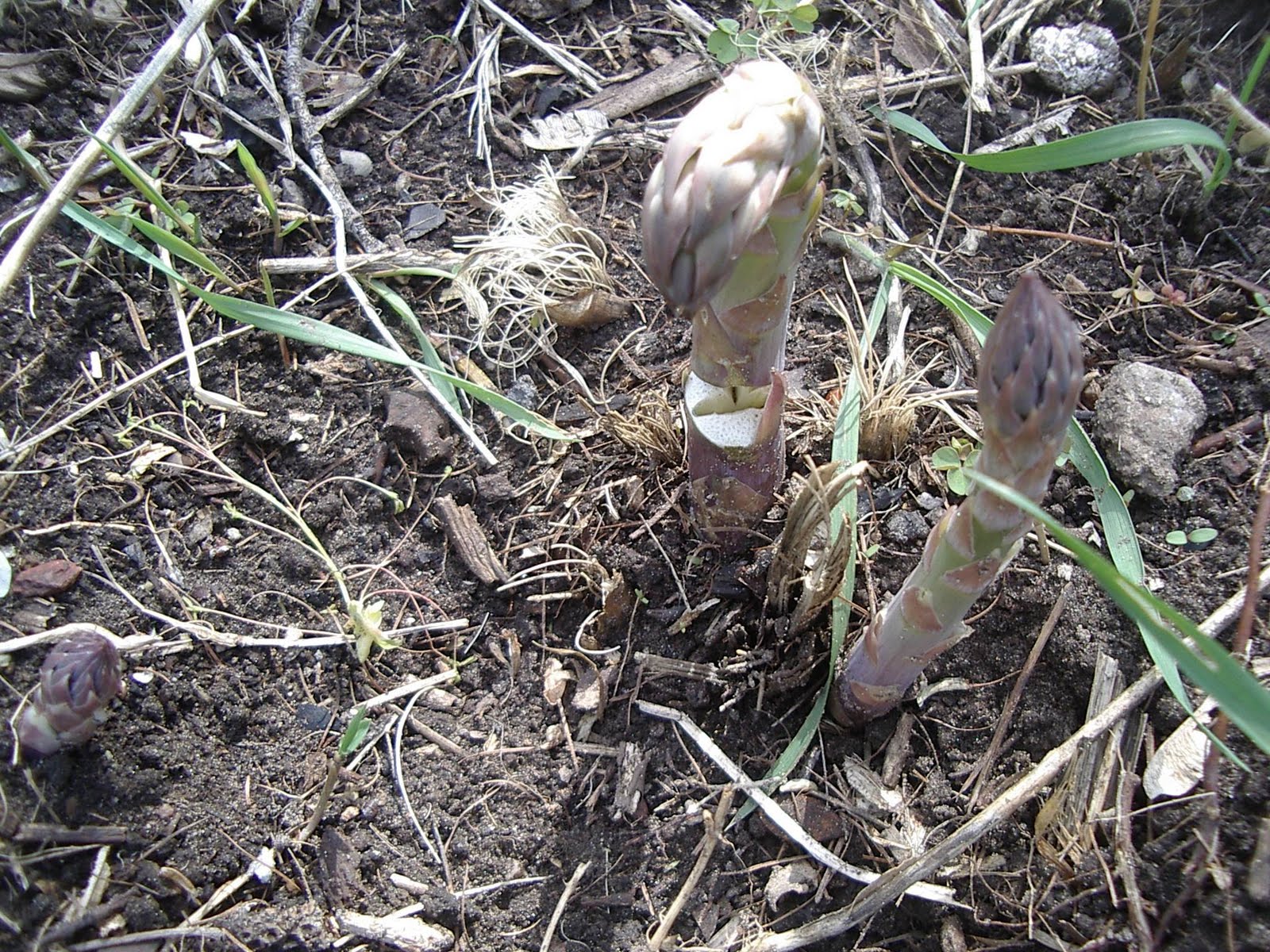
Garden tasks included establishing new beds - we've taken apart our old raised beds and have widened them with new cedar frames, and woodchip mulch as narrow paths between.  Next we want to set up some permaculture-style keyhole beds on the sides and back of the garden, as well as redesign the herb area.  I have mint beds on the outskirts of the main garden, also in raised beds, with 8-9 varieties of mint for tea blends.  These mints, and other herbs, are starting to come up, as well as the rhubarb and first shoots of asparagus!  We had to move a large section of strawberries in order to widen our new beds, so these are now in pots waiting for their new home near our pond.  We'd like a carpet of edibles (strawberries and aromatic herbs like thyme or lavender) near the pond sitting area, under one of our apple trees.

Baking in the cob oven - it makes good sense to do this on a gardening day, as tending a fire for a few hours is easy enough while puttering in the garden beds alongside.  The end result, 6 loaves of crusty wholegrain sesame-sunflower rye bread, 2 plum-rhubarb pies (using up freezer fruit remains), and a huge batch of maple granola - all baked within an hour in the oven, which is still warm now, hours later.

Moving the chicken coop - this is an annual tast we do, as one method of keeping the pen and run tidy and free from mites or disease.  We give it a good cleaning regularily (and may power wash it this week,a s someone generously loaned us her power washer after reading our request earlier in this blog - thank you!!), however, actually moving the entire coop to a new corner of the run is a good idea on an annual basis.

And, happiness is...a new red tricycle - which we found used on kijiji, and, in fact turned out to be from someone who lives only a few blocks away.  Perfect!

Spring craft shows - including upcoming Bloomin' Earth Festival & Stitch'n'Kitsch spring sale!


It's spring festival season!  Yesterday I took part as a vendor at the annual La Leche League garage sale event.  This is a huge garage sale, with a wonderful selection of clothes, toys, housewares, maternity gear, and more - and best of all, it suits every budget as payment is simply a donation of any size toward the organization's work.  Here are some photos of the Homestead Herbals table (including new handmade colouring books with felt covers), as well as the Sew Oiseau display (my friend who sells wool applique clothing and Waldorf-style dolls).

Next weekend we'll both be vending at the Bloomin' Earth Festival at our Kitchener Market (Sat, April 24) - a culmination of a weeklong of fantastic events being held in the downtown to celebrate Earth Week!   The following week (Sat, May 1) Homestead Herbals will be at the exciting annual Stitch & Kitsch spring sale, in uptownWaterloo (church on King & William St corner).  Come visit and say hello!

Workshops: Organic Gardening - plus Compost Tea recipe

Last weekend saw unbelieveably warm weather, and we were able to hold our Organic Gardening workshop outdoors on the garden patio.  Much more inspiring than discussing this topic indoors.  The aim of this workshop was to familiarize beginning gardeners with basic organic principles and techniques - including building and maintaining soil health, compost, tilling vs no-till approach, brief overview of permaculture approaches, as well as companion planting, bio-intensive gardening in small spaces, and organic pest controls.  This was a lot to cover in two hours, given that we also wanted to have enough time to answer the many questions of the participants.  Really, this organic gardening basics could be a whole series in itself - something to consider for next season.

The most important point to bring across was how vital soil health is to a successful garden - getting to know your garden's soil qualities (sandy, clay, poor drainage, too dry, acidic, alkaline, etc) and creating a healthy balance with maximum beneficial microorganisms by using: compost and, better yet, compost tea, as well as aged manures, worm castings (from vermicomposting bins), mulches (straw, shredded newspaper, woodchips), and other simple additions like fish emulsions, eggshells (calcium) and so on. 

Compost Tea Recipe
The best way to quickly improve your soil health is to apply compost tea on a regular basis.  Using a fish aquarium bubbler helps to create a compost tea filled with oxygen (aerobic), as the beneficial microorganisms need oxygen to survive.

What you will need:
5 gallon plastic pail
1 shovelful aged compost (about 3 large handfuls)
Small fish aquarium bubbler

1. Fill pail with water and let this sit for 24 hours to evaporate chlorine (from city water).
2. Add compost into a mesh bag and tie bag loosely closed.  The mesh bag should be fine enough to hold the compost inside, while still letting water flow through.  Put bag in the pail of water and let steep like a "tea" for 12-24 hours, while running the aquarium bubbler.
3. Strain compost tea into a watering can and use on garden immediately  This tea does not keep for more than a few days as microorganisms die and you are left with anerobic water.  A similarily beneficial "tea" can be made using worm castings from a vermicomposting bin.