Pages

Sunday, April 24, 2011

No till gardening (or farming)

A beautiful long weekend meant spending every spare minute outdoors - everything is coming alive!  The perennials like rhubarb, sorrel, red orach (mountain spinach), purple lambsquarters, chives, currants, elderberry, and chokecherry, and herbs like lemonbalm, oregano, mints, sage, lavender, thyme, chamomile are all leafing out and flowering...

We spent our weekend planting radishes, spinach, lettuce, peas, calendula, sweet peas; seeding cucumbers, zucchini, squash and melons in the greenhouse flats; transplanting basil; securing the chicken run with new fencing and a proper gate; creating a new "kids" garden; cleaning up brush piles to store as kindling; and setting up a second grow tunnel.

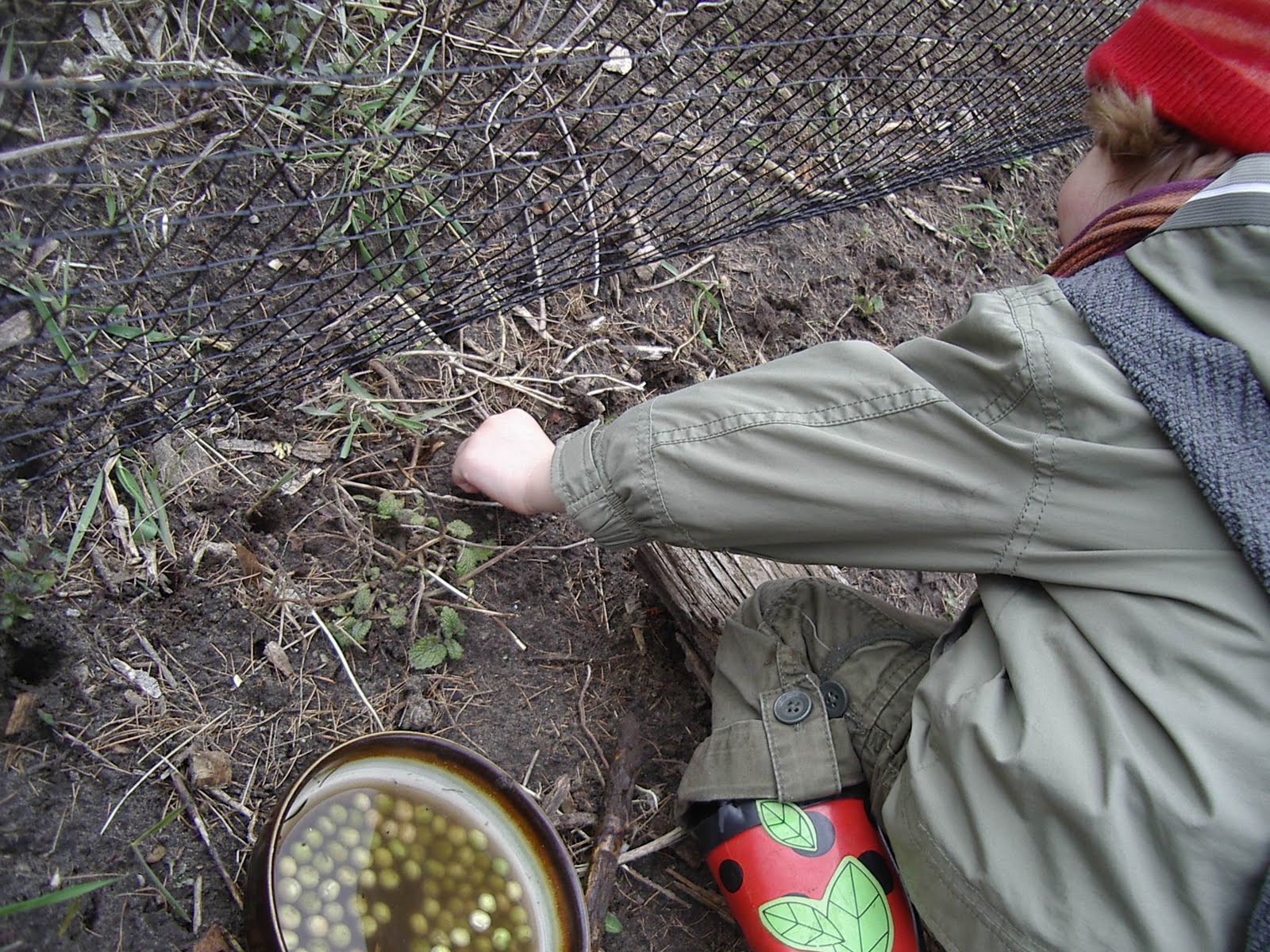
We are continuing the no-till gardening method as we prepare the beds for planting.  No till gardening is based on the ideas of Masanobu Fukuoka in One Straw Revolution, Ruth Stout's no dig gardening system, permaculture principles, (and various others).  No till gardening (or farming) does not mean "no work", as compost, mulch, top dressings, and cover crops are used to build soil health and quality, but there are many benefits.  No till gardening promotes natural aeration and drainage of the soil, saves water, reduces soil erosion, minimizes the need for weeding, saves time, energy and money, encourages soil life (worms, bacteria, fungi, etc), and helps soil retain carbon.


2011 Waterloo Region Food Summit, Sat April 30

In 2009 a Waterloo Region Food Summit was held here in our city.  Summit participants heard about and discussed the reality of hunger and poverty in Waterloo Region, the farmers' struggles to make a living growing food, and of the unhealthy diets of most of our population as a result of our out-of-balance food system.  From this summit, 6 priorities for the building of a strong, viable regional food system were declared: 1) food sovereignity; 2) food policy; 3) urban agriculture; 4) local food infrastructure; 5) farm viability; 6) access to healthy food.  Come out to participate in the upcoming Food Summit to follow up on these priorities for our region - more info and registration details here.

Jane's Walk, Sat May 7

The annual Jane's Walk is coming up on Saturday, May 7 from 10 am-12 noon.  This walk is a legacy to Jane Jacobs (1916-2006), a legendary urban activist, writer and thinker who "championed a fresh, community-based approach to city building...Jacobs saw cities as ecosystems that had their own logic and dynamism which would change over time according to how they were used...She promoted higher density in cities, short blocks, local economies and mixed uses. Jacobs helped derail the car-centred approach to urban planning in both New York and Toronto, invigorating neighbourhood activism by helping stop the expansion of expressways and roads. She lived in Greenwich Village for decades, then moved to Toronto in 1968 where she continued her work and writing on urbanism, economies and social issues until her death in April 2006.  A firm believer in the importance of local residents having input on how their neighbourhoods develop, Jacobs encouraged people to familiarize themselves with the places where they live, work and play with words like these: “No one can find what will work for our cities by looking at … suburban garden cities, manipulating scale models, or inventing dream cities. You’ve got to get out and walk.”
-Downtown is for People, 1957." (excerpt from http://janeswalk.net/about/jane_jacobs).


We are pleased that local residents have organized a Jane's Walk right here in our own Mount Hope neighbourhood, and that Little City Farm will be an official stop along the way his year.  If you come out on the tour you'll hear about the hopes and dreams we have for our urban farm in the midst of this particular neighbourhood, see the strawbale house addition, andtaste fresh baking from the outdoor cob wood-fired oven!  Read more details about the walk here.

Saturday, April 23, 2011

This Moment

{ This moment } - This moment - an end of week ritual, no words, just a special photo to remember, savour, enjoy.  Inspired by the continued beauty and creativity of Soulemama's blog, where she encourages readers to post their own moments.

A visiting cousin inspired new spring fairy capes...


Visiting relatives inspired me to sew quick spring fairy capes for the cousins to romp around in - and dance, run and romp they did!  The cape is a simple free-spirited (i.e. no pattern) design, although I found great inspiration from looking at the gorgeous earth celebrating kids clothing at Kunai.ca (a crafting mama from the sunny prairies of Manitoba.

Spring farm quiche

Here's a quick and easy recipe we love to make, using up several eggs and loads of garden greens and herbs.

Spring farm quiche

Crust:
1 1/2 cups spelt flour (or wheat, etc)
1/2 tsp sea salt
1/2 cup chilled butter
3-4 Tbsp cold water

Blend into soft dough using food processor.  Form into ball, and roll out using extra flour on table.  Makes one large crust.  Press into pie pan.

Filling:
5 eggs
1 cup milk
1/2 cup butter
1 lb greens (arugula, spinach, mizuna, mache, mustard), lightly sauteed
herbs for sprinkling (chives, parsley, cilantro)
1 cup shredded cheese
red pepper slices, optional

Blend filling ingredients mixing well.  Pour into prepared crust.  Bake at 350F for about 45 minutes or until top and crust are golden.  Serve warm or cold, with fresh green salad.

Baby chicks growing


The chicks are nearly three weeks old, and have developed considerable wing feathers by now.  They love to flap around their little indoor pen or our living room trying out their flying abilities, and can now balance on a wooden perch (or anything else they can hop up on - a couch arm rest, an outstretched hand, their water dish, etc).  We love these wee gals who have now been named: Saphira, Dusty, Ruby and Moth (names picked by our 3 year old).  For anyone considering urban hen keeping, these books are useful resources:
Keep Chickens, by Barbara Kilarski; and Backyard Poultry Naturally, by Alanna Moore.

Around the farm

Around the farm this weekend - first rhubarb nearly ready, waiting and hoping for asparagus, baby chicks growing, salad greens picked, seedlings transplanted, peas planted, trees budding, grapes pruned, compost turned, chicken run repaired, eggs collected and decorated..happy earth day, happy easter, happy spring to all.


Monday, April 18, 2011

How to build a root cellar

We've been cleaning out the root cellar lately, using the last carrots, the sprouting potatoes, and jars of preserves.  It's getting too warm in the space, as we have it vented directly outside - i.e. this works perfectly in winter months to keep the room naturally cold, but as the air warms outdoors it's not so usable for longterm storage of root crops.  Last fall we installed this root cellar and cold room into out basement.  Unfortunately this house did not have an existing space set aside for winter food storage - we moved our washing machine upstairs (making it easier to reuse the greywater through a pond filtration system), and set aside about a third of the former laundry room as the root cellar, and another third as pantry shelving for preserves, canning supplies, jars, wine making equipment, etc.  The root cellar space was a very simple construction - insulated from the inside, then vented outdoors as mentioned, and closed with a solid, well insulated tightly sealing door.  So far so good.  Spring is the season to start thinking about new building projects for the coming months, so this may be one for your list.  Here is a great book we suggest as a resource -  Root Cellaring: Natural Cold Storage of Winter Fruits and Vegetables, by Mike Bubel.

Mid-April greenhouse update

It's mid April!  The weather is complete erratic this month - snow, hail, rain showers, cold grey days, patches of warm sun, and then heading upto 18C later this week.  The greenhouse and coldframe, however, are moving right along at a happy pace - gorgeous leafy greens; flowering chive plants, full parsley, kale, spinach and chard plants; the Chicago Hardy Fig (also known as "Bensonhurst Purple") sprouting leaves and tiny fig buds; red currants showing early berry buds; and seedlings seedlings seedlings to be transplanted.


Favourite homesteading/sustainability magazines

We do a whole lot of reading around here...we visit the library at least once a week and bring home stacks of wonderful children's books, keep our B&B stocked with books to inspire our guests, and have a hefty collection of gardening, permaculture, green building, country living, crafting and homesteading manuals on our own bookshelves.  Here are a few of the favourite magazines we've found that provide useful homesteading/sustainability/natural parenting info.  If any readers know of other similar magazines, please add a comment below.

In particular, I'm excited about Urban Farm Magazine which I've only just found and started subscribing to.  The recent May/June 2011 issue includes articles on rooftop gardens, permaculture, suburban homesteading, sustainable local economies, lasgana gardening, DIY dehydrator plans, garden bug identification, and understanding misleading food labels.

Urban Farm: Sustainable City Living
Alternatives: Environmental Ideas and Action
Organic Gardening
Permaculture Activist
Mother Earth News
Harrowsmith (the vintage 1970s and 1980s copies)
Mothering
Natural Life
Yes! Magazine: Journal of Positive Futures
Utne Reader
Orion
New Internationalist 
Back Home Magazine
Small Farm
Hobby Farms and Hobby Farm Home
Living Crafts

Tuesday, April 12, 2011

Spring "firsts" at the homestead

Hooray for warm weather!  These past few days have felt like spring is finally here to stay.  A few "firsts" this week, due to the balmy spring weather...rubber boots, bare feet (dipped into the cold cold pond), wild leeks, crocuses, fresh sorrel and chives from the garden, delicious greens from the outdoor cold frame, transplanting first round of seedlings for our May sale, an outdoor picnic, an outdoor supper on the patio, an outdoor tea party, reading in the hammock, a ladybug, dragonflies, first thunderstorm (and strangely also a first brief hail storm), and a pair of ducks frequenting our yard...


Thursday, April 07, 2011

New chicks arrive

Four new little chicks joined our household this week! At one day old they are not a large addition, their little house (a clear rubbermade bin with mesh cover, warmed by a heat lamp) taking up only a small corner of our bedroom on a table right next to where our dog has her bed, near the woodstove. In about 8 weeks, when they are ready for the great outdoors, we'll move them out to join the rest of the hens...but for now, they make irresistable indoor companions. We chose the varieties - Columbian Rock x Red, and New Hampshire x Barred, for their winter hardiness and "gentle and quiet dispositions", from our local Frey's Hatchery.


Saturday, April 02, 2011

Saturday's activities - cheese making part two

We held our second cheese making workshop here at Little City Farm - back by popular demand - making cream cheese, mozzarella, and ricotta (ricotta was made out of the left over whey - which didn't work quite so well, but participants got the idea of how the ricotta process would go using whole milk)!  We were so pleased to have our facilitator Bianca here again, as she has loads of cheese making knowledge from her own kitchen experimenting, and makes the process feel so relaxed and manageable.  Really, cheese making is in fact that easy after you have tried the recipes once and been walked through the process.  Participants were excited about continuing their cheese making at home, and supplies can be found through the New England Cheesemaking Supply Co. or the more local Ontario based Glen Garry Cheese Making Supply Co.   I, for one, want to start making goat chevre, which seems incredibly simple as there are only 3 steps (as opposed to the 20 steps it takes to make mozzarella) - 1) heat the goats milk, 2) add culture, citric acid/lemon juice and cheese salt (available through New England Cheesemaking Supply) and let this stand 12 hours, 3) then strain curds through colander again letting it stand for 12 hours.  Voila!  Fresh goat chevre, with options to add herbs, spices, nuts, sundried tomatoes, etc.  Mmmm.


Tuesday, March 29, 2011

End of winter freezer clean-up


Although we preserve much of our food each year through canning, pickling, fermenting, cold storage/root cellar, and dehydrating/drying, we also still use a freezer for a few fruit and vegetable items.  This time of year we are trying to use up the pesto, beans, and berries that are still taking up space, to make way for newer produce only a few months away.  Today we received our bulk order of fresh maple syrup from a local farm (10 litres) which we decided to store in the freezer rather than canning, so in preparation for freezer space I pulled out the last elderberries, and red/black currants picked from our yard last year and made jelly!  It only made a small recipe, about 6 x 125 ml, but since I am a fan of the "small batch preserving" method this jam making session worked out perfectly in between making dinner and cleaning up the dishes.  I even used a regular soup pot for the canning process, with only a vegetable steamer basket to hold the jars in place - used less water and took much less time to heat up than a huge canning pot.  I used Pumona's low-sugar pectin for the first time, and LOVE it. Using this pectin reduces the amount of sugar by about half to that of a regular recipe (or they also give recipes if you want to use honey instead of sugar), and the jam/jelly gels beautifully.  I am going to stock up on Pumona's, as usually by canning season in August the shops here that carry it are all sold out. 

Sunday, March 27, 2011

Favourite whole-grain seed crackers

We do a lot of baking around here, always testing out new recipes for our B&B, custom baking for local requests (vegan gluten-free), and just generally dreaming about ways we could operate a wholefoods bakery someday.  Here is our favourite seed cracker - it can be made with nuts, or nut-free - gluten or wheat-free - with additions like herbs, sundried tomatoes, hemp seeds, etc.   This is a great activity to do with kids, as they will love using cookie cutters to cut the crackers into shapes!


Wholegrain Nutty Crackers
2 cups whole spelt flour
1 cup pumpkin seeds, ground into a fine flour
1/2 cup seeds - sesame, flax, poppy, hemp seeds
herbs - rosemary, basil, dill, caraway, etc (optional)
or sundried tomatoes chopped into tiny pieces (optional)
1 tsp sea salt
1/2 cup oil
1/2 cup water

Combine all ingredients in large bowl and mix well.  Knead dough into 3-4 balls, roll out with rolling pin on lightly floured table.  Cut into shapes or rectangles making sure dough is evenly rolled, quite thin.  Bake on unoiled cookie sheets in preheated oven, at 350 F for about 15 min.  Cool before serving or storing in glass jars.  Makes several dozen crackers, depending on size they are cut.


Seedlings!

We had Angie from Fertile Ground CSA here last Saturday to lead her annual seed starting workshop.  She always offers loads of advice, and even though I've been starting seeds for more than a decade, I still learn new tips each time (like using cinnamon as a natural anti-fungal on soil; and using hypothermia blankets to insulate a seedling rack).  She's offering several other gardening workshops this month - so if you are local, check her website for details.

Our flower and herb seedlings are up, healthy and happy.  The kale is ready to be transplanted into the greenhouse and coldframes, and today we are seeding our tomatoes, basil and peppers...yay!  I'm always so anxious to start tomatoes and have to restrain myself from not starting them too early.   This year, in addition to our regular favourites, some new varieties we are trying include: Manitoba Red, Berkeley Tie-Dye, Principe Borghese, Jaune Flammee...all from Greta's Organics, The Cottage Gardener, or Urban Harvest.


Last snowfall for spring?

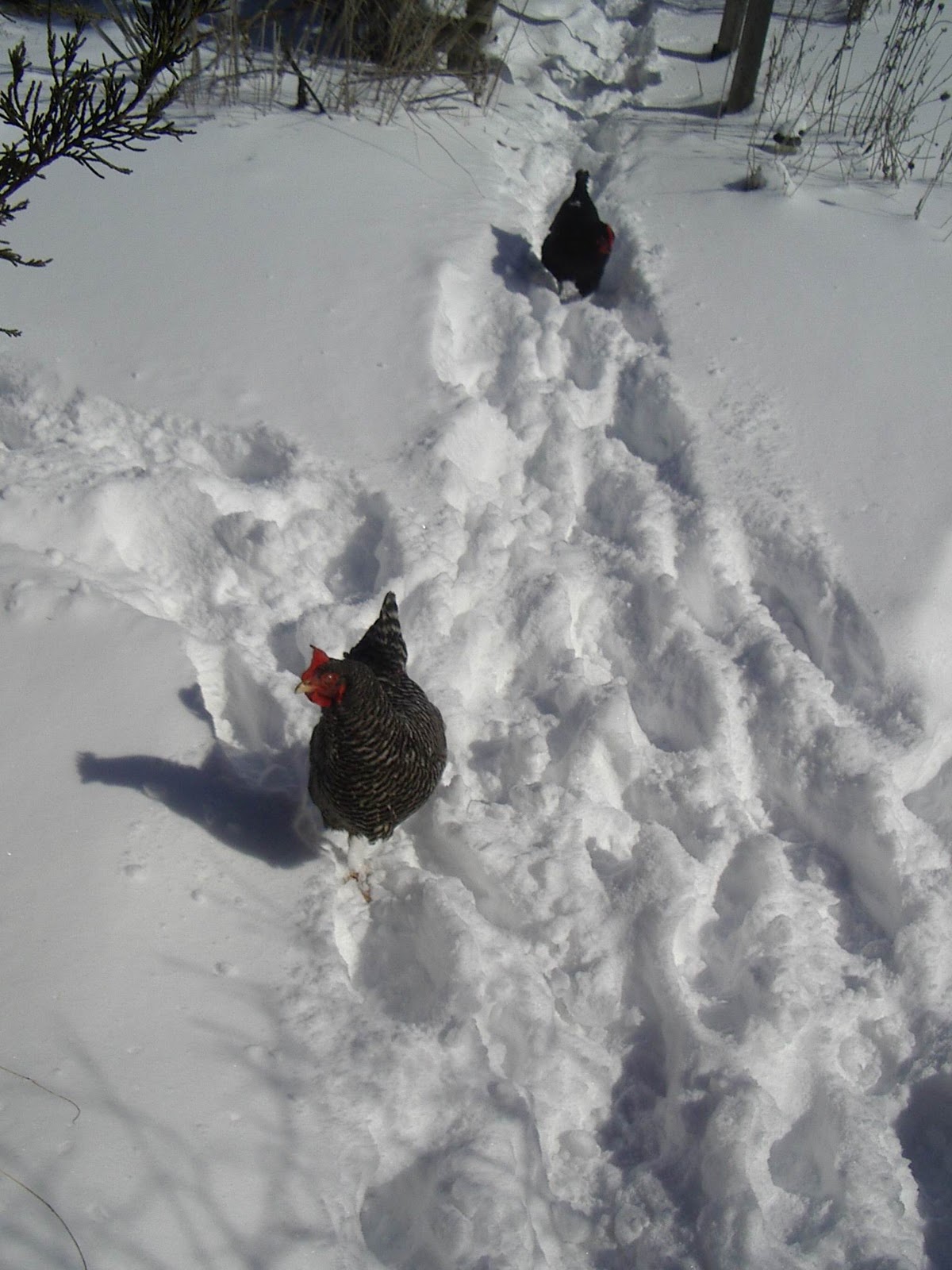
The yard is blanketed in snow again, after a surprisingly heavy snowfall this week. We were just starting to gear up for spring - hearing robins and woodpeckers, tapping maple trees, finding wild leek tips peeking out of the soil - but this gave us one more chance to appreciate winter.  We toured the yard sleuthing out the fresh bird and animal tracks in the snow; built one last snow fort; cut yellow dogwood to bring into the house (to sprout early leaves); and enjoyed warming up in the sunny greenhouse.