Pages

Showing posts with label baileys local foods. Show all posts

Saturday, April 26, 2014

Little City Farm May Sales!

Local folks!  We are happy to invite you to come see us for two occasions in May!

-----------------------------------------------------------------------------------------------------
Fri, May 9 - SOAP & HERBALS SALE 
Homestead Herbals at Bailey's Local Foods 
3:30-6:30 pm, at First United Church, uptown Waterloo
Interested in locally handmade natural soaps and herbal products?  Our Homestead Herbals products are made with locally grown organic and/or wildharvested herbs, local goatsmilk, local honey, local beeswax!  We have natural soaps, shampoo bars, shaving soap, bug spray, herbal first aid kits, pregnancy & post-partum herbals, and more!  Come check out our items during the Bailey's Local Foods pick-up in uptown Waterloo (16 William St W, Waterloo).  Everyone is welcome to come by.   Special discounts for this day only!  Cash payment.  Preview our Homestead Herbals products here.

--------------------------------------------------------------------------------------------------------------
Sat, May 24 - SEEDLING SALE 
12th Annual Seedling Sale
9 am-12 noon, at Little City Farm
Don't miss our exciting annual seedling sale!  This fun community event features hundreds of seedlings, including 20+ varieties of heirloom tomatoes, peppers, eggplant, brassicas, basil, herbs, perennials, strawberries, flowers and more!  This year we welcome back Fertile Ground CSA with their gorgeous seedlings; the Ever Lovin' Jug Band for lively music on the back porch stage; organic baked goods (pies, breads, and more) and a wood-fired oven; and Pollination Canada with important info about pollinators!  Also tours of our urban homestead...and more!

The seedling sale is held at Little City Farm, here at 508 Duke St W, Kitchener.  Please walk or bike if you can!  Bring your own boxes or baskets to carry home your seedling purchases - and CASH payment only.

See you then!

Monday, February 17, 2014

Local homegrown herbals! New! Our soaps & salves now available through Bailey's Local Foods!

We are happy to announce that some of our homegrown herbal products are now available for purchase through Bailey's Local Foods.  This will make the purchasing and pick-up more convenient for local folks who already place regular food orders through the Bailey's online system, and pick orders up at a convenient uptown Waterloo location!

Through the Bailey's site you'll now find our handmade natural soaps, including baby soaps, shampoo bars, assorted body bars, and shaving bars, and even laundry stain stick bars.  You'll find our salves including mama belly balm, calendula healing salve, back ache balm, and all purpose healing salve.  You'll also find our lipbalms - peppermint with red clover, or lavender & local honey.  One of the things that makes our soaps & salves unique is that each uses locally grown herbs such as calendula, lavender, sage, red clover, arnica, and comfrey (grown naturally or sourced from a local organic farm), as well as only pure oils and essential oils for gentle, natural healing.  We work with our herbs from start to finish, including harvesting at their peak, by us, in small batches so we know exactly how they were grown, dried and prepared.

We are very excited about our Herbal First Aid Kits and can't say enough good things about them!  They come in a convenient travel tin that fits into backpacks or bags so it can easily be taken on hikes and kept on hand for when it's needed.   The first aid remedies included are useful for headaches, sunburn, bug bites, minor cuts & scrapes, splinters, heat rash, digestive upset and motion sickness, and much more.  A complete description of the remedies included in the Herbal First Aid Kits is listed here, and also comes with each kit.

A complete line-up of our herbals is also now available through our online Homestead Herbals Etsy store, and we can arrange local pick-up here at our location to save shipping costs.


Friday, November 01, 2013

Teas now available from Homestead Herbals

Our herbal teas for 2013 are now ready!  For now we have five varieties, including a new delicious Immune Boosting Herbal Chai just in time for winter cold and flu season!  We love these teas, and have tried to create blends that can suit a variety of needs - there is
  • After Dinner Tea which is a relaxing digestive blend; 
  • Women's Vitality Blend which is rich in iron, calcium and hormone regulating herbs; 
  • Sweet Dreams which promotes rest and relaxation; 
  • Winter Flu Fighter which has herbs to ward off coughs and colds; and the 
  • Immune Chai blend which is a sweet spiced rooibos & immune herb blend
The herbs we use are grown using sustainable methods in our own gardens, ethically wild-harvested, or purchased for certified organic sources.  The teas will be available during our Dec 7 Handmade Holiday sale, through our online shop, and also by pre-order online from Bailey's Local Foods here in town.  Here are some photos of tea herbs as they were growing this year, and the finished product.   What a sweet reminder for summer in our garden when we sip these teas.

Calendula in blossom
Fennel and echinacea in flower
Hops on arbour
Sage in flower
Calendula drying
After Dinner Tea
Immune Boosting Herbal Chai Tea
Sweet Dreams Tea
Winter Flu Fighter Tea
Women's Vitality Blend


Tuesday, November 29, 2011

A Little Bird Told Me Craft Sale Vendor Profile: Little City Farm

Over the weeks leading upto our annual handmade holiday craft sale, "A Little Bird Told Me", on Sat, Dec 10, we are highlighting each one of the participating vendors.  Here are a few comments from us (Greg and Karin) at Little City Farm.

Why we hold the A Little Bird Told Me handmade craft sale:

Little City Farm aims to promote sustainable city living through our workshops, events, and our "living example" of an urban homestead.  We also try to create unique opportunities for people in the community to meet, share their skills, and support each other's ventures.  Two examples of this are our annual Organic Seedling Sale (the Saturday of the May long weekend), and the "A Little Bird Told Me" handmade holiday sale (the second Saturday in December).

We have been holding the "A Little Bird Told Me" handmade holiday sale since 2007 in order to showcase unique eco-friendly well-crafted goods created by local artisans and crafters.  Each year the event grows, and we anticipate it with great enthusiasm.  We enjoy the way our little house is transformed, bursting at the seams with the crowd of folks who pass through the sale, and the busy bustle of the festive mood.  We love having many of our vendors return and welcome some new ones as well each year.  Yes, the sale is open to the general public (so please help spread the word!) 

What will Little City Farm be offering at the sale: 

Herbals & Baking!  

Herbals - We will be offering our usual selection of handmade natural soaps and herbal products (teas, salves, mama & baby items) all made in small batches using pure ingredients and herbs sustainably grown in our garden.  

Baking - One of Karin's dreams is to run a small eco-conscious bakery some day -- but for now she is satisfying this desire by providing artisan breads and wholesome baked treats on a small scale for the neighbourhood.  At the holiday sale we will have a good selection of these organic baked goods and will be offering them in a tiny cafe-like setting set up just for the day.  We use organic locally milled flour from Oak Manor, as well as organic local eggs, dairy, (or vegan alternatives) in our baked goods.  We will have fresh wholegrain breads, vegan shortbread, organic fair trade brownies, raw nanaimo bars, organic holiday cookies...also jams and jellies made with local organic berries...to name a few...

Make sure you stop by our cafe room to enjoy a baked treat while you are at our sale! 

Read more about Little City Farm at: 
www.littlecityfarm.ca
www.homesteadherbal.etsy.com


Monday, November 14, 2011

Roasting coffee - a do-it-yourself method

We try to grow as much as we can of what we eat; if now grow then buy locally; if not locally available then buy fair trade and organic.  Coffee falls into this latter category.  Some would not consider roasting coffee to be a vital homesteading skill, but we have found it to be quite useful (operating a bed and breakfast and having at least one person in the household who enjoys coffee every day).  There are loads of fair trade, organic and shade-grown coffee brands available at health food stores, Ten Thousand Villages, most cafes, and even some grocery chains by now, and here in town we also have a few local roasteries that provide freshly roasted coffee beans. 

However, we have the do-it-yourself mentality and are always eager to learn new skills, so we set about learning how to roast good coffee (on a shoe-string budget, i.e. without buying an expensive home roaster).  Friends who have lived in various parts of Africa showed us the best way to roast coffee in a cast iron pan over the fire, but about two years ago we came across another interesting way to roast coffee - in the hopper of an electric popcorn maker.  We promptly found a used popcorn maker at the local thrift sore, and tried it out.  So simple, with great results!  Roasting coffee sends chaff flying everywere so it's wise to do it outdoors.  Depending on the roast you want, it can take from about 5-20 minutes, until the beans are crackling, dark and oily.  The smell is delicious!   Our popcorn maker takes a maximum of 110 grams of beans, and you need to stir occasionally to even out the roast.  Then let the beans cool in a collander, and voila, incredible home-roasted coffee.  We buy our beans green through a local friend who is directly involved with farmers in Guatemala through a project called Cafe Justicia.  They also sell their coffee roasted and ground, in various places here in town.


Saturday, April 02, 2011

Saturday's activities - cheese making part two

We held our second cheese making workshop here at Little City Farm - back by popular demand - making cream cheese, mozzarella, and ricotta (ricotta was made out of the left over whey - which didn't work quite so well, but participants got the idea of how the ricotta process would go using whole milk)!  We were so pleased to have our facilitator Bianca here again, as she has loads of cheese making knowledge from her own kitchen experimenting, and makes the process feel so relaxed and manageable.  Really, cheese making is in fact that easy after you have tried the recipes once and been walked through the process.  Participants were excited about continuing their cheese making at home, and supplies can be found through the New England Cheesemaking Supply Co. or the more local Ontario based Glen Garry Cheese Making Supply Co.   I, for one, want to start making goat chevre, which seems incredibly simple as there are only 3 steps (as opposed to the 20 steps it takes to make mozzarella) - 1) heat the goats milk, 2) add culture, citric acid/lemon juice and cheese salt (available through New England Cheesemaking Supply) and let this stand 12 hours, 3) then strain curds through colander again letting it stand for 12 hours.  Voila!  Fresh goat chevre, with options to add herbs, spices, nuts, sundried tomatoes, etc.  Mmmm.


Saturday, August 08, 2009

Fresh cut flower bouquets go to market


"The earth laughs in flowers" - e.e. cummings

We've been selling some of our extra garden bounty through the Bailey's Local Foods buying club every Friday. This is part of the "producerism" mentality of our homestead, trying to find ways to make all aspects of our day-to-day life productive - a concept we define as either earning some income, sharing our excess, educating, or reducing our ecological impact. We've offered fresh herbs, wild grape leaves, dried herbal teas, and also cut flower bouqets to the buying club members. I love making the simple bouquets, using black eyed susan, echinacea, zinnias, sunflowers and daisies which are in full bloom right now. I try to keep fresh flowers around the house whenever I can, as well as enjoying them in the garden. We've also been collecting seed from the annuals in the fall (sunflowers, cosmos, nasturtium, borage, calendula, marigolds, etc) . An easy way to keep flowers fresh in a vase is to add 1 tsp sugar to the water. Changing the water daily also helps prolong the bloom life of cut flowers. Here are some photos as I was preparing the bouquets - we take them to the buying club car-free (by stroller), with my little one helping out.

100-Mile Desserts: Fresh heirloom watermelon


Fruit season is so special! Although we do grow a variety of berries and fruit on our property, I had not planted watermelon this year. The melons, pumpkins and squashes tend to crowd out the rest of our garden, so alas, I just can't fit everything in! I want to experiment with growing them vertically on sturdy trellises next season. However, we are very fortunate to have the Bailey's Local Foods buying club in town, offering us 100-mile organic fruit! This week I picked up two watermelons, one an heirloom yellow variety, grown on nearby farms. What a treat! These were served to our bed & breakfast guests for brunch this morning, but would also make a lovely simple healthful (and beautiful) dessert option.

Thursday, July 23, 2009

100-Mile Desserts: Spelt Crepes


Well it's fresh fruit season, so let's make the most of it! Today's breakfast was delectable - crepes made of organic spelt flour, covered with fresh berries, edible flowers (johnny-jump-ups, and borage) and local organic whipped cream. Hardly our usual breakfast - which tends to be organic oatmeal with homemade applesauce and local maple syrup - but we had a fridge full of beautiful berries including ones picked from our own backyard (currants, gooseberries, raspberries) so these crepes were on the menu. They would make a lovely dessert as well.

Organic Spelt Crepes - serves 4

1 cup organic spelt flour
1/2 tsp salt
3 eggs
1 1/4 cups milk

1) Mix all ingredients together in a large bowl and whisk well until lots of small bubbles form.
2) Preheat cast iron skillet and lightly coat with oil. It is helpful to oil pan before making each crepe so they don't stick.
3) Pour 2-3 Tbsp batter into the pan, and quickly rotate so batter covers entire skillet.
4) Bake 1-2 minutes for first side, then gently flip crepe and cook about 30 seconds more for second side.
5) Remove from skillet and roll up.
6) Either serve with an inside filling, or top with fresh fruit and whipped cream or yogurt.

Makes 10 medium sized crepes.

Sunday, June 28, 2009

100-Mile Desserts: Maple Glazed Peanuts


Just in time for the long weekend holiday coming up, I thought I'd add the recipe for a very simple 100-Mile camping sweet treat. It can be made ahead of time at home (it transports well), or it can also be made over a campfire in a cast iron pan. It would be a fun and easy cooking project for kids to help with! Of course, be sure to ask first if anyone has peanut allergies.

We found locally grown peanuts at Pickards (available directly, or through Bailey's Local Foods). They offer redskin peanuts that are salted, unsalted or garlic. Any variety would do for this recipe. There are also a variety of other nuts available through the Ontario Nut Growers Association (hazelnuts, heartnuts, walnuts), but they are significantly more expensive and need to be shelled by hand.

Happy Canada Day! Enjoy this recipe:

Maple Glazed Peanuts
2 cups peanuts (e.g. Pickards Peanuts)
1/4 cup maple syrup
1 tsp salt (if peanuts are unsalted - e.g. Sifto salt)
1 Tbsp canola oil (e.g. Pristine Gourmet)

1) Pre-heat a large sturdy cast iron frying pan. Prepare a lightly oiled sheet of waxed paper on a baking tray and set aside.
2) Dry-roast the peanuts in the pan over medium heat for about 5 minutes, stirring constantly.
3) Add maple syrup, salt and oil. Stir the mixture to coat peanuts well.
4) Continue to stir well as the maple syrup boils down. This will take about 15 minutes.
5) When the maple syrup has boiled down, the peanuts will look glossy and sticky. Scrape them onto the oiled sheet of wax paper and let cool completely.
6) Break the maple-peanuts ("brittle") into small chunks. Store in sealed container or glass jar.

Friday, June 26, 2009

100-Mile Desserts: Custard & Berry Pie


Last week a local 100-Mile Diet Challenge was started in our community. Two of our community naturopaths (from the Healing Path Centre for Natural Medicine in uptown Waterloo) are heading up the challenge, inviting 100 people to eat 100-mile diet for 100 days. So far more than 160 people have already signed up! There are various slight exceptions, but for the most part participants are attempting to support only local farmers and producers for this duration. The hope is to learn more about the great food varieties in season for us locally, to build a sense of momentum around local eating which will hopefully encourage new food sources and suppliers to become available, and to become a little less reliant on the long-distance transported food system.

More info about this local 100-Mile Diet Challenge at: http://www.healingpathcentre.com/blog/index.php

We already pretty much eat a local seasonal diet, and love seeking out local farmers and producers, and supporting restaurants that feature local foods on their menu. However, my husband cringed at the thought of not having his daily morning coffee, and although he doesn't mind the odd cup of herbal tea, or even dandelion-chickory root brew I suggested, he decided that coffee would be his "exception" as long as it was fair trade and organic. Fortunately, there is a good selection of 100-Mile wine available, not to mention apple cider and other locally made fruit juices, and we are growing hops in the hopes of trying to make our own beer from scratch this fall.

I am not a coffee drinker, but do like my desserts. The thought of no sugar or chocolate for 100 days seemed a bit daunting, but then again it would probably do me good to reduce my dependence on these two items! I decided I will go without both, and will make it my goal to compile 100-mile dessert recipes during this time. We are a region rich in dairy, and there are several excellent locally made sources for organic yogurt, cream, icecream, butter, milk and of course eggs available. I am also excited about all the seasonal berries, local fruit, wild herbs & edibles (like rosehips & wild grapes), wild-harvested abandoned fruit, edible flowers, locally grown nuts, maple syrup and honey available to us, and will be posting weekly 100-mile dessert recipes on this blog along with photos of the desserts we create & sample here at home! To find a quick complete list of all the recipes just do a search in this blog under "100-mile desserts". I will only list general sources for ingredients, and more specific names of farms can be found on our region's Buy Local map, through Bailey's Local Foods, or at the local farmer's markets.

Here is the first recipe, which we savoured on our picnic blanket outside in the garden:

Custard & Berry Pie

Pie Crust:
1 1/2 cups organic spelt or wheat flour (e.g. Oak Manor)
1/2 tsp salt (e.g. Sifto salt which comes from near Goderich)
1/2 cup chilled butter
3-4 Tbsp ice water

1) Mix all ingredients in food processor. This makes a soft ball of dough.
2) Chill for 30 minutes.
3) Roll out and spread into a large pie dish.
4) Pre-bake for 5 minutes at 350F.

Custard Filling:
4 organic eggs (various good local sources, or your from your own backyard hens)
1/2 cup maple syrup (e.g. sources at Kitchener Farmer's Market)
4 Tbsp organic flour (e.g. Oak Manor)
1 3/4 cups organic milk
2 Tbsp organic butter

Plus 2 pints fresh seasonal berries or fruit (we are using strawberries right now).

1) Preheat oven to 350F.
2) Whisk eggs, syrup and flour together. Add other ingredients and blend well.
3) Pour into pre-baked pie crust. Bake for 40 minutes.
4) Cool pie completely. Then cover with fruit or berries in concentric circles.
5) This pie is not very sweet - the sweetness comes from the fruit ontop. It can be garnished with local whipped cream (sweetened with honey) or fresh mint sprigs.

Serves 10.

Thursday, April 30, 2009

First spring salad from the coldframe


Enjoyed our first harvest of fresh greens (spinach, arugula, dandelion, various salad varieties, chives, oregano, cilantro) from the coldframe tunnel. What a treat - celebrated with a bottle of 100-mile Niagara wine and homebaked wood-fired oatmeal bread! We also dropped off a bag of freshly harvested greens to friends around the corner who have been eating a strictly 100-mile diet for the past year, with one month left to go. We've been impressed by how they've managed to do this, including grains, flour, protein sources, etc. We will be joining the 100 mile challenge this summer (100 people for 100 days, eating 100 mile diet) and hope to glean some ideas from these friends on where to source out the best in local varieties.

Sunday, April 05, 2009

Around the Sound - celebrating local in Owen Sound

We took a short "holiday" this past weekend, to visit friends who we haven't seen enough of in the past months. They are living up in Owen Sound, about 3 hours north of here, and had recently purchased a home - this was a chance for a housewarming, to get a tour of the local town sites, time for them to connect with our new baby, and of course great conversations over equally great food.

Part of our tour included the local farmers market, featuring a good supply of local vendors with handmade goods as well as honey, maple syrup, eggs, baked goods, breads and even some end of winter organic produce. The second exciting stop was a newly opened local foods store - featuring all local items sourced largely from the Grey-Bruce County and a larger 100-mile radius. The store, aptly called "Around the Sound Local Foods Store" was well stocked with local meats (including the specialty smoked fish from nearby Georgian Bay), cheeses, produce, grains, handbaked breads, cakes, pickles and jams. It also featured some handmade crafts (knitted hats, soaps and candles), and a few books about eating locally. We duly dropped off a stack of the latest Edible Toronto Magazine (called Edible Toronto, but really featuring southern Ontario farmers and food stories), which Anne, the shop owner took happily to pass along to her customers. We were quite impressed with the shop, and couldn't leave without buying a few loaves of the wonderful wholesome bread (cranberry-sunflower, and multigrain sourdough, baked by the Rising Sun Bakery using local grains), and a jar of "fire kraut" (a unique and spicy sauerkraut made with chili peppers and spices)..mmmm

Next stop was a look at the huge open blue waters of the bay before heading home for lunch. Our friends are excellent cooks, also eating a mainly local diet which includes items from a winter share with their local CSA (community supported agriculture). Our breakfast that morning had already consisted of farm fresh eggs, with toast from Rising Sun Bakery, a fine homemade elderberry-wildgrape-rosehip-sumac jam made last fall. Now lunch was: roasted roots soup (cream of celeriac, parsnip and maple syrup) topped with savoury toasted tempeh bits, more bread from Rising Sun Bakery, and a raw salad of shredded beets, carrots, apples and celeriac from the CSA, plus toasted sunflower & pumpkin seeds, and homemade pickles, firekraut, and for dessert, last summer's homecanned peaches with a splash of amaretto.

Post-lunch we had time for a cozy cup of tea infront of the fire in the woodstove, and then a short hike up the nearby Bruce Trail on the rugged cedar-lined escarpment trails. We got home rested, well-fed, inspired, reconnected...

Saturday, March 28, 2009

Seedling Starting Workshop


This week has been a whirlwind of activity around the homestead - must be the onset of spring...

Our homesteading workshop this month was on starting seedlings - the workshop, held last Saturday, was widely popular with more than 30 people crowding into our kitchen to learn the finer points of starting their own seedlings! Good to see several old friends, and many new faces at this event. Angie Koch, of Fertile Ground CSA, provided lots of anecdotes from her farming experience and useful information on seeds, soil and seedling needs to get everyone equipped and inspired for getting their gardens started indoors. Thanks to everyone for being so accomodating about the full house - but we just didn't want to turn people away. We'll consider holding this workshop outside or in a larger space next season - it's great there is such appreciation and interest in growing our own food in the city.

Speaking of local food, the Bailey's Local Foods project has recently been formed into a non-profit. Nina (and now Rachael as well) will be supplying aproximately 300 families with 100-mile foods, everything from produce, to bread, to cheese, to eggs, to preserves! Wow! This is such a worthwhile business venture, and a gift to us who wish to eat 100-mile but don't have time to do all the background research into sourcing out quality farmers and suppliers! Nina is currently taking registrations - it's a $20 annual membership fee, and you can conveniently order weekly, monthly, or occasionally, as needed. Check out: www.baileyslocalfoods.ca

Monday, March 02, 2009

Let your taste buds tingle - fermented foods workshop!


What an incredible weekend of fine local food flavours! On Saturday we hosted a workshop here on lactic acid ferments - a category that includes delicious and health-promoting foods like sauerkrauts, pickles, miso, kimchi, tempeh, sourdough, yogurt, beers and wines. The two hour workshop did not feel long enough, as our facilitator covered a wide range of information including history, astounding stories of the health benefits, cultural traditions, "how-to" of fermented foods, and of course a tasting of many of her homemade ferments. We were priviledged to try her brined garlic, carrots/daikon/burdock, dilly beans, last spring's asparagus, wild harvested brined grape leaves, and year-old sauerkraut made into a rich salad dressing. Mmmmmm. Yes, our taste and olfactory senses were tingling alright!

Her basic recipe for salt water brine is simple - 1 litre distilled water (as chlorine or other chemicals can destroy the living bacterias which are needed for fermentation) at a ratio to 2 Tbsp sea salt. She also suggests adding 2 Tbsp of whey (skimmed off her homemade yogurt) to each jar to help activate and speed up the fermentation process. Here is one of the recipes she shared, which we made together as a group - a colourful winter slaw made with locally grown root vegetables, cabbage, garlic, kale and more. Just seeing this gorgeous raw "salad" shredded into a huge bowl on the table was enough to make us all salivate. Everyone took home a sample jar, and after watching these wonderful colours bubble and meld, and tasting the changes to our jars over the next days and weeks we will all be hooked on fermentation.

Colourful Winter Slaw
3 1/4 cups peeled & chopped roots
3 1/4 cups chopped onions or leeks
several garlic cloves, peeled
1 large bunch kale, chopped
add other spices as desired (bay leaf, horseradish, ginger, mustard seeds, dill, tarragon, clove)
Salt water (2 Tbsp sea salt: 1 litre water)

Mix all ingredients except the salt water. Crush slightly by hand to start breaking down vegetables making them more susceptible to absorbing the brine. Pack into sterlized jars up to 3-4 cm from the lip. If using metal canning lid, consider layering a piece of waxed paper inbetween so the vegetables don't react with the metal. Add 2 Tbsp whey and fill the jar to cove the vegetables by 1 cm with the salt water. Store at room temperature for 10 days, then in a cool dark place. When desired level of fermentation has been achieved the jars can be stored in the fridge.

An excellent book that covers a wide range of fermentation lore is Wild Fermentation by Sandor Ellix Katz. It's just worth reading on it's own, regardless of whether you plan to ferment or not, as he is such an engaging writer drawing the reader into this tradition of foods. He describes fermentation as a form of activism! Fermentation is unpredictabile, unique, strongly influence by local conditions, and engages the eater directly in the process of its preparation (often for years before the ferment is "ready" - e.g. 10-year old miso, cheese or wine that improves and changes flavour with age). This in opposition to mass produced consumer culture food that is denuded of nutrition, uniform to the extreme, and controlled by corporations leaving the eater powerless. He describes a society without "culture" (i.e. fermented food traditions) as having lost its culture, and encourages us to find ways to engage in our food and food histories again - be it growing, cooking, baking, fermenting...

Thanks to everyone who came - what a great group of food enthusiasts! We could have used another hour after the workshop just to get to know each other and share more recipes and ideas. We plan to offer this fermentation workshop again in the fall, at harvest time when we are all thinking of best ways to put food away for the winter. Not all of us have root cellars or solar dehydrators, not all want to use loads of electricity for canning or freezing foods, but fermented foods are simple, require no electricity, and retain optimum nutrition (in fact, nutrition is enhanced by the fermentation process). Stay posted on our website for updates on the next fermentation workshop date.

Monday, February 23, 2009

Edible Toronto - Little City Farm feature coming in April issue

We're pleased to announce that a small article about Little City Farm will be coming out in the next Edible Toronto magazine (April 09). This is a beautiful magazine that is dedicated to connecting local consumers with local food producers, food growers and food artisans. It's a fairly new quarterly print magazine, with gorgeous farm/food photography, and is available FREE at many locations around southern Ontario, as well as at local summer festivals such as Feast of Fields. Go to: www.edibletoronto.com

Last May, almost a year ago from when this issue will be coming out, we had Lauren Carter and her partner stay with us in our B&B. She is a widely published and accomplished writer who has a regular featured article in the Edible Toronto. In order to do her research, Lauren gets to travel around to all kinds of inspiring locations meeting up with the food artisans, farmers or producers she is writing about. Thanks again Lauren for visiting us, and being an inspired writer able to document a little of your experience with us and the projects we are involved in. Check out the Edible Toronto site under "past issues" for other articles by Lauren. She also has her own website at: www.laurencarter.ca

Friday, October 31, 2008

Hazelnuts, Chestnuts & Heartnuts - grown locally!


I made my final purchase for the season at the Bailey's Local Foods pick-up today. The list of available local foods (even at the very end of October) was staggering! Nina had outdone herself, sourcing everything from butter & cheeses to free-range turkey, produce (including bushels of the last red peppers, bushels of apples, fresh herbs) to peanutbutter, popcorn to pickles, salsa to squashes, sparkling applecider to blackcurrant jam, pear sauce to peach custard pie, 12 kg bags of organic flour to locally handmade pasta, canned peach slices to raspberry cookies, dried beans and much more. Wow! I wish my wagon was bigger to be able to cart home more items (actually it was my handy baby stroller and a large backpack that carted my food home today, as Maya came along with me sleeping all the way).

In the end I had restrained myself and settled on only ordering a few special things that I can't find at our local farmer's market (because I do love going there each Saturday). In particular I was excited about the source for 100-mile nuts that she found. I had not known about the Society of Ontario Nut Growers (or SONG), and their active promotion of nut-tree growing in Ontario (see www.songonline.ca). Nina found a particular farm in the Niagara region that grows chestnuts, hazelnuts and heartnuts in their nut orchard (yes, it's still called an orchard), and was offering these to food buying club members by the pound. I can just imagine savouring these nuts over the course of the winter, bringing them out for after a holiday meal, and roasting the chestnuts in our new woodstove (or even outside in a small fire for a Winter Solstice treat). There is something precious about holding an edible nut (like any seed) in your hand and really thinking about what this means - the potential held within it, the possiblity of a full-grown tree someday - making it all the more potent knowing this nut is fresh, has been sustainably grown and harvested by hand, and came from only an hour or two from here...

The SONG website offers helpful advice for the would-be nut farmer, such as starting a nut orchard, how to harvest nuts, grafting, starting nut trees from seed, value-added products, and more. I was amazed to read that nut trees able to be grown in Ontario make up quite a long list, including the aforementioned heartnuts, hazelnuts, and chestnuts, but also Persian walnuts, black walnut (which we have four of on our property), butternut, buartnut, ginko (didn't know this was an edible nut tree), northern pecan, hican, shellbark and shagbark hickory, nut pines (in our climate the Korean, Swiss and Siberian pines), and even almond. On the site there are links to each variety of nut with more growing details, history, and photos. Many of the nut trees can successfully be started from seed here in Ontario, so I am hopeful to try sprouting some of the nuts I just purchased and start a nut tree orchard of my own. If the seedlings take, I'd love to develop a small urban tree nursery and pass on edible tree seedlings to people at our annual May 24 seedling sale.

www.songonline.ca

Quince Membrillo


A friend passed on a huge sack full of quince to us, which had come from a local tree in her mother's backyard that seldom gets harvested or used. This is the first time I've made anything with quince, and so I did a little sleuthing as to best ways to preserve it.

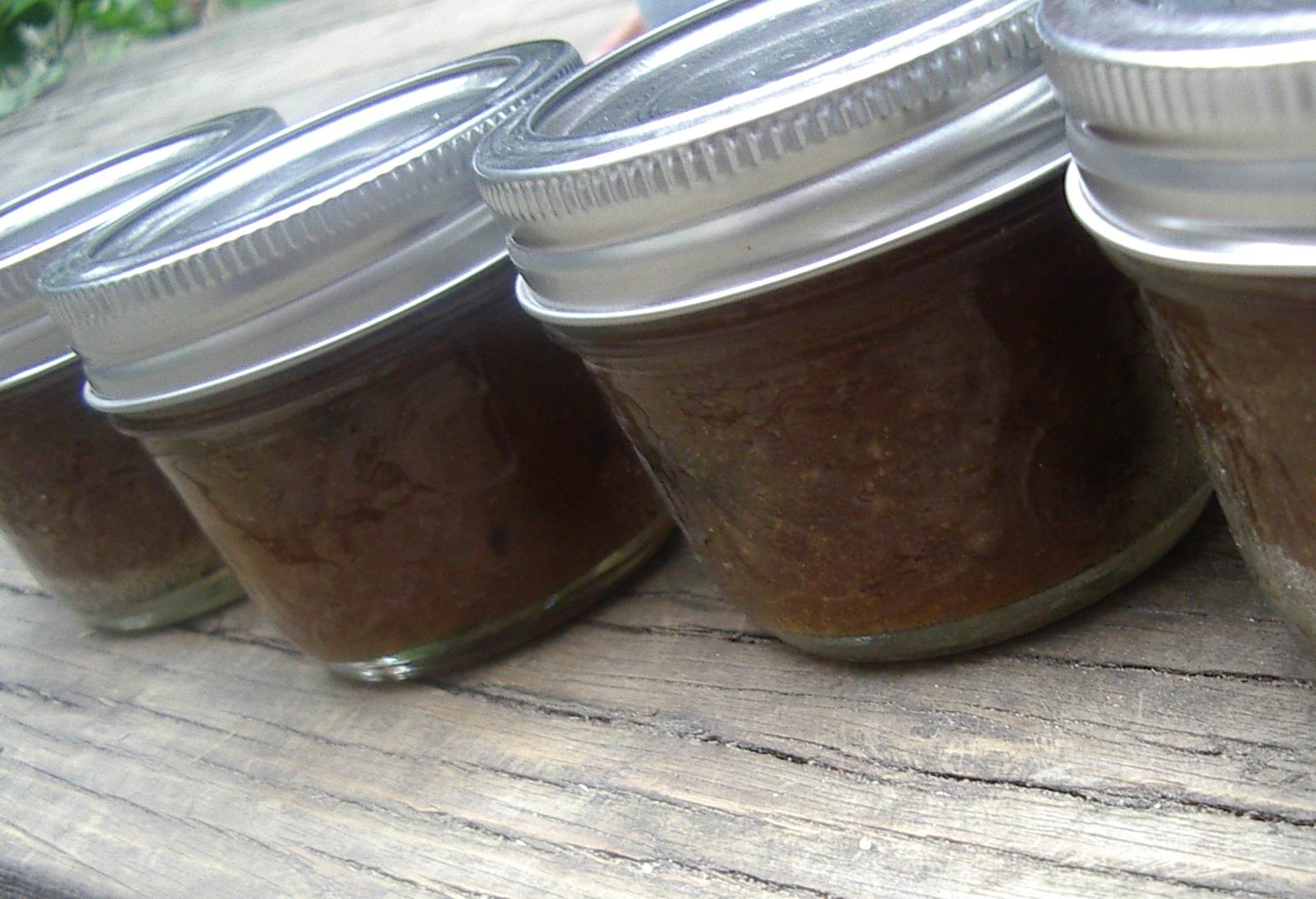
Turns out quince is similar in flavour to apple and pear, but is not desirable to eat uncooked as it is too astringent raw. Therefore quince has not become a popular fashion in grocery stores or farmers markets. It is ripe when it turns from green to yellow and softens slightly. It also has a lovely sweet smell, likened to the aromas of honey, pineapple, guava, or fresh flowers. Very aromatic! In older cookbooks (20-50 years ago) when quince was more well-known it is often referenced in applesauce recipes as a thickener, as it has a high amount of natural pectin. It can be made into sauce, jelly, jam, syrup, and a thick spread called "membrillo". This membrillo is a tradition of Spain, eaten on slices of good quality hard cheese or with cuts of meat. I decided to make my quince into membrillo and here is the recipe I used. I made it over the course of a few days (chopping and cooking down the fruit one day, saucing it through a food strainer the second day, cooking it into membrillo the third day, and canning the membrillo on the fourth day) - so it really was not a labour intensive process at all. The result is a gorgeous pink-purple coloured sweet smelling, rich tasting jelly.

Very simple traditional membrillo recipe:
Quince
Sugar
Water
Lemon juice, optional

1) Quarter the quince, not bothering to peel or core them. Add a small amount of water and cook down slowly in large pot until quince is softened.
2) Strain quince through food strainer to obtain a smooth puree.
3) Measure quince puree and add the same amount of white sugar (e.g. 1 cup quince puree = 1 cup white sugar)
4) Cook quince puree and sugar with a small amount of water, on low heat, stirring occasionally as it will start to thicken. When fairly thick, remove from heat and ladle into baking pans.
5) Bake in a very low oven (150-200 C) for several hours until quince becomes a thick jelly that can be sliced. Alternately, can the hot quince jelly in a food canner as you would any other jam (process in boiling water for 5 minutes). If not canned, the membrillo should be kept in refrigerator wrapped in plastic or stored in sealed container.
6) Serve with cheese wedges, meat cuts (or grilled tofu), or spread on bread. Would be great as an alternate to cranberry sauce for thanksgiving or holiday meals.