Sunday, May 22, 2011
Seedling Sale Saturday!
Thanks to everyone who came out for our 9th Annual Seedling Sale this weekend! It was a festival-like atmosphere - beautiful warm sun, loads of gardeners ready to stock up on seedlings, people lingering over baked goods and meeting each other, a last-minute kids booth selling deliciously refreshing homemade rhubarb and blueberry spritzers, the largest collection of bikes/wagons/bike trailers I've ever seen parked in this neighbourhood, and inspiring enthusiasm about city gardening. Thanks to all our wonderful volunteers who helped us accomodate such a large crowd in such a short time here. Now we're off from the computer for the weekend, to try to get our own gardens planted. Oh, as I finish writing this I hear the rain starting up again...
Thursday, May 19, 2011
This Moment
{ This moment } - This moment - an end of week ritual, no words, just a special photo to remember, savour, enjoy. Inspired by the continued beauty and creativity of Soulemama's blog, where she encourages readers to post their own moments.
Spring berry pruning tips
We have been doing some pruning of berry bushes and grapes around here - the grapes were done about a month ago, but we were a little late on the raspberries. However, better late than not at all in this case, where the raspberry hedge was quickly taking over our path.
~ in all pruning, remember to use sharp pruners so clean cuts are made of each branch
~ use clean tools so any diseases are not spread to other plants
~ pruned branches generally don't compost well, so dispose of them in yard waste bags, or if you have the space, create a longer term stick compost pile in a back area of your yard where they can slowly break down
~ wearing gloves is a good idea, especially for currants, gooseberries and raspberries!
~ find a mentor, if you can, who will let you observe pruning for your first season
Red Raspberries
Remove all weak, diseased and damaged canes at ground level, and cut any tips that have died due to harsh winter conditions. Generally this is done in March or April. Leave the strongest healthiest looking canes, keeping about 6 inches of space between each other.
Grapes
Grape pruning is a little more complicated. There are many more buds produced on each vine than can be ripened into fruit, so vines need to be pruned back in order to have enough energy to ripen fruit adequately. Grapes also prefer sunlight to help ripen, so excessive grape leaves should be pruned back during the growing season. There are various ways to prune/train a grapevine (on a trellis, on an arbour, etc) and we won't go into the details here. We find Rodale's The Organic Gardener's Complete Guide to Vegetables and Fruits to be a useful resource book for this, and other questions we have about small fruits (berries, grapes, etc).
Gooseberries & Currants
These berry bushes produce fruit on 2-3 year old branches. Older shoots should be pruned away as they will provide very little fruit.
Blueberries
Blueberries also produce majority of fruit on 2-4 year old branches, so any older or dead branches should be trimmed away in early to late spring.
Wednesday, May 18, 2011
Wool bunnies head out to the garden
We try to surrounding our daughter with nature-inspired toys and crafts - be it actual twigs, acorns and bark to inspire the imagination, or Waldorf-inspired toys made of natural materials like wool, hemp, cotton, wood, beeswax, and non-toxic paints. Each year we also offer several "natural crafting" workshops here at Little City Farm. In the past, these have included topics like knitting, recycled wool soakers for babies, wet-felting, spinning, natural dyes, Waldorf doll making, and woolen woodland animals, among others. Since day one, our daughter has always sat in with us during these workshops, observing, or playing on the side, but now that she's getting old enough to participate in a more hands-on way, it's been fun to dream up new workshop ideas for this season and into next year. We have started a nature table in our kitchen, actually a reserved shelf of the bookcase there which she can fill with her special finds from our daily ramblings in the yard and around town - so far, loads of pinecones, a twirl of birchbark, a few black walnut halves from our trees (that look like owls), a bowl full of acorn caps, and then amidst all these, her favourite wool bunnies and wool squirrel.
Eve, of Eve's Little Earthlings in Guelph, taught a workshop here two years ago where we learned to make these bunnies our of reclaimed wool sweaters. Here are several patterns for making similar felted wool animals - wonderful (and safe) for young children to grasp in their hands, or use in imaginative play. Today our two bunnies went out on a garden adventure for the first time...(luckily they were remembered just before the rain came, and safely brought back inside for night).
Apple rhubarb mini pies & permablitz urban gardening
Tonight's activity was baking pies, pies and more pies...and then mini pies...we had loads of organic apples, fresh rhubarb from the garden, organic flour we just picked up from nearby Oak Manor Farms...it a great rainy evening activity, and the mini pies were a perfect wind-down activity for our little one to help with just before bedtime. Come sample these, among other delectable baked goods, at our Seedling Sale, this Saturday morning (May 21). All you gardeners will need proper nourishment before heading home to plant your seedlings you know!
Speaking of urban gardening, we'd like to see a "permablitz" (permaculture) movement happening here in our city. There is an article in the latest Urban Farm magazine describing this community-based permaculture gardening effort. The idea is to create a day where several people (friends, neighbours, fellow gardeners, etc) get together to transform yards into edible landscapes for each other, trading skills and labour in a kind of informal barter system. In the process, there is learning/teaching about permaculture and sustainable living, socializing, and fun.
Apple Rhubarb Mini Pies
You will need:
Your favourite pie dough recipe (enough for 6 pies) - spelt, whole wheat
Filling:
5 cups chopped apples and rhubarb (or berries, etc)
2 cups organic sugar
1 Tbsp lemon juice
1/4 cup flour
1/4 cup cornstarch
dash cinnamon
pinch sea salt
1) Form pie dough into a large ball and chill for several hours. Then cut ball into two halves. Roll each half into a large even square on a lightly floured surface. Cut into 16 small squares.
2) Fill each small square with 1-2 Tbsp apple filling. Fold corners up, using water brushed on the edges to seal a firm seam.
3) Bake on lightly oiled baking sheet for about 25 minutes, in 400F oven. Makes 32 mini pies.
Monday, May 16, 2011
Rainy day activities
Will this May rain ever stop...? Our rainy weekend activities included last transplants of seedlings...photographing flowers opening around the yard (violets, johnny jump ups, trilliums, forget me nots, tulips, bloodroot)...cozy woodstove fires (we love our little Jotul)...card games ("go fish" is a current favourite with our daughter)...wooden blocks to build with...starting a quilt...baking pies for the sale this weekend (mulberry-raspberry with the last of our mulberries picked last summer, apricot, apple & wild blueberry, and sour cherry, rhubarb)..."hardening off" our chicks by letting them live on the back porch under roof cover...mmmm, a few rainy days aren't so bad after all.
Saturday, May 14, 2011
Wild Edibles Workshop - The Spring Selection
We had a long-awaited workshop here today - wild edibles of spring. Our favourite local wild food/foraging expert Jackie was here to to walk us around the yard and pass along her wisdom about all the delicious abundance that is all around us. She covered important background information regarding how and when to harvest wild foods so you are doing it safely and with informed knowledge. Then she discussed nearly 20 different wild foods that are very common in our area (therefore difficult to over-harvest), showed us examples of these growing here at Little City Farm (luckily we have a large wild area of our yard and are happy to encourage these wild edibles freely) and how to eat/cook/preserve them properly. Some wild foods need to be boiled in several changes of water, some need to be steamed, some are ok raw, some only in small quantities, etc.
The wild foods we talked about included dandelion (using the delicate flower petals in a salad, or greens wilted into a stir-fry, or root roasted into a hot beverage); burdock (root sauteed); nettle (leaves made into tea, added to lasagna); jerusalem artichokes (roots used in a similar way to potatoes); greens like lamb's quarters, mallow, plantain, wild carrot, wild lettuce, wild mustard, wood sorrel); rosehips (made into a jelly, or "apple-butter" type spread); violets (candied, made into violet wine), and wild grape (made into stuffed grape leaves, or preserved for winter using the lacto-fermentation method with a salt water brine). Then, there was some tasting...wood sorrel pesto, violet wine, and wild grape leaf dolmades...delicious! She suggested going for wild food foraging walks at minimum every 3 weeks during this season as there are new plants coming out all the time. We're planning to have Jackie back in the fall to cover Wild Edibles - the fall selection (nuts, roots, other tea plants, etc)...
Friday, May 13, 2011
Do-it-yourself homemade natural laundry soap
With the new (old) wringer washer, and the warm weather, we are a little laundry obsessed these days! I've been meaning to make a batch of homemade laundry soap. Good quality natural laundry soap is expensive - our usual brand is about $20 for 3 litres. Here is a bulk recipe for liquid laundry soap that incorporates pure essential oils – it’s a compilation of recipes from various sources. I like that this liquid laundry soap cleans well, is all natural, affordable, extremely easy to make, uses whatever favourite essential oils you prefer for added aromatherapy value, and can recycle left over soap bar bits (soap off-cuts tend pile up at our house from our soapmaking business). And, maybe most importantly, you know exactly what is going into your laundry soap and you are avoiding carcinogenic, toxic, skin irritating, environmentally nasty additions like sodium laureth sulphate, dioxins, etc (read more about the problems with SLS and other chemicals in your cosmetics on David Suzuki's website here). From now on, we hope not to have to buy laundry soap again! If you don't have the time or inclination to make this laundry soap, another good option is to use soap nuts (well, they are actually soap berries, sustainably harvested from trees in India and Nepal, and highly effective at cleaning laundry in an eco-friendly way).
As a side note, some of our soap bits were also recently used in a wet-felting workshop (follow the link for a walk-through demo on wet-felting!) – another good use for left-over bits of soap!
Do-it-yourself homemade natural laundry soap (liquid)
You will need:
- One large 18-20 litre (5 gallon) pail to mix soap in
- 4 cups hot water (just boiled)
- 1 cup natural olive oil based soap bar, grated finely
- 1 cup washing soda (found in the laundry section of the hardware store)
- ¼ cup borax (found in the cleaning section of the grocery store)
- 60 drops of pure essential oils of choice – e.g. lavender & citrus; lemon & thyme; lemongrass; chamomile & marigold; grapefruit & tea tree; or unscented is also an option
1) Combine grated soap and hot water in large saucepan. Stir over medium heat until soap is melted. Then fill your large pail halfway with very hot water. Add the melted soap, washing soda and borax. Stir well.
2) Fill bucket up with hot water. Stir, let sit 12-24 hours. Then add essential oils stirring well. You are done!
3) Store your laundry soap in glass jars, or old liquid laundry containers. Shake well before each use. Use 1/2 per load for top loading (or your wringer-washer). I'm not sure it is recommended for front-loading washers as they tend to suggest using particular products with those machines. I believe this recipe yields about 90-100 loads.
Here are 10 other recipes for do-it-yourself homemade natural laundry soap (powder and liquid options)
Loving Mint
I'm so pleased to see the mint beds coming back to life. Although the mint spreads extensively, we use it in so many of our dried tea blends that I never seem to have enough left for our own household to last the winter. I crave fresh mint and now it's here again. In an earlier post we included the recipe for how to make a herbal iced tea using both a solar or regular infusion method. Add fruit, honey or other sweetener, lemon or ice, hot or cold, it's so simple and so satisfying...in our mint tea garden we have mohito mint, apple mint, chocolate mint, ginger mint, frutasia mint, orange mint, grapefruit mint, spearmint, wild mountain mint, and finally a true peppermint (mentha x piperita which is actually a cross between water mint and spearmint, and is harder to get than you'd think since peppermint doesn't come true to the parent plant if you use seeds - so planting from a root cutting is the safest way to get exactly the plant you want)...and peppermint in particular has such a long history of medicinal uses, that this is one we needed to have on hand. If you drop by the farm for a visit this summer, you know what we'll be serving...
This Moment
{ This moment } - This moment - an end of week ritual, no words, just a special photo to remember, savour, enjoy. Inspired by the continued beauty and creativity of Soulemama's blog, where she encourages readers to post their own moments.
Picnic breakfast with sock monkey, and other farm day adventures
A most lovely May day…it all started with a breakfast picnic on the sunny back porch with Sock Monkey (here’s a simple sock monkey pattern made, of course, from recycled socks!)…we wanted to be outside for every spare minute, so we tackled a few garden projects like gathering tomato stakes, labeling medicinal herbs with new tags given us by a neighbour, and weeding the mint tea beds (where we currently have a selection of 9 different kinds of mint establishing themselves for our B&B guests to pick as morning tea). Then there was still time to cool our feet off in the pond, set up a make-shift wading pool on the patio, and visit with the hens. Phew! Wonderful day!
Tuesday, May 10, 2011
Growing...seeds, chicks, laundry piles
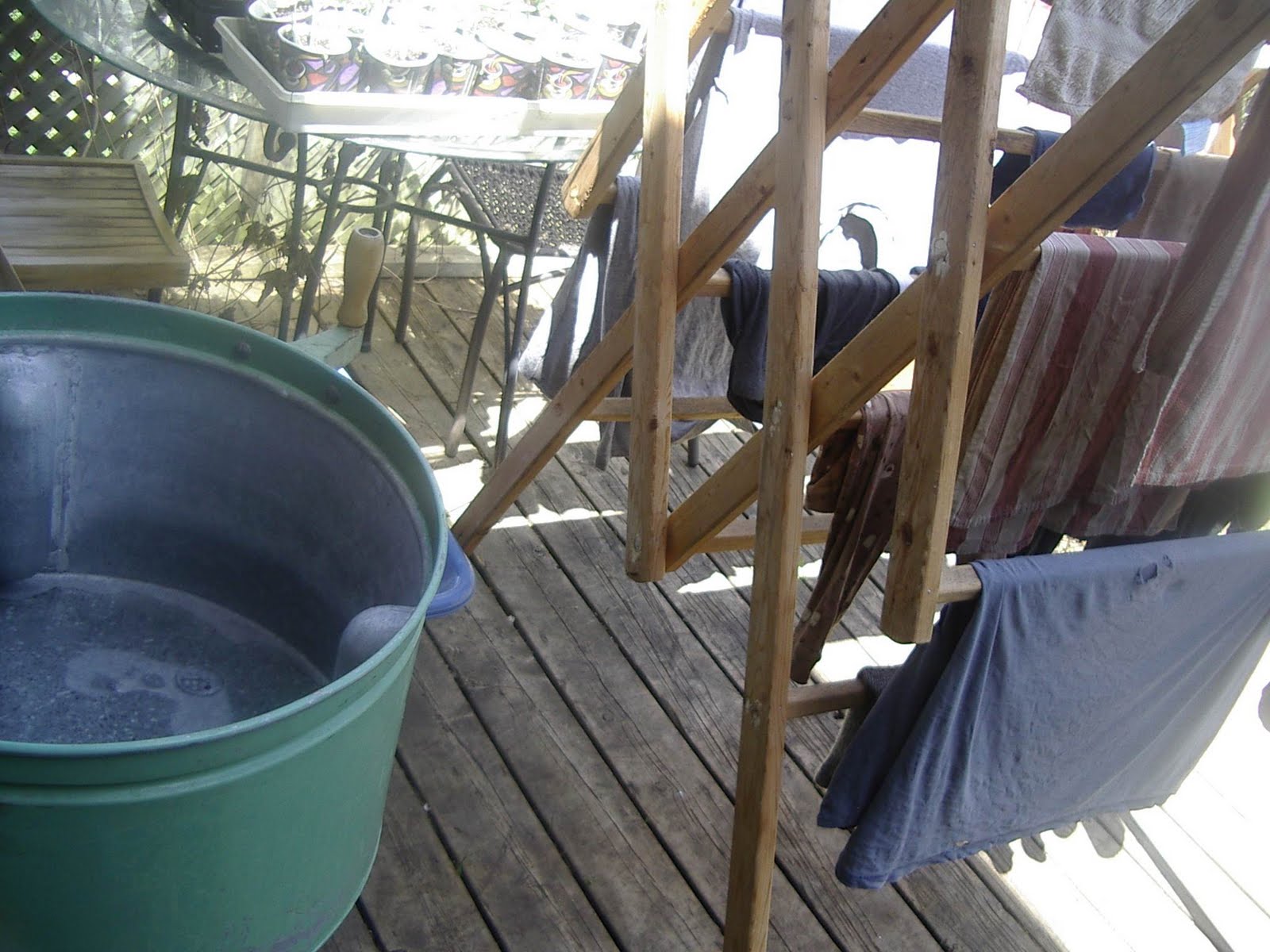
As mentioned earlier, this is a bit of a crazy time of year for anyone who is a gardener or farmer. There is just so much potential in what the new season ahead holds, yet to unfold...and so much it seems that needs doing now that the weather has warmed. Everything is growing in leaps and bounds around here - the newly planted garden seeds sprouting (radish, peas, spinach, lettuce, calendula, nasturtiums!); the asparagus and rhubarb ready to harvest; the other seeds to get into the ground; the seedlings transplanted and ready for the upcoming sale; the chicks (now about 5 weeks old) who are quickly out-sizing their make-shift indoor pen; and...the laundry piles. However, everything is being managed all in good time, including the laundry - and on this note we've decided we like the old wringer-washer enough to not purchase another electric laundry machine. We took stock of our current laundry area in the house, and realized that once we move out the other machine, we can easily fit the wringer-washer in that same space, hooked up to our laundry sink for the winter months. It seems like the perfect solution. Saving energy, saving money...and we espouse moving toward a more human-powered life and household, so here is the perfect opportunity.
Oh, wild wonderful nettles!
It's wild nettles season, aka. stinging nettle (Urtica dioica). Nettles are abundant, nutritious, delicious, healing...and one of the first wonderful spring edibles around here. I am so fortunate to have a large nettle patch that is establishing itself nicely in the wooded back area of our property. I harvest nettles daily in the spring, and am careful to maintain a buffer zone so they don't spread into the neighbouring property (nettle does spread quickly, and although it's highly valued by some, others wouldn't appreciate this plant taking over their yard). You need to harvest delicately, either using gloves, or gently harvesting the stalks one by one by pulling upright on the stems, going "with the grain" (same direction) so to speak with the stinging hairs on the stem. I think you do build up a tolerance over time, as I can now harvest them largely by hand without getting too itchy. I wouldn't advise young children harvesting nettle though, as it will definitetly sting sensitive uncovered skin like legs, arms, hands, etc.
Where to begin with the many beneficial uses of nettle - as a tea it's rich in iron, vitamins and minerals, lowers blood pressure, helps with urinary and kidney infections, hives and skin inflammations (taken internally or as a skin wash), boosts the immune system, increases the body's energy supply, and much more. It's added to women's tea blends to help with anemia due to heavy menstrual bleeding. Taking nettle tea over time can help alleviate hay fever, and it is a wonderful spring tonic to use as an overall boost to rejuvinate and detoxify the body after winter. The tea is kind of bland on it's own, but mixed with peppermint or lemon balm, or some local raw honey, it's quite tasty! As for eating, it makes a delicious cream of nettle soup, replaces spinach well in recipes such as spanikopita (we make annual nettle-kopita with the abundant spring nettles - here is our favourite nettle-kopita recipe from a blog post a few years ago), juiced or added to smoothies, etc. It's also great for hens, adding into a compost tea...and much more.
For those who want to learn more, we are hosting a Wild Food Gourmet workshop here at Little City Farm on Saturday, May 14. Nettles are on the menu, as well as dandelion, burdock, wild grape leaves, and various other wild gourmet "weeds" that are growing right here at our doorsteps.
Subscribe to:
Posts (Atom)