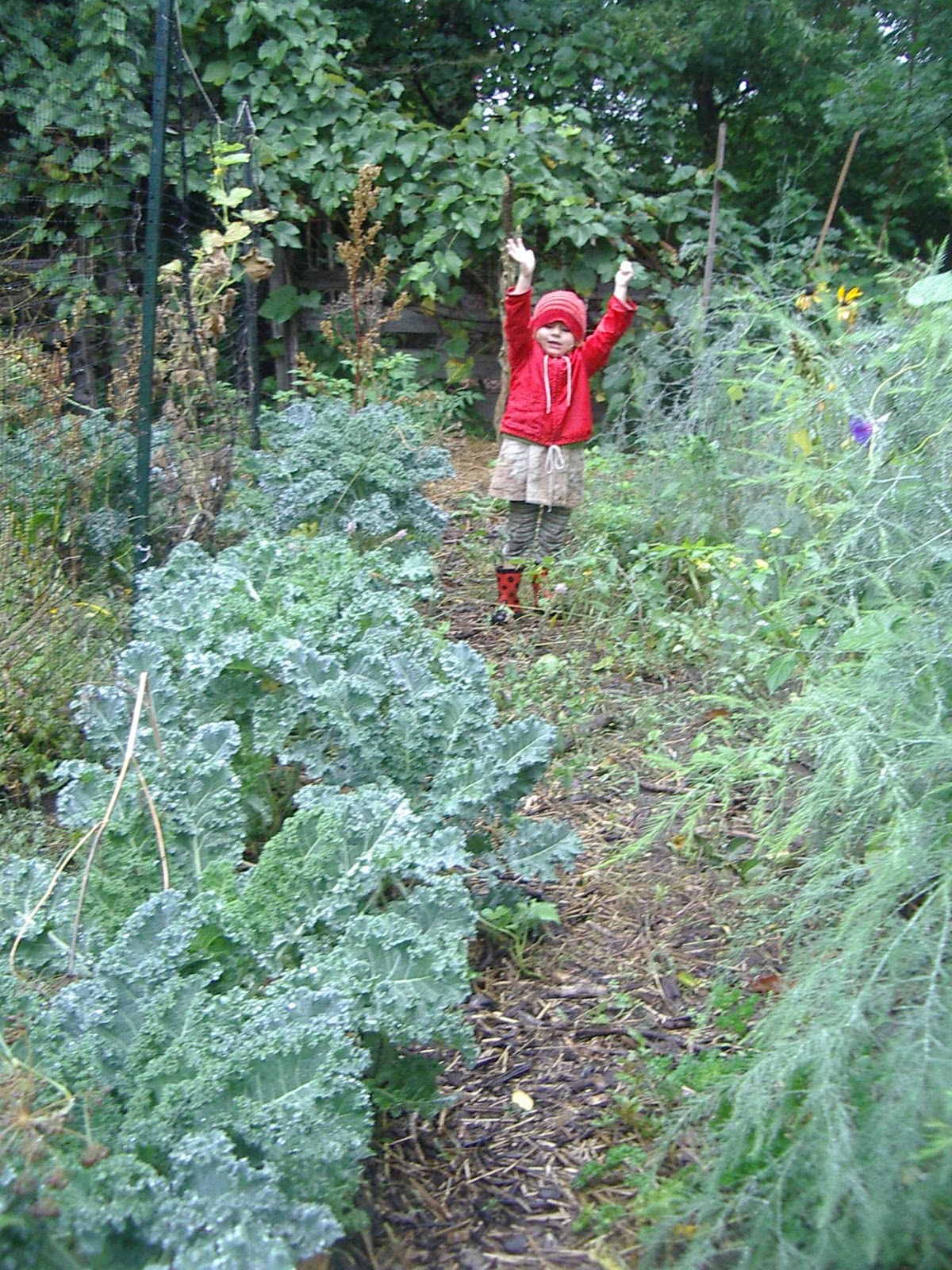
This week saw us cleaning up the garden, planting garlic, transplanting greens, herbs and cherry tomatoes into the greenhouse, harvesting our last peppers, zucchini, AND a whole pile of tomatillos! This meant another huge batch of our favourite tomatillo salsa (salsa verde) from Small Batch Preserving - it used carrots, garlic, cilantro, onions, sweet peppers, oregano, hot peppers and tomatillos - all harvested from our own garden. The recipe was written for a small batch, but we needed to multiply to by 6 times to use up all those tomatillos! It will be lovely to pull out jars of this salsa in the winter months and remember our last bounty from the fall harvest of this year's garden.
Friday, October 14, 2011
This Moment
{This moment} - This moment - an end of week ritual, no words, just a special photo to remember, savour, enjoy.
Monday, October 10, 2011
A Little Bird Told Me Craft Sale Vendor Profile: Michelle Morin
Over the weeks leading upto our annual handmade holiday craft sale, "A Little Bird Told Me", on Sat, Dec 10, we are highlighting each one of the participating vendors. Here is a short interview with Michelle Morin (hand-spun and hand-dyed local wool, and felted toys):
Little City Farm: Describe the products you will have at the Little Bird Sale:
Michelle: For the sale, we will be bringing organic wool yarn, homespun and hand dyed, as well as felted animals, rovings and more!
Little City Farm: How did you learn this craft/art?
Michelle: I started spinning about 6 years ago, after meeting our sheep farmer and learning that the wool was all going to waste! I have been knitting since I was a child, and I have always loved the amazing properties of wool!
Little City Farm: What inspires your craft/art?
Michelle: Usually I am inspired from nature and the seasons, but sometimes just letting the children have a go at the colors is the best inspiration! Children are more free and have less silly rules in their minds, so their dyed wool is always my favourite.
Little City Farm: Describe how your craft/art is eco-friendly?
Michelle: All of our fiber is from happy organically raised animals, raised here in southern ontario.
Little City Farm: Favourite music to listen to while you craft?
Michelle: Again, happy children playing is usually the background noise in our home!
Find Michelle and her family at the Little Bird Sale, on Dec 10!
Thursday, October 06, 2011
This Moment
{This moment} - This moment - an end of week ritual, no words, just a special photo to remember, savour, enjoy.
A walk in the woods
We took the day off from tasks here at home to go for a ramble in the woods nearby. Even though we live just off the downtown of a busy city, there are lots of hidden gems of wildness still to be found, all within walking distance of where our home is - a little creek trickling over stones at the farthest back edge of a park; forested walking trails with trilliums, oaks, tamaracks and maples; the trail running alongside the Grand River, where we pick wild mint and often see kayaks, canoes, geese, hawks and ducks; the wild flowers we love to see growing along old railway tracks; a hidden storm water pond where a blue heron nests; a sunny south-facing hilltop with a view; the place we know to go for harvesting nettle in the spring, the trail where we have seen puffball mushrooms and fiddleheads; the place with the large wild raspberry patch; the corner of a park where remnants of an old apple orchard are...we try to take time to visit these special places often, to know and appreciate the wildness we still have close by in the city.
Monday, October 03, 2011
A Little Bird Told Me Craft Sale - Vendor Profile: Sew Oiseau
Over the weeks leading upto our annual handmade holiday craft sale, "A Little Bird Told Me", on Sat, Dec 10, we are highlighting each one of the participating vendors. Here is a short interview with Amaryah from Sew Oiseau:
Little City Farm: Describe the products you will have at the Little Bird Sale:
Sew Oiseau: I make clothing and accessories for women and children, as well as woolen goods for the home. I choose reclaimed materials, predominantly wool because of its comfort, practicality, and natural properties. Recycled wool sweaters are cut and sewn into comfy kid's slippers, individually pieced skirts and sweaters, soft rugs, and floor cushions. Select wool pieces are felted for applique work.
Little City Farm: How did you learn this craft/art?
Sew Oiseau: I am mostly self-taught but have been helped along by seamstress friends and relatives and a number of formal courses on weaving, felting, and spinning. Before Sew Oiseau, I ran a one-woman book binding press, she weaves!, for five years. I also have a Masters in Adult Education and Community Development and teach specific fibre arts techniques, including needle felting, wet felting, and rag-rug weaving as well as workshops on sewing, recycled crafting, and soft doll-making.
Little City Farm: What inspires your craft/art?
Sew Oiseau: Original fashion; really good thrift store finds; people who get excited about reconstructed clothing; wonderful WOOL!
Little City Farm: Describe how your craft/art is eco-friendly?
Sew Oiseau: My materials are predominately reclaimed. I try to use the least amount of energy possible; ie line-drying after pre-washing or felting.
Little City Farm: Favourite music to listen to while you craft?
Sew Oiseau: CBC radio podcats esp. "Dispatches".
Find Sew Oiseau at:
www.sewoiseau.com
www.tomakeaday.blogspot.com
Little City Farm: Describe the products you will have at the Little Bird Sale:
Sew Oiseau: I make clothing and accessories for women and children, as well as woolen goods for the home. I choose reclaimed materials, predominantly wool because of its comfort, practicality, and natural properties. Recycled wool sweaters are cut and sewn into comfy kid's slippers, individually pieced skirts and sweaters, soft rugs, and floor cushions. Select wool pieces are felted for applique work.
Little City Farm: How did you learn this craft/art?
Sew Oiseau: I am mostly self-taught but have been helped along by seamstress friends and relatives and a number of formal courses on weaving, felting, and spinning. Before Sew Oiseau, I ran a one-woman book binding press, she weaves!, for five years.
Little City Farm: What inspires your craft/art?
Sew Oiseau: Original fashion; really good thrift store finds; people who get excited about reconstructed clothing; wonderful WOOL!
Little City Farm: Describe how your craft/art is eco-friendly?
Sew Oiseau: My materials are predominately reclaimed. I try to use the least amount of energy possible; ie line-drying after pre-washing or felting.
Little City Farm: Favourite music to listen to while you craft?
Sew Oiseau: CBC radio podcats esp. "Dispatches".
Find Sew Oiseau at:
www.sewoiseau.com
www.tomakeaday.blogspot.com
Handmade Holidays - preparing for our annual craft sale Sat, Dec 10!
Mark your calendars! We wanted to announce that our annual "A Little Bird Told Me" handmade holiday sale is scheduled for Sat, Dec 10 from 10 am-4 pm. This exciting sale features a great selection of local artists/crafters who focus on making earth-friendly one-of-a-kind works. There will be something beautiful and unique for everyone on your list!
Over the next 10 weeks leading up to the sale we will be showcasing one vendor each week on our blog, including a short interview and photos - just to let local readers in on what they can expect when they attend our sale! This year there will be ceramic jewellery; reconstructed woolen clothing for children and women; wood-turned bowls from reclaimed local wood; candleholders made from recycled bicycle parts; pottery dishes; holiday baked treats; handmade soaps; beeswax candles and locally produced fresh honey; children's clothing and other eco-sewn goods; handspun and naturally dyed wool and felted toys; handmade cards; yoga pillows; and much more!
Friday, September 30, 2011
This Moment
{This moment} - This moment - an end of week ritual, no words, just a special photo to remember, savour, enjoy.
Winter firewood
Getting ready for winter. Collecting, chopping and stacking firewood has been top of the list for a while now. Our strawbale living quarters are very well insulated, so we only tend to keep a small fire going most days in the winter months. Still, each year we wonder if we'll have enough wood ready. We were hoping to build a woodshed/bike shed this season, but time seems to have slipped away. For now the large back porch will do. Oh, the hours of enjoyment, with our little eager helper working side-by-side with her papa...
Right now, at the homestead
This end of week/weekend at our little homestead...
- canning the last bushel of tomatoes into sauce, ready for winter feasts and wood-fired pizza dinners
- bottling the lacto-fermented crock pickles, our favourite recipe from Wild Fermentation, that are now ready, and storing the jars in the cold cellar
- making another large batch of our favourite hemp & maple granola (recipe below)
- planning an apple picking adventure to nearby Avalon Orchards for the last fall harvestings
- stacking firewood in growing piles for winter warmth
- observing the many bees busily foraging in the fall flowers
- preparing garden beds for the coming of first frost, possibly tomorrow night?
- planting greens in our greenhouse for fresh winter harvests, using methods from Winter Harvest Handbook
- reading: Radical Homemakers; Urban Farm Magazine; Playful Learning
- attending our first local homeschooling workshop this weekend, a daylong "living room" discussion with David Albert
-and baking vast quantities of pumpkin pies for next week's CSA pick-up!
Hemp & Maple Granola
12 cups whole oats
3/4 cup sunflower oil
1 cup pure dark maple syrup
1/2 cup hulled hemp seeds
1/3 cup flax seeds
1/2 cup sunflower seeds
(other nuts and/or seeds as desired)
Stir all ingredients well to combine. Spead evenly on two lightly greased baking sheets and bake at 350F for about 30 minutes, stirring every 10 minutes. Bake until golden brown and slightly crispy. Granola will firm up once it cools. Stir in 1 cup raisins after granola has cooled.
Wednesday, September 28, 2011
The potential of an acorn...
What is it about acorns that I find so fascinating? They are beautiful - intricately designed, sturdy yet delicate, each with their own markings, a compact food source, and, most importantly holding the potential to grow into an enormous oak tree given just the right conditions. That's almost magical. So at this time of year we collect acorns on our walks, and have a bowl of them on our table celebrating the harvest, the turn of the season, and the hopes we have for all the potential in a new growing season the next year. This seems to be what thanksgiving should be about. Happy harvest season everyone!
Do-it-Yourself Herbal Winter Medicines
We're preparing for the coming winter months - preserving the last foods, picking our nearly ripe tomatoes in anticipation of first frost this weekend, and processing our medicinal herbs into immune boosting winter health tonics.
On Saturday I led the annual "herbal winter remedies" workshop here at Little City Farm. During the workshop we talked about the basics of making your own tinctures, tonics, bitters, syrups and lozenges - and then made an immune tonic tincture, bottled a rosehip tincture, sipped herbal immune-boosting cups of chai (see recipe below), and created a sage-horehound cough syrup. In the days leading up to the workshop, I was surprised and pleased to notice my 3-year old preparing her own "tinctures" of herbal leaves and roots picked from the garden "steeping" with water in wee glass bottles in her little play kitchen. I love when I can pass on valuable life skills simply by example.
Making Herbal Winter Medicines:
It's important to start with top quality herbs, fresh if possible (so now is the last of the season to do so), or dried will also do. Tincturing is a great way to preserve the medicinal qualities of herbs for a very long time, making powerful potent medicine, and often extracting constituents of the plant that water will not. Tinctures are extracts made with food grade alcohol, usually 80-100 proof alcohol like vodka or brandy, where the herbs are steeped for 4-6 weeks. Tincturing works well for extracting medicinal qualities of herbal roots and berries, such as the deep immune system/winter health herbs like elderberry, echinacea, goldenseal and astragalus. Once strained and bottled, tinctures will last several years if kept in a cool, dry, dark location.
Herbal syrups, on the other hand, start with a very strong tea (i.e. herbal extracts made with water such as strong infusions or decoctions), then are cooked slowly for a long time with honey to thicken into a syrup consistency. The honey acts as a preservative, but a little alcohol can also be added to help prolong the shelf life. Cough medicines are often made in a syrup form, such as our favourite sage-horehound syrup for healing sore throats.
There is so much more to say, but for now, here are a few recipes:
Elderberry Tincture (following method also good for tincturing other herbs)
(highly beneficial for colds, cough, flu, bronchitis, sinus infection, virus, etc)
1) Chop herbs finely, or crush in blender. Use fresh berries where possible. High quality dried berries will work well too.
2) Place berries into clean, dry jar. Pour in enough alcohol (vodka or brandy) to cover the berries, and continue pouring until liquid covers by 2-3 inches. The berries need to be completely submerged. Cover with tight-fitting lid.
3) Place jar in warm location (e.g. sunny window) and let herbs and liquid soak (macerate) for 4-6 weeks. The longer the better. Shake jar every day to make sure herbs are blending with alcohol.
4) Strain out berries, using a muslin cloth or jelly bag, or a large stainless steel strainer. Reserve liquid, which is now a potent tincture.
5) Bottle and label. Store out of reach from children, in a cool, dark location where the tincture will keep almost indefinitely.
6) Useage guidelines: one measure is to give 1 drop tincture for every 2 lbs body weight.
Immune Boosting Herbal Chai
(serve hot as a strong tea, with warm milk/rice milk and honey)
Ingredients - mix to your own taste - dried nutmeg, allspice, cloves, cinnamon bark, star anise, black peppercorn, ginger root, echinacea root, astragalus root (only a pinch) dried rosehips, marshmallow root, chamomile, fennel seeds, plus spearmint and lemongrass (for flavour).
Tuesday, September 27, 2011
What is your fibreshed?
In general, it feels there is a growing awarness of the importance of supporting local farmers and sustainably grown foods. 100-Mile diet, locavore, slow food, bioregional eating, local food challenges, food buying clubs, CSA's (community supported agriculture), community gardens, school gardens, and farmstart and mentorship programs for young would-be farmers, are just some of the options and ideas that have become increasingly available in recent years. And this is a good thing. There is the great quote we see on bumper stickers around here: "farmers feed cities", a reminder not to forget the dependance we in our urban areas have on farmers (and farmland) around us. I remember Michael Ableman, a keynote speaker at an the Canadian Organic Conference in Guelph a few years ago, getting a standing ovation when he noted that farmers should get the same respect (and earnings) as the most prestigious doctors and lawyers. So, the local food movement has slowly brought a little more of this acknowledgement and support to the farmers.
The Fibreshed Project takes this one step further. This project is a one year challenge to wear clothes sourced (and dyed) from fibres grown close to home (within 150 miles) - as a way of raising awareness about the incredibly unsustainable clothing industry (the ecological and social impacts of the clothes we buy/wear); as well as aiming to support local farmers who produce fibres that are largely undervalued (e.g. thousands of pounds of wool discarded each year because of lack of market). If the farming, milling, production, manufacturing of many of our clothes could be done closer to home, this would be a significant ecological and social contribution. Read this beautiful blog, and be inspired to start building networks with your local fibre-producing farmers.
Friday, September 23, 2011
Hooray for kale, kale and more kale!
We have kale in absolute abundance in our garden - when added together in all the places we've planted it, we have nearly 3 of our raised beds filled with kale. That's a lot of kale. But, we love kale (and our chickens can't get enough of it either), and it keeps well in the ground, long into the cold months that are ahead. It's a pleasure to go out in January, when the garden is deeply buried under snow, and dig out a patch of kale to harvest for supper - still fresh and crisp as if it had been kept in a refrigerator. Yes, kale is likely the plant we grow the most of here (a close race with tomatoes). Crinkly dinosaur kale, red Russian kale, green curled kale, we love them all - and such a versatile plant to cook with - made into potato-kale soup, thinly sliced with tofu in miso soup, or added into chili; blended in fruit smoothies; stir-fried with tamari, or steamed with a little hemp oil; served on toast with eggs, added chopped into pasta; made into a warm kale salad with balsamic dressing and toasted nuts; tossed with tahini-garlic sauce; kale stands up well in most dishes. Here's a quick simple recipe we made up for dinner this evening, using all our current garden harvests - carrots, eggplant, red peppers, tomatoes, zucchini, kale (of course)!
Fall Harvest Kale Stew
1 large bunch kale, chopped
2 large carrots, cut into half moons
5-6 large tomatoes, chopped (we used orange and red ones)
1 large onion, chopped
1 red pepper and 3 small eggplants, roasted with olive oil and sliced
3 potatoes, diced
1 large zucchini, cut into half moons
8 cups water
2 vegetarian soup cubes, or homemade soup stock
dash of tamari
dash of sea salt and coarsely ground black pepper
1-2 red cayennes, sliced finely
1-2 cloves fresh garlic, sliced finely
large handful of fresh garden herbs (basil, chives, parsley, etc)
This is a versatile recipe - it's a guideline, but add what you have that needs to be used up in your garden. Let everything cook slowly, simmering for about an hour in a large pot. So simple! Serve this thick stew over whole grains like brown rice or quinoa, or with hearty slices of homemade bread.
This Moment
{This moment } - This moment - an end of week ritual, no words, just a special photo to remember, savour, enjoy.
Monday, September 19, 2011
Apple Tasting
We've been trying different kinds of apples from the local farmers market, as well as from our own trees and wild foraged ones. We've made applesauce, apple jelly, applebutter, apple pies, and of course kept lots of apples for fresh eating. I love apple harvest season - there is such variety and abundance, colour, flavour, texture, history. We'll be hosting the annual apple tasting event here in October, for those who live locally and want to come learn the stories of heirloom apples from our region. Or look for apple festivals in your own area.
Subscribe to:
Posts (Atom)