Showing posts with label biointensive gardening. Show all posts
Sunday, January 07, 2018
Organic Gardening Course at Little City Farm - 6 part series starting Jan 17!
Dates: 6 Wednesday evenings, Jan 17, 24, 31, Feb 14, 21, 28 (NO CLASS on Feb 7)
Time: 6:30-8:30 pm on each evening
Facilitator: Angie Koch, from Fertile Ground Farm
Class Location: Little City Farm, 508 Duke St W, Kitchener
REGISTER HERE NOW!
Are you serious about gaining more knowledge for developing a productive organic garden? Join us this winter for this very exciting 6 part intensive organic gardening course. 10 participants will have the opportunity to take part in this series, which will include 6 guided workshops, with opportunity for each participant to develop and complete an individual garden plan.
These classes will be facilitated by local organic farmer Angie Koch, from Fertile Ground Farm (located just west of Waterloo, near St. Agatha). Angie has operated a market garden, CSA (community supported agriculture), for the past 10 years. Her farm has grown to include a number of seasonal staff, interns, volunteers, as well as chickens, herb gardens, pollinator gardens, beehives, seed saving gardens, a greenhouse for seedlings, and more! Angie is involved in Canadian Organic Growers, and the Ecological Farmers Association, as well as a part-time staff member at Seeds of Diversity. This is a unique opportunity to learn first-hand from Angie's 10 years of organic farming experience! Bring your notebook, your garden ideas, and your questions.
View this short video to see Angie's beautiful organic farm!
Organic Gardening Course Outline:
Week 1: Seed and Seedling Starting - including basic plant botany
Week 2: Garden Planning Part One - succession planting for continuous harvest
Week 3: Garden Planning Part Two - using space effectively
Week 4: Soil Biology & Fertility - using organic methods
Week 5: Pest Management, Seed Saving, and Attracting Beneficial Insects
Week 6: Overflow, Q&A & Individual Garden Plans Wrap-Up - final developing, feedback and completion of individual garden plans
Please note: we need a minimum of 7 participants in order to offer this course. We will notify you one week prior to the first class, to confirm details and what to bring along.
For more information about this course, and to register visit our course page here.
Thursday, May 03, 2012
Busy month of May in the garden
Other than several plantings of peas, and a nice array of greens in the cold frame, we have not direct seeded much in the garden yet. It's time! Radishes, potatoes, carrots, more peas, lettuces, chard...it's time to plant all of these. These days...planting, tending, transplanting, digging, nurturing, reading, mapping, planning, organizing...busy days here in the month of May, but so worth the hard work. Today's list included work with our daughter on her own small plot - where she happily planted the special seeds she had chosen at the Organic Conference in Gueph back in January: dinosaur kale, rainbow carrots, ruby red lettuce, sugar peas, whirlybird nasturtiums, various sunflowers, and dragon's tongue beans - all varieties that spark a child's imagination and will create a colourful delicious mix. Now we need to figure out the best system for protection from squirrels!
Monday, November 14, 2011
This Moment
{This moment} - This moment - an end of week ritual, no words, just a special photo to remember, savour, enjoy.
Friday, August 26, 2011
Grape Harvest
This year's grapes have proven to be bountiful - both the tiny tangy wild grapes we have growing through a tangle of hops vines on the back porch, and the large sweet dark blue garden grapes that are clinging from the arbour at the back of our main garden. The heavy pruning seemed to do the trick, offering both light and air circulation to our grape arbours. I am trying to save most of the grapes for making jelly and juice, but it's next to impossible to walk past the vines without sampling a few of the tantelizing grapes, hoping that maybe this time they will be perfectly ripe. And any grapes that fall to the ground do not go to waste, as the hens love these fresh sweet treats.
Thursday, August 18, 2011
A gardening life
I have been savouring my early mornings in the garden, getting up with the sun to let our hens out, and then spending the pre-breakfast hour outside. The mornings around our neighbourhood are quiet, calm, peaceful. Our garden is a meditative place to start the day. My little helper is usually with me, as she's up early with the birds and eager to get going. But the morning air and light create a different mood from the rest of our busy daytime, and we quietly work side by side, tending to weeds, peeking at new vegetables, taking a little harvest into our baskets. Today it was tomatoes. I wouldn't miss these early mornings for anything.
Saturday, August 13, 2011
Right now, in our garden
Such a busy time - harvest, preserving, new planting...
From the garden right now - zucchini, eggplant, tomatoes, basil, kale, chard, beans, new peas, new potatoes, first sweet lemon cucumbers (my favourite), herbs, nasturtiums, cherry tomatoes, ground cherries, tomatillos, first green peppers, hot peppers...
Today was also Market Day - Saturday! At the downtown farmers market we picked up what we aren't growing at home - fresh local corn, peaches, and watermelon - yumm! After visiting with a few friends and making one last quick tour through the cheese and baked goods aisles, we were gifted with the most gorgeous samples of handmade fair trade chocolate from our local artisan chocolatier, Anna Tolazzi (who happens to live in our neighbourhood!). This morning, before we headed to the farmers market, we had re-read the wonderful book To Market To Market, by Nikki McClure, one of our best-loved authors. Just as this book expresses, we are grateful for the harvest in our own garden, and all the dedicated growers and makers at our local farmers market.
From the garden right now - zucchini, eggplant, tomatoes, basil, kale, chard, beans, new peas, new potatoes, first sweet lemon cucumbers (my favourite), herbs, nasturtiums, cherry tomatoes, ground cherries, tomatillos, first green peppers, hot peppers...
Today was also Market Day - Saturday! At the downtown farmers market we picked up what we aren't growing at home - fresh local corn, peaches, and watermelon - yumm! After visiting with a few friends and making one last quick tour through the cheese and baked goods aisles, we were gifted with the most gorgeous samples of handmade fair trade chocolate from our local artisan chocolatier, Anna Tolazzi (who happens to live in our neighbourhood!). This morning, before we headed to the farmers market, we had re-read the wonderful book To Market To Market, by Nikki McClure, one of our best-loved authors. Just as this book expresses, we are grateful for the harvest in our own garden, and all the dedicated growers and makers at our local farmers market.
Friday, July 22, 2011
How do bees carry pollen?
My fascination with the incredible world of bees continues. I was watching bees buzzing through our echinacea patch today, and for the first time had the opportunity to really notice how they carried the pollen they were foraging. At first I almost thought we had a new variety of bee in the yard, but it was the pollen heavily laden on the legs of each bee that made them look like they had thick yellow stripes along their sides. I read that bees have a way of periodically grooming themselves which packs the pollen more tightly into the tracts under their hind legs called "scopa", and allows them to bring it back to the hive or transfer from flower to flower. Amazing! I was also reminded of how perfect and beautiful every last detail in nature is - look at the gorgeous symmetry of the echinacea spirals in the last photo here.
Thursday, July 21, 2011
In the garden right now...and fall planting schedule
We're harvesting from the garden right now...
~ last peas...new fall peas to be planted shortly
~ first beans (french filet), and more being planted
~ lettuces, tatsoi, swiss chard, purple kale, green kale, collards, red orach
~ last spinach, and more to be planted for fall
~ first tomatoes! Stupice is the winner for first red ripe tomato this year (even ahead of the cherry tomatoes)
~ first jalapenos and cayennes, and several large green peppers nearly ready
~ loads of basil, as well as other kitchen herbs
~ first zucchini (slow this year)
Coming in August...purple potatoes, corn, ground cherries, tomatillos, other tomatoes, eggplant, cherokee cornfield beans, squash, Brussels sprouts, and watermelon (well, keeping our fingers crossed for that one!)
Now is the time to start planning your fall planting schedule. Mother Earth News gives an excellent planning guide, based on the first killing frost of your region. Generally around here (zone 5-6) we have first hard frost in mid October, although you never know. Some tender plants can last through a few frosts if they are covered with row cover or blankets on those cold nights, or if you have a grow tunnel that is covered with plastic sheeting. Here are some ideas for a fall planting schedule in our climate:
End of July/early August - start cabbage family seedlings (kale, broccoli, Brussels sprouts, kohlrabi)
Mid August - set out the cabbage seedlings, and direct plant carrots, leeks, lettuce, peas
Late August/early September - direct plant arugula, spinach, tatsoi, lettuce, other greens, radish
Early Sept/mid September - direct plant spinach, and other greens (chard, kale, mache) into a cold frame
Early Oct/mid October - plant shallots and garlic for next summer's harvest
~ last peas...new fall peas to be planted shortly
~ first beans (french filet), and more being planted
~ lettuces, tatsoi, swiss chard, purple kale, green kale, collards, red orach
~ last spinach, and more to be planted for fall
~ first tomatoes! Stupice is the winner for first red ripe tomato this year (even ahead of the cherry tomatoes)
~ first jalapenos and cayennes, and several large green peppers nearly ready
~ loads of basil, as well as other kitchen herbs
~ first zucchini (slow this year)
Coming in August...purple potatoes, corn, ground cherries, tomatillos, other tomatoes, eggplant, cherokee cornfield beans, squash, Brussels sprouts, and watermelon (well, keeping our fingers crossed for that one!)
Now is the time to start planning your fall planting schedule. Mother Earth News gives an excellent planning guide, based on the first killing frost of your region. Generally around here (zone 5-6) we have first hard frost in mid October, although you never know. Some tender plants can last through a few frosts if they are covered with row cover or blankets on those cold nights, or if you have a grow tunnel that is covered with plastic sheeting. Here are some ideas for a fall planting schedule in our climate:
End of July/early August - start cabbage family seedlings (kale, broccoli, Brussels sprouts, kohlrabi)
Mid August - set out the cabbage seedlings, and direct plant carrots, leeks, lettuce, peas
Late August/early September - direct plant arugula, spinach, tatsoi, lettuce, other greens, radish
Early Sept/mid September - direct plant spinach, and other greens (chard, kale, mache) into a cold frame
Early Oct/mid October - plant shallots and garlic for next summer's harvest
Harvesting garlic
Oh garlic! This week was garlic harvest time in our garden. How do you know when it's time to harvest your garlic? Different varieties mature at various rates. For example, Artichoke varieties of garlic mature first, then Rocamboles, then Purple Stripes, then Porceleins, and finally Silverskins. Knowing your variety is helpful, but if you don't, then in general when the tops of garlic start to die back the garlic is nearing it's time to be harvested. In early summer you have already (hopefully) snipped off the garlic scapes (skeins), in order to send energy down into production of the bulb. When you start to see the tops of the garlic turning brown and wilting, try to stop watering in order to allow the bulbs to start to curing. You can dig up one garlic bulb and cut it open to see if the cloves have fully formed - if they are still small, let the garlic remain in the ground a little longer. However, you don't want them to stay in the ground too long or they may burst open and be susceptible to disease.
To harvest, dig gently with a pitchfork to loosen the soil. Brush off the soil, but don't wash the bulbs. Let them cure out of directy sunlight and heat, with skins on to protect the cloves inside. Leave the garlic tops long so that the bulbs can be hung in bunches over the winter in a cool dark place with good ventilation. Garlic is traditionally often braided before it's hung for storage, though there is definitely a knack to getting those braids to look nice and even! Soft neck varieties are easily stored for half a year, whereas hard neck varieties generally don't keep as long. Keep a few of your largest healthiest bulbs for planting in the fall. We usually plant in mid October, for an earlier crop the following summer.
Tuesday, July 12, 2011
July garden colours
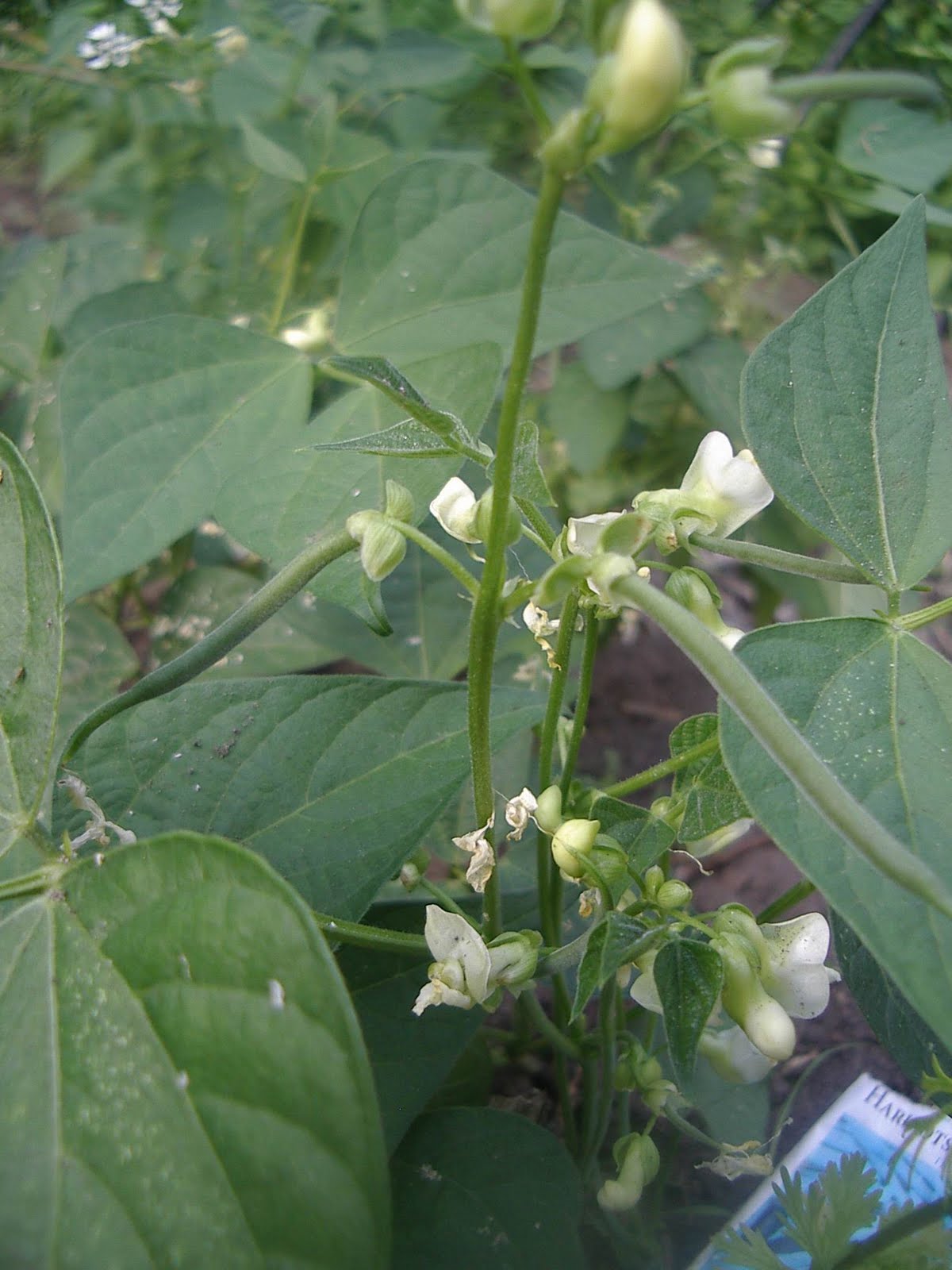
The fruit, berries, and flowers are gorgeous in the garden right now. Purple bean flowers, red currants, yellow calendula, orange rudbeckia, crimson bee balm...and bees are buzzing everywhere we turn!
Our apples, grapes and fig are all looking full and we are crossing our fingers for a plentiful harvest this year. We've been learning more about grape pruning (we like the Rodale organic gardener's guide), giving the fruit lots of air and light, and trying to trust our best instincts. The next projects for this property (besides the regular weeding, mulching, harvesting, drying, preserving frenzy of this season) are the new greywater pond and the living green roof. Hopefully these are projects that can be completed in August-September (oh, the summer is flying by)!
Tuesday, March 15, 2011
These days, leading up to Spring Equinox
These days...seeding, waiting, hoping, dreaming, planning, tending...happy spring equinox to all of you (just a few days away).
We just picked up our portion of 10 bags of certified organic potting mix, ordered through a friend who was getting a whole skid (70 bags) delivered from Pefferlaw Peat Products (located near Pefferlaw, Ontario). Exciting to stack up this large pile of (frozen) soil next to our greenhouse, knowing in a few weeks the weather will have warmed up and we'll be needing much of this soil to transplant our seedlings.
Below, feasting on greenhouse greens (arugula, mache), planting eggplant, hot peppers and basil...and chickens warming themselves in south-facing soil patches around the yard that have warmed up to the sun! New chicks for this season will be ordered and picked up in just a few weeks. We'll be getting our chicks from the nearby Frey's Hatchery (in St. Jacobs) again this year.
We just picked up our portion of 10 bags of certified organic potting mix, ordered through a friend who was getting a whole skid (70 bags) delivered from Pefferlaw Peat Products (located near Pefferlaw, Ontario). Exciting to stack up this large pile of (frozen) soil next to our greenhouse, knowing in a few weeks the weather will have warmed up and we'll be needing much of this soil to transplant our seedlings.
Below, feasting on greenhouse greens (arugula, mache), planting eggplant, hot peppers and basil...and chickens warming themselves in south-facing soil patches around the yard that have warmed up to the sun! New chicks for this season will be ordered and picked up in just a few weeks. We'll be getting our chicks from the nearby Frey's Hatchery (in St. Jacobs) again this year.
Subscribe to:
Posts (Atom)