Pages

Showing posts with label heritage seeds. Show all posts

Sunday, June 05, 2016

Bean biodiversity project

We received this great "bean biodiversity" kit in the mail from USC-Canada, a non-profit organization promoting food security and seed saving (not only in Canada, but around the world).  They have some amazing projects going on, lots of useful information, and resources for educators (useful for home educators too) including this bean growing kit with 15 kinds of beans (some of which were near extinction and have been revived by seed savers in Canada).  Very cool project to take on with our 8 year old daughter!  The kit comes with info about each seed, and ways to share the stories of these diverse seeds, so we can all learn why it's so important for us to help grow, save and share the seeds. 

Here at home we are planning to plant a few varieties to save this year - I read that beans need an average of 10-20 feet distance between varieties so that they don't risk cross-pollinating.  Some growers do grow beans successfully without cross-pollination, but it depends on number and variety of pollinators in the area.  We don't have the space to grow all these varieties, but will grow some this year and some next.  And did I mention how beautiful these beans are - we especially love the Orca Beans, Sadie's Horse Beans, Tiger's Eye, Annie Jackson Bean, and the Candy Beans.  Take a look below!


.

Saturday, October 03, 2015

Planting the winter garden!

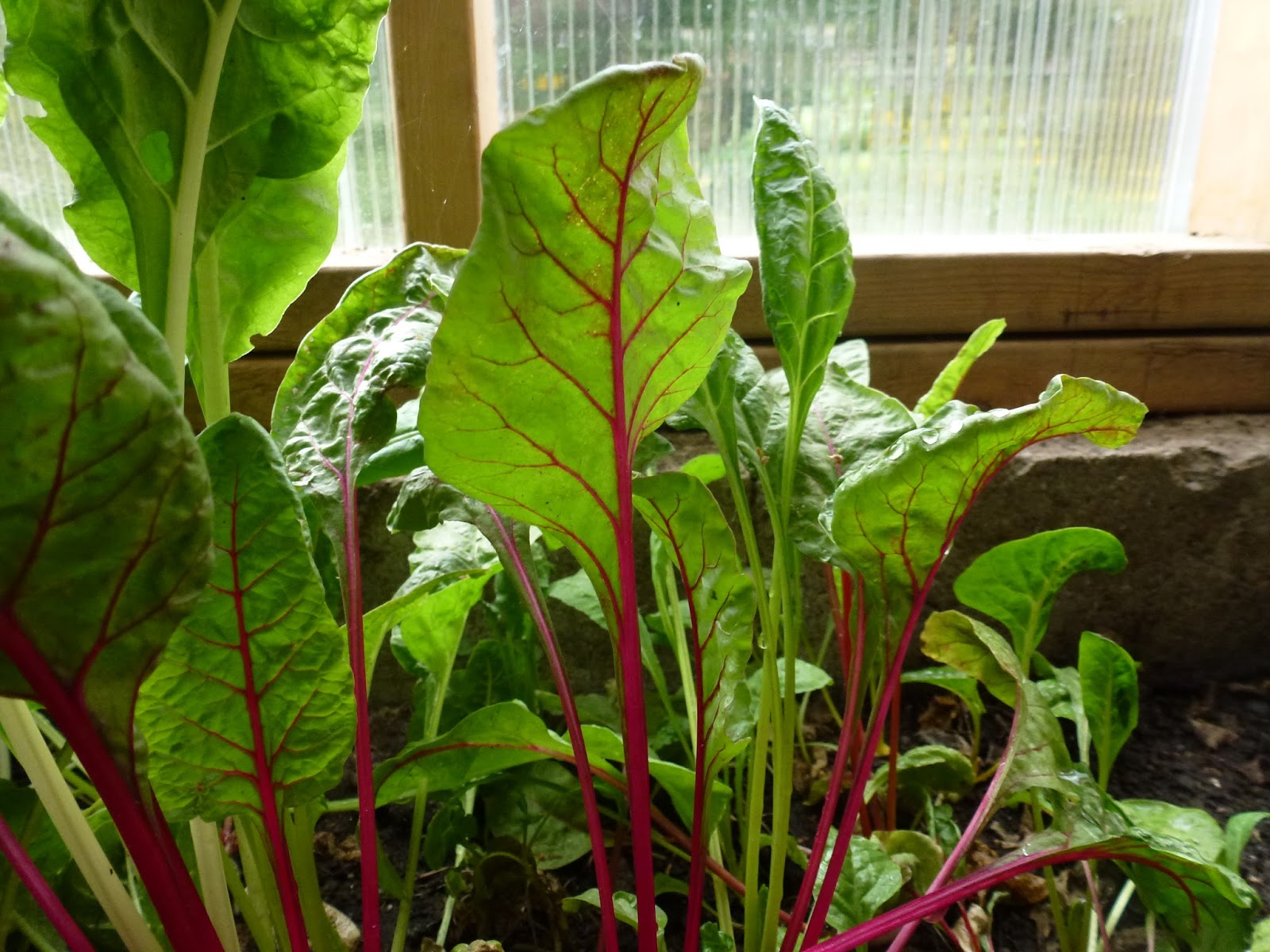
We are a little late this year with our winter garden - the season just got away on us.  But yesterday we planted up the cold frame grow tunnel with winter hardy greens, and several days earlier the greenhouse bed was filled with new seeds as well.  We hope to have a good harvest of fresh greens from the greenhouse all winter long, and the grow tunnel will give us a head start in late winter with new greens coming up ahead of the rest of the garden.

We are always trying to experiment with stretching the growing season.  In our climate, we need to use hardy greens and vegetables for winter growing but it is definitely possible - not to mention the huge variety that we can provide.  Eliot Coleman suggests over 30 varieties to grow in the winter, as well as innovative planting methods, scheduling ideas and garden designs for winter, in his inspiring book The Winter Harvest Handbook.   There are the usual suspects - kale, chard, spinach, arugula - but then also many other interesting options such as mache, claytonia, cress, tat soi, mizuna, scallions, garlic greens, turnip greens, beet greens, hardy winter lettuces...

Yesterday we started with 3 kinds of spinach including a "winter spinach", wild arugula, mizuna, tat soi, 3 kinds of kale (red, green curly, and lacinato), hardy winter lettuces, beets and turnips for their leafy greens, mustard greens, mesclun mix.  The grow tunnel still has baby chard, kale, spinach, mustard, chives, oregano, red and green lettuces, and arugula already growing, so that is a nice head start.  We'll be keeping regular updates here on the status of the winter greenhouse and winter garden so please continue to read (and grow) this winter with us.


Sunday, September 06, 2015

Weeds + Seeds Classes coming in September!

We love Weeds + Seeds!  If you have looked around our yard (and maybe yours too) at this time of year, you will have noticed lots of weeds...and lots of seeds... Yes, we do have a young baby here so the garden has not had the weeding attention it usually gets, and some of these weeds are certainly not growing here by our intention.  However, many of the so-called weeds in our garden are wonderful plants that we welcome, for food and medicine, for wildlife, for pollinators, for ground cover, for nutrients they bring to the soil, for health in our compost pile, and so on.  And many of our plants are let go to seed, so we can save these seeds for planting next season's garden, and to let stand all winter as forage for birds.

How to learn more?  Here at Little City Farm we love weeds + seeds so much that we offer classes on this topic every fall!  If you want to learn more about the benefits of cultivating, using and eating "weeds" - join us on Sept 19 for our Fall Wild Edibles Foraging workshop.  If you want to learn more about how and why to save your own seeds, join us for the annual Seed Saving workshop here on Sept 12.  Join the I Am A Seed Saver campaign organized by USC Canada - learn more here!  More details on these exciting Weeds + Seeds classes at Little City Farm.  Please register in advance for these classes.


Monday, January 30, 2012

Seed Starting Schedule for 2012

It's time to plan out the seed starting schedule.  On this past weekend we made our annual "pilgrimmage" to the Organic Conference in Guelph, where we saw many old friends, ate organic icecream from Mapletons (my favourites are chai, ginger and pumpkin), came back with a pile of exciting new seed packages from our favourite Ontario small seed companies Cottage Gardener, Greta's, and Urban Harvest, and were generally inspired by the crowd of farmers/gardeners and other folks who live, advocate for, and grow organically. 

Each year we post our Seed Starting Schedule (for zone 5-6, where we need to start plenty of our seeds in advance, e.g. tomatoes, brassicas, hot peppers, herbs)...Here is the link to last year's post regarding our seed schedule, or if you don't want to read the entire post again I will include the summary of our Seed Starting Schedule below.

We also placed seed orders with West Coast Seeds, High Mowing, and Richters Herbs today - in particular, the photos and selection of High Mowing were astounding - we are especially anticipating their specialty greens, edamame, high-resin medicinal calendula, and wild greens (wild arugula, purslane, amaranth, purple mustards, etc).  Maya is excited about what she chose for her garden: dragon beans, rainbow carrots, dinosaur kale...she wants to plant a rainbow selection of vegetables this year.

PLANTING GUIDE (based on frost-free date of May 24):
FEBRUARY (the greens listed here can continue to be planted throughout the growing season of course)

Start lettuce, chard, other greens in greenhouse or in flats indoors (to be planted out to greenhouse). Start selected medicinal and culinary herbs by middle of February. Some take 6-8 weeks to germinate!

10 WEEKS TO LAST FROST (aprox. March 15)
Start seeds of celery, eggplant, leeks, onion, pepper and flowers like impatiens, lobelia, verbena and perennials indoors.

8 WEEKS TO LAST FROST (aprox. March 29)
Start seeds of early head lettuce and flowers like begonia, coleus, nicotiana, petunia and salvia indoors.

7 WEEKS TO LAST FROST (aprox. April 5)
Start seeds of tomatoes, hot peppers, and early basil indoors.

6 WEEKS TO LAST FROST(aprox. April 12)
Start seeds of early left lettuce, early cabbages including cauliflower, broccoli, brussels sprouts, kohlrabi and kale, and small seeded annuals indoors. DIRECT SEED broad beans, carrots, peas, spinach, leaf lettuce, turnips, dill, parsley, and hardy flowers such as alyssum, candytuft, pansies, poppies, snapdragons, stocks, sunflowers and sweet peas. Plant onion sets or transplant onion seedlings outdoors.

4 WEEKS TO LAST FROST (aprox. April 26)
Start melon seeds indoors. If desired, start seeds of late basil, cucumber, squash, pumpkin, large-seeded annuals, and flowering vines indoors in peat pots. DIRECT SEED radishes, beets, cabbages, chard, head lettuce, and flowers such as godetia, hollyhock, and mallow. Plant potato eyes and transplant seedlings of early cabbages, except cauliflower.

2 WEEKS TO LAST FROST (aprox. May 10)
DIRECT SEED corn, tender bulbs such as glads, and annual vines such as morning glory. Transplant early lettuce seedlings.

WEEK OF LAST FROST (aprox. May 17-24)
Around the last frost date you can finally direct seed beans, cauliflower, cucumber, squashes, heat-loving flowers such as zinnias, marigold, and lavatera. Transplant your tomaotes. If you've got them, transplant cauliflower, squash and cucumber seedlings.

1-2 WEEKS AFTER FROST (aprox. May 31-June 7)
Wait for a couple of weeks after the last frost before direct seedling lima benas, soybeans, melons and herbs such as basil, summer savory and sweet marjoram. Transplant celery, melon, peppers, eggplant seedlings when the night temperatures stay well above 10 degrees C. Plant sweet potato slips. Start second crop of kale seedlings, and reseed spinach and peas for second crop.

Sunday, March 27, 2011

Seedlings!

We had Angie from Fertile Ground CSA here last Saturday to lead her annual seed starting workshop.  She always offers loads of advice, and even though I've been starting seeds for more than a decade, I still learn new tips each time (like using cinnamon as a natural anti-fungal on soil; and using hypothermia blankets to insulate a seedling rack).  She's offering several other gardening workshops this month - so if you are local, check her website for details.

Our flower and herb seedlings are up, healthy and happy.  The kale is ready to be transplanted into the greenhouse and coldframes, and today we are seeding our tomatoes, basil and peppers...yay!  I'm always so anxious to start tomatoes and have to restrain myself from not starting them too early.   This year, in addition to our regular favourites, some new varieties we are trying include: Manitoba Red, Berkeley Tie-Dye, Principe Borghese, Jaune Flammee...all from Greta's Organics, The Cottage Gardener, or Urban Harvest.


Friday, February 04, 2011

Inspiring heirloom seeds..25 easy to grow heirlooms

Recently I received a copy of "Heirloom Farm and Garden" magazine, and was re-inspired about the value of heirloom plants and seed saving.  What exactly is "heirloom"?  It seems to be a loose definition, meaning seeds that are open-pollinated, grow true to the parent plant when saved and replanted, and have a 50+ year span of being passed on from one generation to the next.  Usually these heirlooms all come with interesting stories or personal histories too!  Heirlooms also tend to have been saved because of superior or unique flavour, colour, shape, texture, tolerance for harsh growing conditions, etc.  Not to mention that seed saving is now becoming a human rights issue, in countries such as India where increasing pressures from corporate seed companies who are making seed saving illegal means that seed savers sometimes even risk their lives to save seeds for their own gardens and farms.  See Vandana Shiva's non-profit Navdanya for more information on the topic of seed sovereignity and the idea that "seed saving is sacred".

Heirloom Farm and Garden listed 10 easy to grow heirlooms and gave wonderful details about their stories - you will need to get their magazine to read more.  I have added 15 more of the favourite ones we like to grow here each year.  People often think of tomatoes when we speak of heirloom plants, and usually we know heirloom tomatoes by their fascinating names, and their indeterminate natures (i.e. they need staking or lots of space to sprawl).  However, this list gives you a whole range of vegetables so that you can fill your entire garden with a great variety of beautiful and interesting heirloom vegetables, from carrots to lettuce to squash to onions to melons...I am especially excited to grow the gorgeous "Moon and Stars Watermelon" this summer!

I was suprised how many of these seeds can be found (for local readers) at our Ontario Seed Company in uptown Waterloo on King St, but others need to be purchased from select small seed companies that provide heirloom varieties.  Of course, if possible, make sure to save them yourself for next season so you don't need to keep buying seeds, and help keep these heirlooms thriving for the next generation.  You may also want to join a seed saving organization like the Canadian Seeds of Diversity, where you get an extensive catalogue of all the varieties being saved across the country (often by backyard gardeners with small plots of land) that are available for you to plant and help maintain.  And yes, as a reader pointed out, there are the wonderful "Seedy Saturdays" all across Canada coming up in March and April, where gardeners can share/find seeds in this free seed swap!

Here's the list of 25 easy to grow heirlooms:
Kentucky Wonder Pole Beans
Chioggia Beets
Lemon Cucumbers
Listada de Gandia Eggplant
Early Jersey Wakefield Cabbage
Moon and Stars Watermelon
French Breakfast Radish
Paris White Cos Lettuce
Improved Long Green Cucumber
Hubbard Squash
Pattypan Squash
Bull Nose Pepper
White Globe Onion
Deer Tongue Lettuce
Forellenschulss Lettuce
Scarlet Nantes Carrot
Golden Bantam Corn
Early Scarlet Horn Carrot
Homesteader (Lincoln) Peas
Bloomsdale Longstanding Spinach
Tomatoes - Brandywine, Cherokee Purple, Striped German, Eva Purple Ball, Yellow Pear

Thursday, September 02, 2010

Going to seed - and Seed Saving Workshop

It's Sept 2nd and the garden really seems to have taken a few dramatic paces closer toward fall...  Although tomatoes, zucchini and beans are still going strong, the first winter squash is ripe, basil is nearly done, and all variety of plants are going to seed.  In our city garden we are able to save seeds of all manner of herbs, but cross pollination of plants like tomatoes, squash, or even beans, is too common so we can't be guarunteed to get the true variety.  That's one of the down-sides of limited space.  Some city gardeners remedy this by using various backyards to grow their different crops, keeping them separated (e.g. SPIN farming).

Speaking of seed saving, our annual Seed Saving Workshop is coming up here at Little City Farm on September 11.  We are so pleased to have Bob Wildfong, President of Seeds of Diversity, here for the fourth time!  He gives an excellent workshop, packed with information about how to save, store and maintain all varieties of seeds.  In particular, Seeds of Diversity works to preserve and share heritage varieties through it's nationwide member network. The American counterpart is Seed Savers Exchange.  Bob, and Seeds of Diversity, have also been instrumental in setting up the Seeds Alive!, and educational seed saving garden project at Everdale Learning Centre, where they have grown and saved more than 150 varieties of seeds, with special focus on a "great canadian garlic collection", and a special heirloom tomato project.

Sunday, July 18, 2010

Mid-July garden going to seed

Seed pods are works of art.  They are so beautiful shooting upward or nodding low in the garden paths, dusting off when you brush by or floating away with a strong breeze, perfect, compact, and with all the potential in them to start the next generation of hardy plants for another garden season...already, now in mid-July, various plants are at seed stage in our garden and here is a sampling of what I saw yesterday.  We try to collect many of these to use next year (e.g. lettuces, spinach, kale, chard, peas, beans, tomatoes, cucumbers, basil, coriander, and many herb varieties), to give away, or to broadcast back into the beds as we slowly develop our permaculture self-perpetuating gardens...

Pictured here - sorrel, purple ruffles basil, chives, lettuce, dock, plantain.

Wednesday, March 03, 2010

Zero Mile Diet Seed Kit from Salt Spring Seeds

Thanks to a friend who just sent me the info about this very cool idea - a "zero mile diet seed kit", put together by Salt Spring Seeds in BC. The idea is by using this seed kit gardeners or groups of gardeners can learn to become more self-reliant in food. Salt Spring Seeds states that with this kit of 13 packets of seeds, plus "combining them with locally grown vegetables, fruits and nuts, you could become close to 100% self-sufficient in food." They suggest, if you are in an urban environment and don't have a large plot of land, to get together with other neighbourhood gardeners and share these seeds around while turning front and back yard green spaces into gardens together.


For $46, you can get the 13 seed packets contained in this kit, and reap a huge harvest! The seeds included are: Red Fife Wheat, Purple Barley, Hulless Oats, Wren's Abruzzi Rye, Golden Flax, Quinoa, Amaranth, Heritage Bean Mix, Carlin Soup Pea, Winnifred's Garbanzo, Russian Kale, 20 Lettuce Blend, Ardwyna Paste Tomato.

http://www.saltspringseeds.com/

Tuesday, February 23, 2010

Heirloom seeds companies

It's nearly the end of February, but not too late to still mail away for some new seeds! As there are not often heirloom (or even organic) seeds available at the local stores or garden centres, we thought we'd post a list of our favourite small-scale seed suppliers who offer wonderful and hard-to-find varieties of heritage seeds. Consider supporting these small suppliers, who work hard to keep these old varieties alive and viable year after year - and of course, don't forget to let a few of these plants go to seed to save some of these varieties yourself once you have them in your garden.

Many of these old varieties come with fascinating stories, often expressed in their unique names - e.g. Mennonite Orange tomatoes, Cherokee Purple tomatoes, Mortgage Lifter tomatoes, Baie Verte Acadian Beans, Tante Alice cucumbers, Mammoth Melting Sugar peas, Black Spanish radish, Galeux d'Eysines pumpkin, Cream of Saskatchewan watermelon, etc. Non-profit organizations like Seeds of Diversity Canada, and Seed Savers Exchange (USA) have legions of members who help share the work of keeping these varieties alive - consider joining one of these groups to access their vast member catalogue seed exchange network and help with the important work of saving seeds.

Eternal Seeds (Quebec)
http://www.eternalseed.ca
Greta's Organic Seeds (Ontario)
http://www.seeds-organic.com
Hope Seeds (New Brunswick)
http://www.hopeseed.com

Salt Spring Seeds (BC)

http://www.saltspringseeds.com/

Seeds of Change (eastern USA)
http://www.seedsofchange.com
Seed Savers Exchange (USA)
http://www.seedsavers.org
Seeds of Diversity (Canada)
http://www.seeds.ca
Terra Edibles (Ontario)
http://www.terraedibles.ca
The Cottage Gardener (Ontario)
http://www.cottagegardener.com
Urban Harvest (Toronto)
http://www.uharvest.ca
West Coast Seeds (BC)
http://www.westcoastseeds.com

Monday, February 01, 2010

Organic Conference & new seeds!

We attended the annual organic conference in Guelph this past weekend! It's been an annual end of January tradition and highlight for us for the past 10 years, and each time we look forward to reacquainting with so many friends and familiar faces in the Ontario organic growers community. We also love touring all the booths selling seeds, as this is THE source for purchasing heirloom and organic seeds if you want to meet the growers in person. As usual, we came away with no less than a dozen new packs of heirloom tomatoes, our pockets filled with brochures about intriguing organic projects and organizations we want to follow up on, and our heads swirling with new ideas for garden ventures and community initiatives!

Dispite this being an organic farming conference with the emphasis on rural farm production, we were surprised by the number of conversations we had with urban farmers. We seem to be a growing sector of the organic farming movement in Ontario! From small-scale homesteaders like ourselves, urban SPIN-farming market gardeners, rooftop gardeners, city wildharvesters, urban-based seed saving businesses (like Urban Harvest in Toronto - www.uharvest.ca), urban hen keepers networks, beekeepers, community gardeners and food educators, city folks are trying to find a meaningful place for themselves in the sustainable food movement - creative, innovative, exciting! There are so many directions to take urban agriculture/urban sustainability, and we are always inspired by the varied projects we see out there.

Of note, we met a couple who have a new project called "All Sorts Acre" ("real food, real life, real small" - nice slogan, that says it all!), who have one acre just outside of Guelph and are beginning to see themselves as a resource for others in their neighbourhood and city! There was also Sustain Ontario ("the alliance for healthy food & farming"), who are a cross-sectoral provincial alliance in Ontario working for a sustainable food system that is ecological, equitable and financially viable (quote from their brochure). They are organizing a large conference in Kitchener in early March, called "Bringing Food Home", to connect Ontario farms and food networks (farmers, growers, consumers, producers, etc). More details at: www.sustainontario.com

Then there was FarmStart, and FarmLink - a booth we have stopped by in other years. The idea of FarmLink is a "match-making" system to link potential farmers with those who have available land, through on online database (www.farmlinkontario.ca) FarmStart is also teaching a 4-session course across the province related to "exploring your new farm dream", looking at opportunities and realities of starting a farm business. Our friend Angie from Fertile Ground CSA will be teaching the course here locally (www.FarmStart.ca).

We dropped by Mycosource, a gourmet mushroom cultivation supplier, from whom we had purchasedour shiitake logs last year. He gave some helpful advice on how to promote bountiful fruiting of the logs, which seemed to have slowed down last season (they are supposed to fruit for several seasons). He suggested they had possibly gotten too wet - they need soaking to get started initially, but should be stored in a partially covered area to prevent too much rain from continuously soaking them. We are very keen on harvesting more mushrooms this season... (www.mycosource.com)

As for seeds, we always stop at Greta's Organic Gardens first (www.seeds-organic.com). Her booth, in the farthest back corner of the exhibition hall, has the widest selection of heirloom tomato varieties and we have our favourites that we go back for every few years (when we haven't been able to save our own - a limitation of our city property). Tomatoes we'll be starting soon from Greta's seeds include: Yukon Red, Green Zebra, Green Tomatillo, Stupice, Gold Nugget Cherry, Yellow Pear, Manitoba Red, Sub-Arctic Cherry, Cherokee Purple, Brandywine, Old Flame Bi-Colour, and Gardener's Delight Red Cherry...all of these will be available as seedlings at our annual Seedling Sale in May!

Sunday, September 20, 2009

Seed Saving Workshop


The executive director from Seeds of Diversity (Canada's heritage seed saving non-profit organization) was here yesterday to lead his seed saving workshop. It was a well attended session, with 25-30 people here, and the weather was perfect! We had anticipated a crowd, and in addition to chairs and a long bench had also set out strawbales to sit on. The bales always help to make it feel more like a farm here! He had lots of seed saving techniques to show (in particular his collection of sieves of various sizes in which to winnow the small seeds), talked about pollination, how and when to gather or dry the seeds, and about the organization's exciting member-based nationwide seed savers exchange.

There were lots of seeds to take home, including Jacob's Cattle Beans, Mennonite Orange tomatoes (a local heirloom), Persistance swiss chard, and a red tipped winter hardy lettuce variety. The donations raised at the workshop went toward the "adoption" of a heritage variety of brown (purplish) tomato - by raising $250 Seeds of Diversity can preserve a heritage variety in perpetuity in their seed bank. We also spent some time walking through our garden with Bob pointing out various kinds of seeds (in our garden currently lettuce, beans, chard, various flowers, basil and many other herbs are being let go to seed for collection purposes). He also pointed out native species of bees, good pollinators and welcome in the garden, which can be identified by their green heads.

We were very happy to see such interest in seed saving, a vital skill to have for building urban food security (and as we know from the rise in GMO and terminator variety seeds, access and ability to save your own garden seeds is not something to be taken for granted).

Seeds of Diversity - www.seeds.ca