We've been busy tapping our trees the past weeks. It's the black walnuts (Juglans nigra) that we tap, as we don't have any sugar maples or other substantially sized maples in our yard. There are only 3
large black walnuts on this property, but enough to get a real taste for the whole tapping process.
This year we set up some of our taps at 2-year old height, so our little guy could easily check the buckets by himself. Both kids eagerly added this to the daily chore routine, getting tastes of fresh sap every day. We boiled down over a fire using shallow pans, then finished the syrup indoors on the stove. It was a 2-day boiling down process, but worth it!
Once the trees start to bud the tapping season is over, and it can last from a few days to a few weeks (this year it was a few weeks for us, but the weather this spring has been sooo unpredictable - it is snowing again right now!). 4 litres of delicious sweet syrup were accomplished in the end, plus lots of sampling of the "sweet water" along the way and some black walnut taffy - yummm!
Showing posts with label wild edibles. Show all posts
Friday, April 06, 2018
Monday, May 08, 2017
Wild Dandelion Greens Pesto
Dandelion season is upon us!
One of our favourite wild plants, dandelion is readily available (growing nearly everywhere) and generally not at risk of being overharvested. It's a great wild plant to start with if you are new to foraging for wild edibles, as all parts of it are edible (root, leaf and flower), it's highly nutritious, versatile and delicious. The common dandelion is easy to identify. Just make sure not to harvest in sprayed areas or near roadways so that the plants you pick are not toxic.
We love the dandelion flower blossoms in salads, baked goods (they make great additions to cookies and muffins), and dandelion drinks such as dandelion-lemonade, or dandelion blossom shrub (a mixed drink made with the blossoms first infused in organic raw apple cider vinegar). Use only the yellow parts of the blossom, and cut away the green stems as these will impart bitter flavours (also stay away from the milky white sap in the stem - it has been traditionally used for curing warts, but is not desireable for eating).
Dandelion roots make a wonderful hot beverage. Mix them with raw cacao nibs, cinnamon, vanilla, and your choice of milk, and you have yourself a delicious warming dandelion mocha chai. Roots are best dug when they are young in the spring, but once the flower buds start to form leave the roots in the ground. Roots are then also harvested in the fall, after the flowers die back.
Dandelion greens are amazing additions to smoothies, egg dishes, soups, salads (the young leaves are not quite so bitter), steamed greens, infused as medicinal tea, and - our absolute favourite for the greens - wild pesto. We make pestos of all sorts, eating our "medicine" is always a nice way to go so that medicinal healing herbs and foods become commonplace in our kitchens and everyday table. Any wild edible green will do for pesto (for example, we love including chickweed, dandelion greens, nettle tops, purslane, wild garlic, wood sorrel). As well, culinary herbs such as garden sorrel, basils, mints, fennel, oregano, parsley, chives, garlic greens and scapes, and other leafy greens such as spinach or kale. Feel free to substitute according to your taste and what is seasonally available, using this basic recipe below:
Wild Greens Dandelion Pesto
Ingredients:
2 cups sunflower seeds or hemp seeds (or nuts if you prefer)
1/4 cup olive oil (or more to taste)
2 tsp sea salt
1 large handful dandelion greens, freshly picked (or other wild green edibles)
1 large handful sorrel leaves, freshly picked (or add 1 Tbsp lemon juice in it's place)
fresh oregano, chives and parsley - a few sprigs each
2 cloves garlic
1/4 cup nutritional yeast
water as needed (to get the consistency you like for your pesto)
Method:
1) Place all ingredients into a food processor and blend well.
2) Add more olive oil or water to get a smooth consistency.
3) Add more salt, to taste.
4) Serve with wholegrain or glutenfree crackers, mixed into grain dishes, blended into pasta, as a dip for fresh veggies, or in a grilled cheese sandwich. Pesto is so versatile!
Monday, April 17, 2017
Wild Violet Syrup Making - a spring ritual
Making violet syrup with wild flowers is our favourite spring ritual. We've been doing this for a few years now, usually in mid to end of April when the violets are in full bloom and ready to be picked. They are abundant, so there is no great worry about overharvesting, though care should still be taken when wildharvesting so that we leave enough to be enjoyed in another year.
Here is our recipe for Wild Violet Syrup! When it's made with sugar the syrup turns a bright light pink colour - but honey does not give it this colour (though the honey version is much healthier and also just as delicious). We serve our syrup with sparkling water as a refreshing floral spring tonic.
How to make Violet Syrup
You will need:
4 cups fresh violet flowers (not washed)
4 cups water that has just boiled
2-4 cups sugar (or honey)
8 Tbsp lemon juice
1) Place fresh violet flowers into a glass jar or measuring cup. Cover with water that has just boiled, and place a lid or plate on top. Steep this infusion for 24 hours (covered).
2) After 24 hours, strain the infusion. Compost flowers, reserve the infused water.
3) Put infusion into a stainless steel pot, add sugar and lemon and bring to a boil. Then turn down heat and simmer until sugar (or honey) is dissolved and syrup starts to thicken. Stir constantly until syrup coats the back of the wooden spoon. This can take from 15-30 min depending on how thick you want your syrup to be.
4) Bottle in glass jars, cap and store in the fridge. Keeps 3 months in fridge.
5) To use: add about 1/4 cup syrup to a glass, top with sparkling water and add fruit or ice cubes. This is a delicious sweet and refreshing tonic to lighten your heart and put a spring in your step.
Here is our recipe for Wild Violet Syrup! When it's made with sugar the syrup turns a bright light pink colour - but honey does not give it this colour (though the honey version is much healthier and also just as delicious). We serve our syrup with sparkling water as a refreshing floral spring tonic.
How to make Violet Syrup
You will need:
4 cups fresh violet flowers (not washed)
4 cups water that has just boiled
2-4 cups sugar (or honey)
8 Tbsp lemon juice
1) Place fresh violet flowers into a glass jar or measuring cup. Cover with water that has just boiled, and place a lid or plate on top. Steep this infusion for 24 hours (covered).
2) After 24 hours, strain the infusion. Compost flowers, reserve the infused water.
3) Put infusion into a stainless steel pot, add sugar and lemon and bring to a boil. Then turn down heat and simmer until sugar (or honey) is dissolved and syrup starts to thicken. Stir constantly until syrup coats the back of the wooden spoon. This can take from 15-30 min depending on how thick you want your syrup to be.
4) Bottle in glass jars, cap and store in the fridge. Keeps 3 months in fridge.
5) To use: add about 1/4 cup syrup to a glass, top with sparkling water and add fruit or ice cubes. This is a delicious sweet and refreshing tonic to lighten your heart and put a spring in your step.
Saturday, August 06, 2016
Local Superfood Spotlight: Purslane
We love wild foods here, currently harvesting the last dandelion greens, lambs quarters, plantain, and loads of wild grape leaves. Purslane (Portulaca oleracea) is another wild food that is abundant, but many people are not so familiar with. It grows wild on the edges of our garden and once it arrives it is plentiful (though not entirely invasive as it's easy enough to pull up by the shallow roots). But it is delicious (like a rich spinach or chard) and needs to be used - plus, the health benefits of this local superfood are abundant: it is rich in fibre, vitamins and minerals, and contains a huge amount of omega-3 (some say more than any other leafy plant!). It is good for our skin, urinary and digestive systems. It also has a perfect combination between antioxidants, omega 3 fatty acids, potassium, calcium, magnesium and carotene.
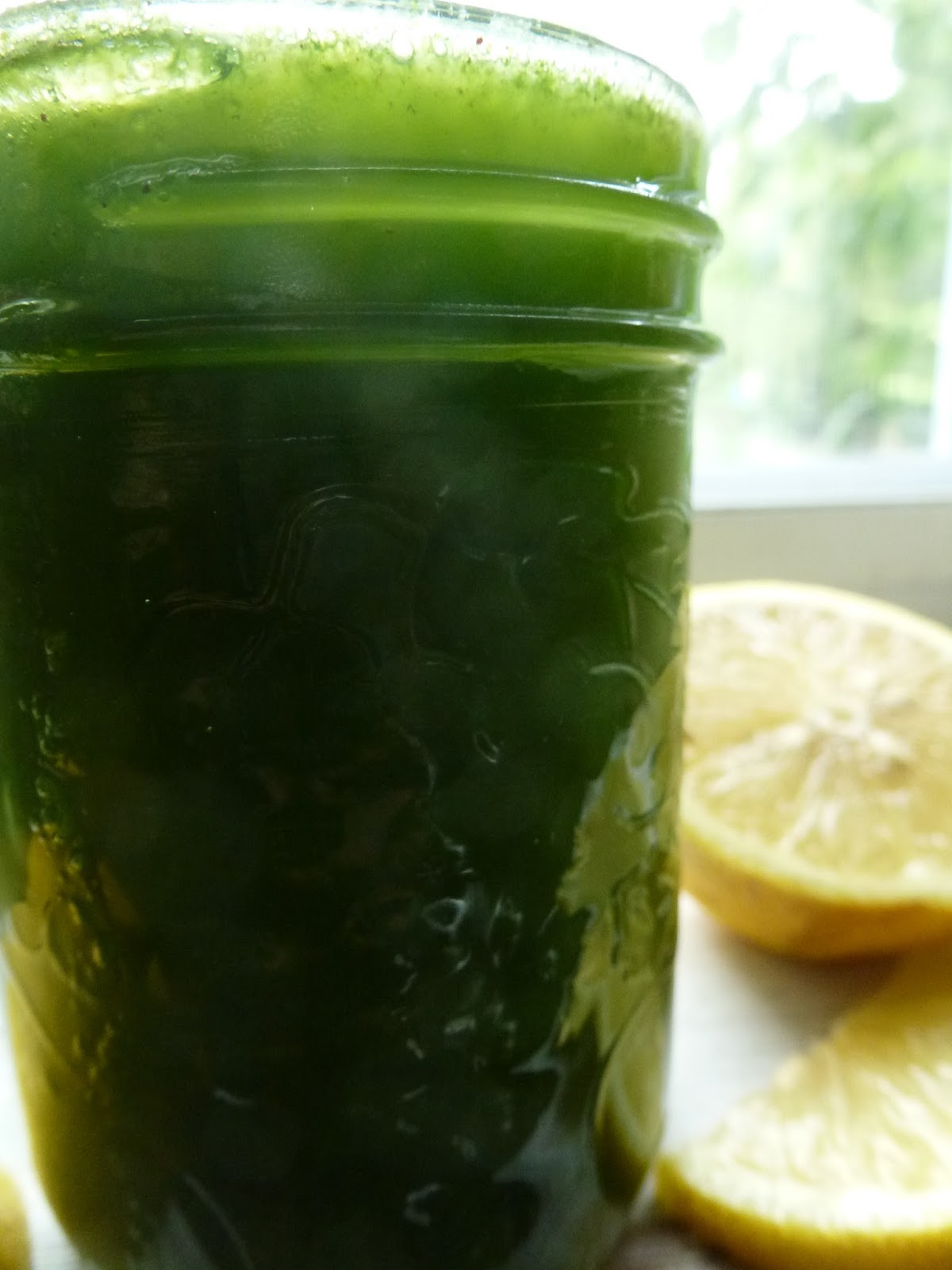
A friend shared her purslane lemonade suggestion with us. Since we love making herbal lemonades, and herbal-rich smoothies, this made a great addition to our summer drink selections. Here is our variation on the purslane elixir. If you can't find wild purslane it can also be grown indoors or in a greenhouse/garden bed as a microgreen.
Purslane Elixir
You will need:
1-2 lemons
honey or maple syrup to taste
large handful fresh purslane
2 cups water
2-4 ice cubes
1) Put 2 cups water into blended. Add juice of lemons and handful purslane, and ice. Blend on high until smooth (about 1 minute).
2) Strain drink for lemonade consistency, or don't strain and drink as a rich green smoothie.
3) Sweeten to taste.
A friend shared her purslane lemonade suggestion with us. Since we love making herbal lemonades, and herbal-rich smoothies, this made a great addition to our summer drink selections. Here is our variation on the purslane elixir. If you can't find wild purslane it can also be grown indoors or in a greenhouse/garden bed as a microgreen.
Purslane Elixir
You will need:
1-2 lemons
honey or maple syrup to taste
large handful fresh purslane
2 cups water
2-4 ice cubes
1) Put 2 cups water into blended. Add juice of lemons and handful purslane, and ice. Blend on high until smooth (about 1 minute).
2) Strain drink for lemonade consistency, or don't strain and drink as a rich green smoothie.
3) Sweeten to taste.
Sunday, June 05, 2016
Wild Plant Medicine Workshop 1 - focus on Nettle
I absolutely love nettle. I think it's one of my favourite "wild" medicinals, with such a versatile range of applications and uses. And since it is at it's peak right now, we offered our first workshop in the "wild plant medicine (in the city)" series on the topic of Nettle!
Not only is it delicious, packed with nutrition (iron, calcium, vit A and C, 25% protein by weight), but healing to many aspects of our body (men, women, children, elders alike). It is an alterative, working to bring our body back into healthy balance, meeting us where we need. It helps stimulate all systems of elimination in the body, this removing toxins and wastes and realigning our bodies toward healthy wholeness. It is helpful for allergies, arthritis, rheumatism, recovering from illness, beneficial for nursing mothers, and generally toning to both the male and female reproductive systems. It does not have counter-indications with other herbs/medicines, and can be used freely and safely. Primarily the leaves are used, harvested before they start to flower. It can be tinctured, dried for tea or used fresh for tea and cooking (the drying, steaming or cooking removes the sting from the leaves). See a few of our favourite nettle recipes below - taking our "medicine" as food is always a great way to go!
Nettle has a long history of co-habitation with humans. Wherever old human settlements are in the northern boreal regions of the globe (Europe, Asia, North America) likely you will find nettle. It is said that nettle has often been found growing over old burial grounds, bringing to mind that this special plant is protecting sacred ground - it's stinging properties mean that humans will not easily trample through a nettle patch.
Nettle is also beneficial for many species of animals - several kinds of butterfly larva only eat nettle, and also nettle is a useful food source for ground birds, reptiles and rodents in riparian areas.
So, don't think of this wonderful wild plant as just a "weed" - bring some nettle into your life, ethically harvesting* where it is growing along streams and shady moist riverbanks and wooded areas, or even planting a small patch in a contained area of your back woods/garden (be warned, nettle spreads rapidly by underground roots and rhizomes so do keep it contained by trenching the area or planting in a container). Remember, it's called "stinging nettle" for a good reason - harvest with caution, wearing long sleeves, pants and gloves as it can cause severe contact dermatitis (red stinging itching welts) from the formic acid it releases into exposed skin through it's stinging hairs.
* ethical wild harvesting - meaning to harvest carefully and respectfully, leaving no trace that you have been harvesting a wild plant (take no more than 1/4 of a patch, do not harvest entire plants, cover soil back to leave ground undisturbed, and leave healthy plants to go to seed and grow in the coming years)
* and when harvesting in the wild, be sure to know FOR SURE that you have properly identified the plant (use a good ID book with clear photos or sketches of plants in various times of season, or go with an experiences wild harvester who knows how to safely harvest and identify - there are some look-alike plants that can be toxic)
Here is an delicious example where nettle makes a creamy soup in place of any dark leafy green (spinach, chard, kale). It was paired with sorrel in this lemony green soup above.
And in our workshop we made a nettle-based "medicinal" pesto - deep green, garlic-y, and delicious!
Nettle-Walnut Pesto (cheesy version)
8 cups nettle leaves (top 6 inches, removed from stalk)
2 cups other wild green edibles (we used dandelion and plantain leaves, but you could use traditional pesto garden herbs like basil or parlsey)
1 cup nuts (e.g. walnuts, pine nuts, brazil nuts, almonds)
1 cup seeds (e.g. sunflower, pumpkin, hemp)
2 cups olive oil (more or less, to get consistency you want)
1 cup parmesan, grated
1/2 cup Asiago, grated
10 clove of garlic
3 tsp sea salt
Nettle-Seed Pesto (vegan version)
8 cups nettle leaves
2 cups other wild green edibles
2 cups seeds (e.g. pumpkin, sunflower, hemp or combination of these - add in nuts if you like in place of seeds)
1 cup nutritional yeast
1-2 cups olive oil (to get consistency you want)
10 cloves garlic
3 tsp sea salt
Method:
1) Blend greens with seeds and some oil in small batches in a food processor.
2) Then add cheese/nutritional yeast, garlic and sea salt and blend well.
3) Add more olive oil if necessary to get the consistency you want. Do not thin with water as it will create a paste, not a thick pesto sauce.
4) Taste, adjust flavours - remember the pesto will mellow and blend flavours as it sits.
5) Scoop into jars and store in fridge (for about 2 weeks) or freezer for longer term.
6) Serve with crackers, zucchini chips, as a dip for fresh veggies, mixed into pasta, on bread, mixed into mayo for a delicious veggie burger experience, and so many other great uses for pesto!
Coming up next month in the "wild plant medicine (in the city)" series:
Plantain - and making healing oils, salves, and bug lotions with plantain
Not only is it delicious, packed with nutrition (iron, calcium, vit A and C, 25% protein by weight), but healing to many aspects of our body (men, women, children, elders alike). It is an alterative, working to bring our body back into healthy balance, meeting us where we need. It helps stimulate all systems of elimination in the body, this removing toxins and wastes and realigning our bodies toward healthy wholeness. It is helpful for allergies, arthritis, rheumatism, recovering from illness, beneficial for nursing mothers, and generally toning to both the male and female reproductive systems. It does not have counter-indications with other herbs/medicines, and can be used freely and safely. Primarily the leaves are used, harvested before they start to flower. It can be tinctured, dried for tea or used fresh for tea and cooking (the drying, steaming or cooking removes the sting from the leaves). See a few of our favourite nettle recipes below - taking our "medicine" as food is always a great way to go!
Nettle has a long history of co-habitation with humans. Wherever old human settlements are in the northern boreal regions of the globe (Europe, Asia, North America) likely you will find nettle. It is said that nettle has often been found growing over old burial grounds, bringing to mind that this special plant is protecting sacred ground - it's stinging properties mean that humans will not easily trample through a nettle patch.
Nettle is also beneficial for many species of animals - several kinds of butterfly larva only eat nettle, and also nettle is a useful food source for ground birds, reptiles and rodents in riparian areas.
So, don't think of this wonderful wild plant as just a "weed" - bring some nettle into your life, ethically harvesting* where it is growing along streams and shady moist riverbanks and wooded areas, or even planting a small patch in a contained area of your back woods/garden (be warned, nettle spreads rapidly by underground roots and rhizomes so do keep it contained by trenching the area or planting in a container). Remember, it's called "stinging nettle" for a good reason - harvest with caution, wearing long sleeves, pants and gloves as it can cause severe contact dermatitis (red stinging itching welts) from the formic acid it releases into exposed skin through it's stinging hairs.
* ethical wild harvesting - meaning to harvest carefully and respectfully, leaving no trace that you have been harvesting a wild plant (take no more than 1/4 of a patch, do not harvest entire plants, cover soil back to leave ground undisturbed, and leave healthy plants to go to seed and grow in the coming years)
* and when harvesting in the wild, be sure to know FOR SURE that you have properly identified the plant (use a good ID book with clear photos or sketches of plants in various times of season, or go with an experiences wild harvester who knows how to safely harvest and identify - there are some look-alike plants that can be toxic)
And in our workshop we made a nettle-based "medicinal" pesto - deep green, garlic-y, and delicious!
Nettle-Walnut Pesto (cheesy version)
8 cups nettle leaves (top 6 inches, removed from stalk)
2 cups other wild green edibles (we used dandelion and plantain leaves, but you could use traditional pesto garden herbs like basil or parlsey)
1 cup nuts (e.g. walnuts, pine nuts, brazil nuts, almonds)
1 cup seeds (e.g. sunflower, pumpkin, hemp)
2 cups olive oil (more or less, to get consistency you want)
1 cup parmesan, grated
1/2 cup Asiago, grated
10 clove of garlic
3 tsp sea salt
Nettle-Seed Pesto (vegan version)
8 cups nettle leaves
2 cups other wild green edibles
2 cups seeds (e.g. pumpkin, sunflower, hemp or combination of these - add in nuts if you like in place of seeds)
1 cup nutritional yeast
1-2 cups olive oil (to get consistency you want)
10 cloves garlic
3 tsp sea salt
Method:
1) Blend greens with seeds and some oil in small batches in a food processor.
2) Then add cheese/nutritional yeast, garlic and sea salt and blend well.
3) Add more olive oil if necessary to get the consistency you want. Do not thin with water as it will create a paste, not a thick pesto sauce.
4) Taste, adjust flavours - remember the pesto will mellow and blend flavours as it sits.
5) Scoop into jars and store in fridge (for about 2 weeks) or freezer for longer term.
6) Serve with crackers, zucchini chips, as a dip for fresh veggies, mixed into pasta, on bread, mixed into mayo for a delicious veggie burger experience, and so many other great uses for pesto!
Coming up next month in the "wild plant medicine (in the city)" series:
Plantain - and making healing oils, salves, and bug lotions with plantain
Tuesday, April 26, 2016
Wild Harvest - Dandelion Chocolate Chip Cookies
While we were out harvested violets we discovered that the dandelions were in bloom on the south-facing slope of a nearby hill. My daughter and her friend spontaneously picked a good handful of blooms, as well as leaves (for feeding to our hens!). With the blooms we made these yummy dandelion cookies. They are so pretty, flecked with yellow petals throughout - a real spring treat.
Dandelions are so good for us - the fresh green bitter leaves for salads or stirfry, the flowers for wine/syrup/baking/salads, the roots for tinctures and decoctions. Dandelion is rich in Vit C, iron, calcium, and a great tonic for the liver. It makes a wonderful first spring plant to help detox our sluggish bodies after a long winter.
Please note: dandelion is not usually at risk of over-harvesting, but in general use careful sparing harvesting techniques when doing any wild harvest. Also, treat wild edibles as medicine, and use in small doses until you see how your body reacts.
Dandelion Chocolate Chip Cookies
Ingredients:
1/3 cup butter or coconut oil
1 large egg
1/4 cup sugar
2 Tbsp honey
2 tsp vanilla
1 1/2 cups spelt flour
1/2 tsp baking soda
1/2 tsp sea salt
1 cup fresh dandelion flower petals
1/2 cup dark chocolate chips
1) Preheat oven to 350F.
2) Prepare dandelion flowers - pick off the yellow petals, discard the green stems.
3) Mix wet ingredients together stirring well.
4) Mix dry ingredients together, then add to wet and mix well.
5) Then shape dough into small balls, place on parchment lined baking sheet, and press down slightly.
6) Bake 10 min, cookies will still be slightly soft (they will firm up when cool).
Makes about 24 small cookies, or 12 large cookies.
Dandelions are so good for us - the fresh green bitter leaves for salads or stirfry, the flowers for wine/syrup/baking/salads, the roots for tinctures and decoctions. Dandelion is rich in Vit C, iron, calcium, and a great tonic for the liver. It makes a wonderful first spring plant to help detox our sluggish bodies after a long winter.
Please note: dandelion is not usually at risk of over-harvesting, but in general use careful sparing harvesting techniques when doing any wild harvest. Also, treat wild edibles as medicine, and use in small doses until you see how your body reacts.
Dandelion Chocolate Chip Cookies
Ingredients:
1/3 cup butter or coconut oil
1 large egg
1/4 cup sugar
2 Tbsp honey
2 tsp vanilla
1 1/2 cups spelt flour
1/2 tsp baking soda
1/2 tsp sea salt
1 cup fresh dandelion flower petals
1/2 cup dark chocolate chips
1) Preheat oven to 350F.
2) Prepare dandelion flowers - pick off the yellow petals, discard the green stems.
3) Mix wet ingredients together stirring well.
4) Mix dry ingredients together, then add to wet and mix well.
5) Then shape dough into small balls, place on parchment lined baking sheet, and press down slightly.
6) Bake 10 min, cookies will still be slightly soft (they will firm up when cool).
Makes about 24 small cookies, or 12 large cookies.
Thursday, October 01, 2015
Wild Smoothies! Urban Wild Kids Classes at LCF
We've had a great time with wild edibles lately! Not only harvesting wild fall edibles for our household (more to come shortly about rosehips and goldenrod) but also hosting classes on the topic.
For the first time this year we are including classes for children - and wild edibles is one topic that is so much fun to introduce to kids. Our friend Jackie has been here to facilitate the "kids urban wild" series, and did a nice job of explaining simple methods for properly identifying, safely harvesting, and using wild edibles that are all around us. The way she introduced the tastes of wild foods to the kids in the workshop was to make "wild smoothies". First we all talked about the plant and how to identify it, then we walked around the yard collecting samples of the plant (so fun to see kids with little baskets traipsing around the yard picking wild greens), and tasted the leaves raw, then added them in the blender with smoothie ingredients to make delicious healthful wild blends. The plants we included in our wild smoothies were common plants that are not easily over-harvested because they grow wild everywhere around us: dandelion, wood sorrel, lamb's quarter, and wild lettuce. These can be added a small handful at a time, to taste (depending on how "green" you like your smoothie).
Wild Green Smoothie Base Recipe
1 banana
1 cup hemp milk (or nut milk of your choice)
1 Tbsp chia seeds or hemp seeds
1-2 Tbsp nut butter (hemp butter, almond butter, etc)
1 handful wild greens (dandelion is the most bitter, wood sorrel is lemon tasting, lamb's quarter like spinach)
3-4 ice cubes
Blend well! Add more hemp milk to thin drink if it's too thick. Add more banana if the flavour is too bitter.
Experiment with combinations of wild greens (nettle, fennel, dandelion, wild lettuce, wood sorrel, etc).
You can combine all manner of garden greens (chard, spinach, kale, pea shoots) with the wild greens to soften the bitter flavours. Enjoy!
For the first time this year we are including classes for children - and wild edibles is one topic that is so much fun to introduce to kids. Our friend Jackie has been here to facilitate the "kids urban wild" series, and did a nice job of explaining simple methods for properly identifying, safely harvesting, and using wild edibles that are all around us. The way she introduced the tastes of wild foods to the kids in the workshop was to make "wild smoothies". First we all talked about the plant and how to identify it, then we walked around the yard collecting samples of the plant (so fun to see kids with little baskets traipsing around the yard picking wild greens), and tasted the leaves raw, then added them in the blender with smoothie ingredients to make delicious healthful wild blends. The plants we included in our wild smoothies were common plants that are not easily over-harvested because they grow wild everywhere around us: dandelion, wood sorrel, lamb's quarter, and wild lettuce. These can be added a small handful at a time, to taste (depending on how "green" you like your smoothie).
Wild Green Smoothie Base Recipe
1 banana
1 cup hemp milk (or nut milk of your choice)
1 Tbsp chia seeds or hemp seeds
1-2 Tbsp nut butter (hemp butter, almond butter, etc)
1 handful wild greens (dandelion is the most bitter, wood sorrel is lemon tasting, lamb's quarter like spinach)
3-4 ice cubes
Blend well! Add more hemp milk to thin drink if it's too thick. Add more banana if the flavour is too bitter.
Experiment with combinations of wild greens (nettle, fennel, dandelion, wild lettuce, wood sorrel, etc).
You can combine all manner of garden greens (chard, spinach, kale, pea shoots) with the wild greens to soften the bitter flavours. Enjoy!
Sunday, September 06, 2015
Weeds + Seeds Classes coming in September!
We love Weeds + Seeds! If you have looked around our yard (and maybe yours too) at this time of year, you will have noticed lots of weeds...and lots of seeds... Yes, we do have a young baby here so the garden has not had the weeding attention it usually gets, and some of these weeds are certainly not growing here by our intention. However, many of the so-called weeds in our garden are wonderful plants that we welcome, for food and medicine, for wildlife, for pollinators, for ground cover, for nutrients they bring to the soil, for health in our compost pile, and so on. And many of our plants are let go to seed, so we can save these seeds for planting next season's garden, and to let stand all winter as forage for birds.
How to learn more? Here at Little City Farm we love weeds + seeds so much that we offer classes on this topic every fall! If you want to learn more about the benefits of cultivating, using and eating "weeds" - join us on Sept 19 for our Fall Wild Edibles Foraging workshop. If you want to learn more about how and why to save your own seeds, join us for the annual Seed Saving workshop here on Sept 12. Join the I Am A Seed Saver campaign organized by USC Canada - learn more here! More details on these exciting Weeds + Seeds classes at Little City Farm. Please register in advance for these classes.
Sunday, July 26, 2015
Local Super Food - Chokecherries!
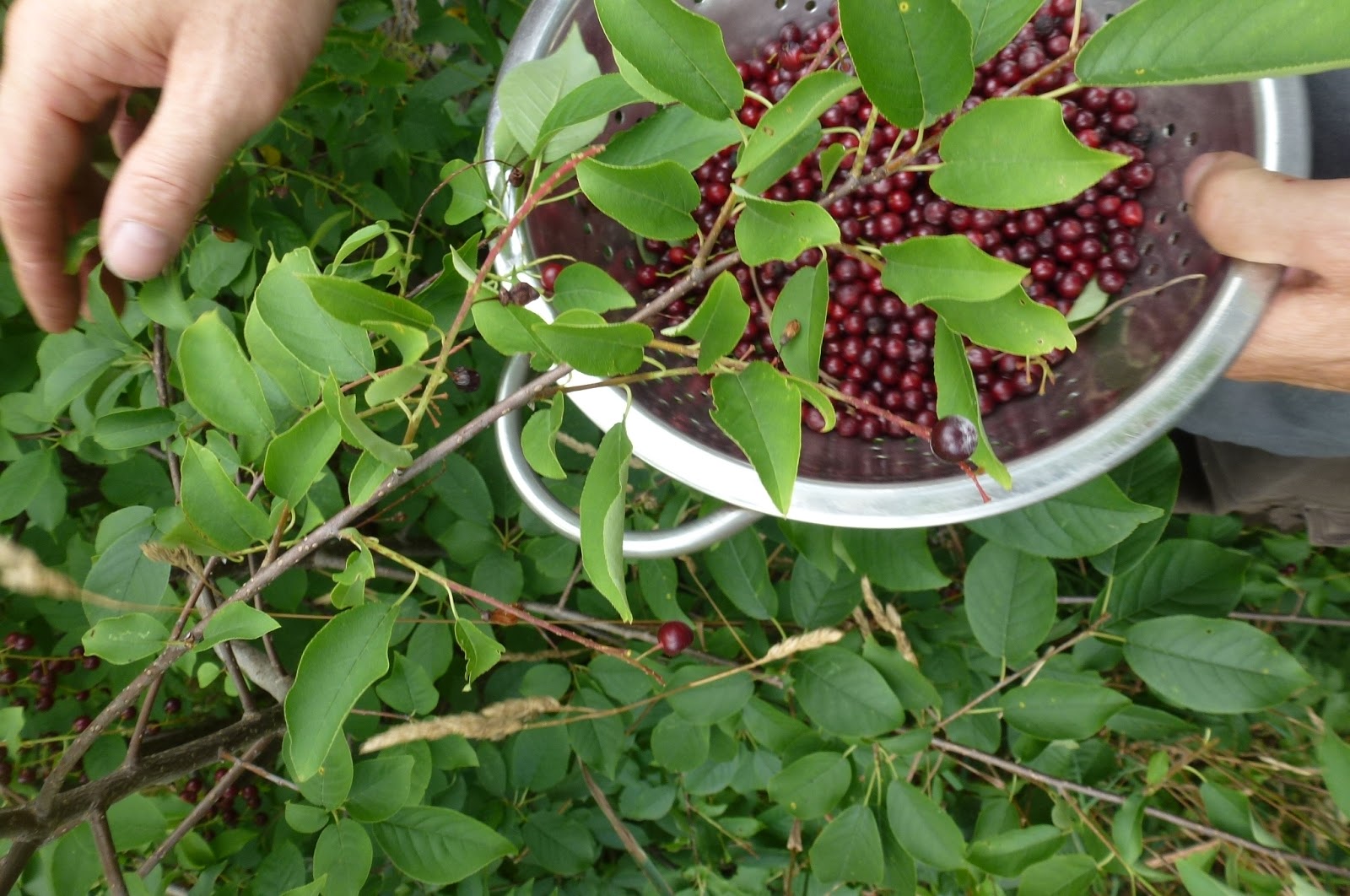
We've been noticing an exceptional berry harvest this year (other than strawberries) - the wild berries like mulberries, service berries, raspberries, and also grapes, as in greater abundance than we've seen in many years. This was the same for the chokecherry tree in our own yard (well two, one is a volunteer that has self-seeded and is also bearing loads of fruit!). While eating raw chokecherries should be avoided, they do make lovely jam, wine, syrup and juice. We are also going to try making chokecherry fruit leather this year, following this recipe idea here. Chokecherries (Prunus virginiana) are considered some of our greatest "local super foods", along with elderberry (Sambucus nigra) as they are high in anti-oxidants and rich in vitamin C. When using both chokecherries or elderberries the seeds need to be removed, and both of these berries need to be cooked or processed, not eaten raw. They take a bit of work to pick, pit, and process, but oh they are worth the effort.
Saturday, June 27, 2015
Service berry season & pie recipe
The service berries are ready! Service berries (aka. June berries, or Saskatoon berries) are small trees or large shrubs, with delicious edible sweet berries that almost have a taste similar to wild blueberries. It's looking like an amazing year for these berries so far, as all the trees that line boulevards in our neighbourhood are loaded with berries. We have been so pleased for discover the service berry over the past years, as we wild forage around the city. It seems to be a common tree to be planted by the city as part of their landscaping design, and we counted 30 service berry trees lining the sidewalk of one street not far from our house. These trees eventually get too big to fully harvest without using ladders, and the birds do love the berries too (so they take the higher ones which works out just fine). However, on our daily walks around town (now always with extra bags and containers along, just in case we need to harvest something) my daughter and I have been able to gather small handfuls from various trees we pass - enough to make a batch of mini pies, a few dozen muffins, and put away some berries in the freezer for winter.
Service Berry Pie with Butter Crust
Best Butter Crust
1 1/2 cups spelt or kamut flour (or wheat, or combination)
1/2 tsp sea salt
1/2 cup chilled organic butter (or coconut oil)
3-4 Tbsp ice water
Mix flour, salt and butter with hands to form small pea-sized bits.
Add water one Tbsp at a time, mixing just until dough comes together. Do not overmix.
Chill for at least 30 min, then roll out dough using extra flour on table top.
Makes 1 large pie.
Service Berry Filling
4-6 cups service berries (or mix of berries)
2 Tbsp arrowroot
a few Tbsp water
cinnamon
maple syrup
Mix filling, add to unbaked pie shell. Bake at 350F oven for about 30 min.
Service Berry Pie with Butter Crust
Best Butter Crust
1 1/2 cups spelt or kamut flour (or wheat, or combination)
1/2 tsp sea salt
1/2 cup chilled organic butter (or coconut oil)
3-4 Tbsp ice water
Mix flour, salt and butter with hands to form small pea-sized bits.
Add water one Tbsp at a time, mixing just until dough comes together. Do not overmix.
Chill for at least 30 min, then roll out dough using extra flour on table top.
Makes 1 large pie.
Service Berry Filling
4-6 cups service berries (or mix of berries)
2 Tbsp arrowroot
a few Tbsp water
cinnamon
maple syrup
Mix filling, add to unbaked pie shell. Bake at 350F oven for about 30 min.
Subscribe to:
Posts (Atom)