Pages

Showing posts with label compost. Show all posts

Tuesday, October 18, 2011

Autumn at our urban farm

Each change of season has such a charm.  We are enjoying these chilly, sunny days as we prepare for the  much colder months ahead.  These are perfect days for eating warm kale and potato soups, sitting by cozy bonfires, taking up forgotten knitting, air drying laundry outside, clearing the garden, tending compost...and starting to wind down for the start of an annual semi-hibernation time where we incubate new ideas, read, research, play, and rest over the winter.


Saturday, June 19, 2010

Creating great compost workshop & biodynamic compost activator plants!

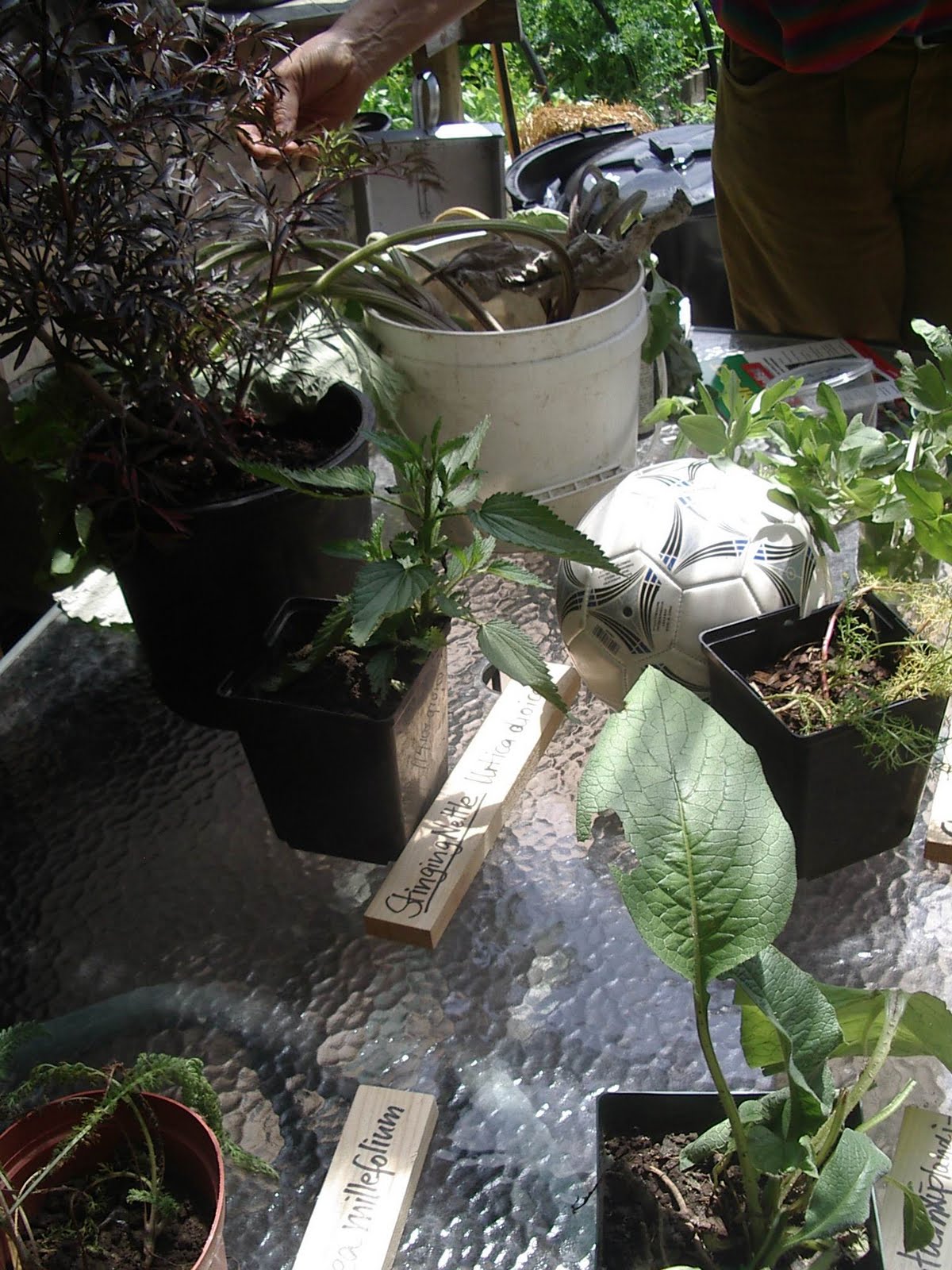
This weekend's Saturday workshop was on Compost!  Our friend Anna-Maria, long-time organic grower and CSA farmer, was here to lead the session.  She really knows her information well and although we have been composting for more than a decade and have done plenty of reading ourselves, I still came away with many new and useful ideas from her talk!  She talked about why to compost (why not?? there are just so many benefits, including fertile soil, building tilth, plant nutrient boosting, reduction of wastes going to landfills, creating closed loop systems in our own backyards, etc etc)!  She also takes a biodynamic approach to her composting, both in terms of how she layers her pile (it's like cooking for her, layering and seasoning her piles), and also in the types of plants she adds as "compost activators".  Seven useful plants recommended by Rudolf Steiner, father of biodynamic agriculture, include comfrey, yarrow, nettle, chamomile, horsetail, dandelion, and valerian.  Anna-Maria also added burdock - ideally, these are all plants you have growing in your own yard so you don't need to be dependent on outside sources.  Luckily, over the years on this property, we have encouraged all of these plants to grow here!  Even a few leaves of each, chopped up and added every few months, can do wonders for adding the proper balance to the compost pile.  Fish emulsion or seaweed can also be added...

The ideal pile would be a 30:1 ratio of carbon:nitrogen, balanced by weight not volume (she suggested if you really wanted to be precise you could leave a scale beside your compost pile!).  She talked about useful cover crops to grow, in garden beds or paths, to chop up and add to the soil or the compost pile for extra nitrogen - such as fava beans, sweet peas, clover, vetch, buckwheat, rye.  There is also a debate about whether to turn a compost pile, how often or not at all (similar to no-till gardening approaches, no-turn compost approach believes that turning disturbs the microbial life too much).  If the pile is properly layered and managed, and heats up well, then turning is not necessary - although she was clear to state that each situation is a little different, and you need to get to know your own garden, compost and conditions well to make judgements about how to manage your pile.  Anna-Maria also told us about the wonderful elderberry - which is it's own little composter as it's roots seem to create perfect compost - you can dig gently around the roots in the fall and get beautiful compost to add to your garden (not to mention eating the berries, using the flowers for wines or tincture, and more).

Now I'm off to harvest some comfrey and nettle for our compost, buy an elderberry bush, and try to plant some buckwheat and fava beans as cover crops this season!

Friday, April 16, 2010

Workshops: Organic Gardening - plus Compost Tea recipe

Last weekend saw unbelieveably warm weather, and we were able to hold our Organic Gardening workshop outdoors on the garden patio.  Much more inspiring than discussing this topic indoors.  The aim of this workshop was to familiarize beginning gardeners with basic organic principles and techniques - including building and maintaining soil health, compost, tilling vs no-till approach, brief overview of permaculture approaches, as well as companion planting, bio-intensive gardening in small spaces, and organic pest controls.  This was a lot to cover in two hours, given that we also wanted to have enough time to answer the many questions of the participants.  Really, this organic gardening basics could be a whole series in itself - something to consider for next season.

The most important point to bring across was how vital soil health is to a successful garden - getting to know your garden's soil qualities (sandy, clay, poor drainage, too dry, acidic, alkaline, etc) and creating a healthy balance with maximum beneficial microorganisms by using: compost and, better yet, compost tea, as well as aged manures, worm castings (from vermicomposting bins), mulches (straw, shredded newspaper, woodchips), and other simple additions like fish emulsions, eggshells (calcium) and so on. 

Compost Tea Recipe
The best way to quickly improve your soil health is to apply compost tea on a regular basis.  Using a fish aquarium bubbler helps to create a compost tea filled with oxygen (aerobic), as the beneficial microorganisms need oxygen to survive.

What you will need:
5 gallon plastic pail
1 shovelful aged compost (about 3 large handfuls)
Small fish aquarium bubbler

1. Fill pail with water and let this sit for 24 hours to evaporate chlorine (from city water).
2. Add compost into a mesh bag and tie bag loosely closed.  The mesh bag should be fine enough to hold the compost inside, while still letting water flow through.  Put bag in the pail of water and let steep like a "tea" for 12-24 hours, while running the aquarium bubbler.
3. Strain compost tea into a watering can and use on garden immediately  This tea does not keep for more than a few days as microorganisms die and you are left with anerobic water.  A similarily beneficial "tea" can be made using worm castings from a vermicomposting bin.

Thursday, August 06, 2009

Making compost tea - and rain water harvesting


This has been a summer of plentiful rain but few hot sunny days, and the garden produce has been slow to ripen. This week we finally tasted the first fresh tomatoes (subartic cherry and yellow plum were the first), and the long-standing flowers of the eggplant and hot pepper plants have nowbegun to shape into fruits. This abundant rain has meant that our new rainwater harvesting tank has been full continuously - in fact, on the heavy rains two days ago it filled up and over-flowed three times in one downpour! That means 3 x 1150 litres (or 3450 litres) of water collected in that one storm off our new very large steel roof on the straw bale addition plus the house roof.

To give an idea of how much water that is, consider these stats from earthcarecanada.com's water conservation website:

How many litres of water does a garden hose use per hour?
1100 litres per hour

How much water is used in a shower?
A typical shower will use 160 litres. (8-10 minute)

How much water is used in a regular toilet per flush?
16 to 23 litres per flush

How much water would be lost by a leaking faucet or toilet?
A leaking toilet would lose 400 litres per day ($200 per year) and a faucet would lose 5000 litres per year.

However, all our other rain barrels and pond were also full from the storm, so we actually (disappointingly) didn't have a place to store the overflow and after that big storm the garden certainly didn't need more watering for at least another day or two! Maybe we've rigged up too many good eaves troughs, more than we actually need? The rain tank comes with a 3/4 horsepower pump which is used to pump the water through a hose into other parts of the yard (which saves us carrying it by watering can or bucket). We will have to set up further rainbarrels into which we can pump the overflow on storms like this.

During an earlier rain storm we also collected water for compost tea. We had filled a wheel barrow with compost mix from our composting bins, and when the water filled the wheel barrow we just let it sit for a week or so to steep. Voila! Compost tea! This tea we've now been pouring onto the garden beds and tomato containers for an extra nutrient boost. Comfrey or nettle leaves are also often added to the compost tea because they are rich in nutrients and make and excellent organic liquid fertilizer. So simple, yet so effective.